Hardwood floors can make a kitchen feel warm, inviting, and connected to the rest of the home. They’re especially appealing in open-concept spaces, where using the same flooring throughout creates a seamless look.
But the material that looks beautiful in a renovation photo may be harder to live with once the kitchen is back in daily use. Between spilled drinks, dropped utensils, and constant foot traffic, kitchen floors have a lot to handle.
That’s why some flooring and design professionals caution against choosing hardwood for kitchens. Their concern isn’t how it looks; it’s how much care it can require in a room where spills are inevitable.
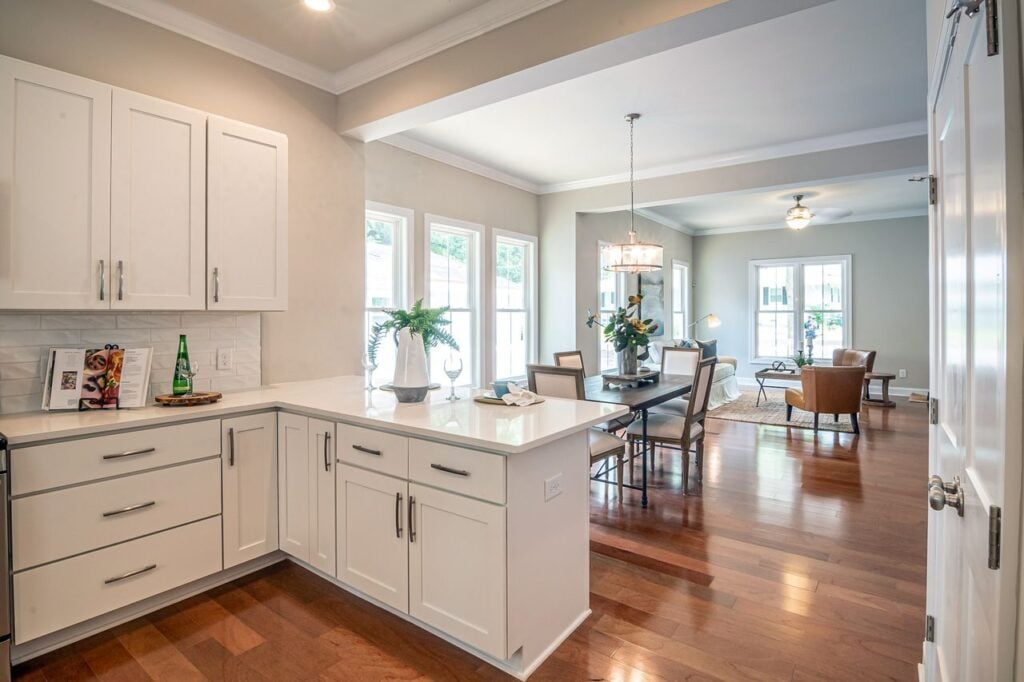
Why hardwood floors can be a problem in the kitchen
The biggest issue is moisture. Water from a spilled glass, a leaking dishwasher, or a sink overflow can seep into hardwood flooring. Over time, moisture exposure may cause boards to stain, discolor, or warp.
Hardwood also requires more attention than some homeowners expect. Clean up spills promptly, and maintain the floor’s finish to help protect the wood underneath.
Then there’s everyday wear. Kitchen floors see plenty of movement, and hardwood can pick up scratches from dirt, furniture, and daily activity. Keeping it looking its best may mean being more careful about spills and staying on top of maintenance than you would with another material.
None of this means everyone who has hardwood kitchen floors regrets them. It does mean that anyone considering them should weigh their appearance against the upkeep they’re willing to take on.
What if your kitchen already has hardwood floors?
You don’t need to replace an existing hardwood floor just because it’s in the kitchen. If you like how it looks and it’s holding up well, protecting it from moisture and maintaining its finish may help you get more life out of it.
Watch the areas around the sink, dishwasher, and refrigerator, where leaks or repeated spills can go unnoticed. Wiping up water promptly is particularly important with this material.
What to consider instead of hardwood
If you love the look of wood but want flooring that’s easier to manage around kitchen spills, waterproof luxury vinyl plank is one option to explore. It comes in a range of wood-look designs and generally requires less maintenance than traditional hardwood.
Porcelain tile is another option, particularly if you prefer the look of natural stone. Larger-format tiles can also mean fewer grout lines to scrub.
Before choosing any flooring, look beyond the showroom sample. Think about how often your kitchen gets wet, how much foot traffic it sees, and how much maintenance you want to handle.
A floor that suits your everyday routine is one you’re more likely to enjoy long after the renovation is finished.