Most nonstick pans eventually start showing signs of wear. After months or years of making eggs, pancakes, stir-fries, and other everyday meals, you might notice scratches, worn areas, or small chips in the coating. That’s usually when the question comes up: Is the pan still okay to use, or is it time to replace it?
A couple of light scratches don’t necessarily mean you need to throw the pan away right away. More serious damage is a different story, especially if the coating is peeling, flaking, or exposing the metal underneath. The age of the pan, how often you use it, and how well you’ve cared for it can all affect how long it lasts.
Before deciding what to do with an old nonstick pan, take a close look at its condition. Knowing how the coating behaves as it wears can help you spot the difference between normal use and damage that means it’s time for a replacement.
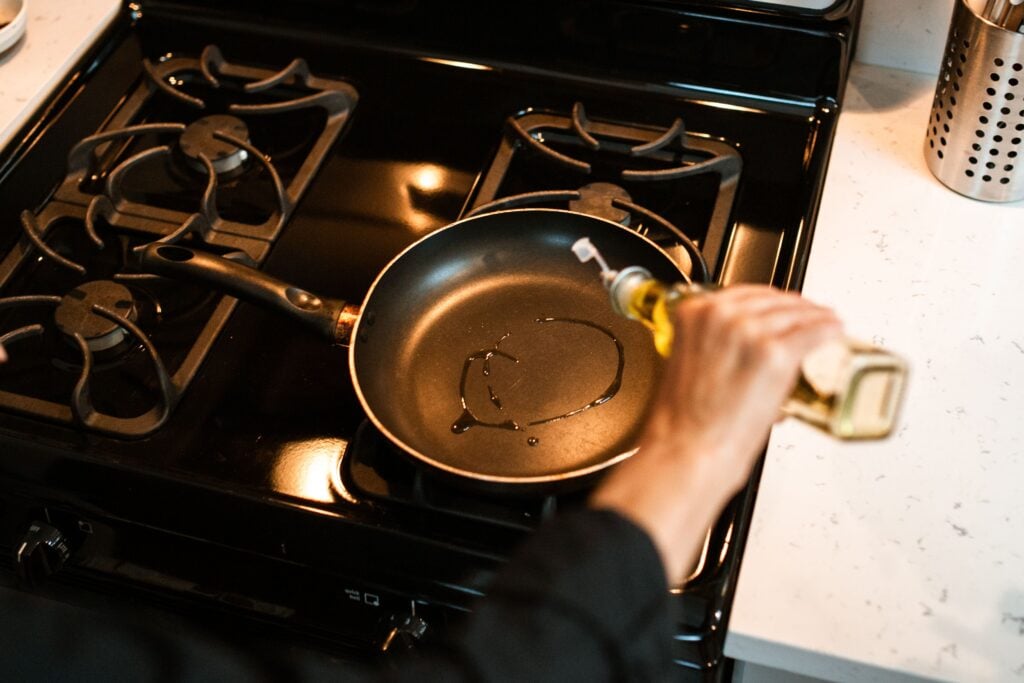
What Happens When a Nonstick Pan Gets Scratched
Scratches are pretty common on nonstick pans, especially those used several times a week. Metal spatulas, knives, abrasive scrubbers, and stacking pans directly on top of each other can all wear down the coating over time.
Most traditional nonstick cookware uses polytetrafluoroethylene, better known as PTFE. If the coating becomes scratched or chipped, tiny pieces can potentially come loose during cooking. Research has also found that damaged PTFE coatings can release microplastic and nanoplastic particles.
The U.S. Food and Drug Administration considers PTFE used in approved food-contact applications to have very low migration into food, and swallowed particles of the material are generally not absorbed by the body. The bigger practical issue with a badly damaged pan is the loss of the nonstick surface and the exposure of the metal underneath.
A pan with major coating damage can also become harder to cook with. Food may start sticking more often, cleaning can become frustrating, and the pan may simply stop working the way it did when it was new.
Two Potential Risks of Damaged Nonstick Pans
Overheating the Pan
High heat is one of the main things to watch with PTFE-coated cookware. At temperatures above roughly 500°F (260°C), the coating can begin to break down and release fumes. The American Cancer Society says exposure to these fumes can cause temporary flu-like symptoms known as polymer fume fever.
This isn’t something that usually happens during ordinary cooking at moderate temperatures. The greater concern is leaving an empty nonstick pan on a hot burner for a long time, especially over high heat.
Keeping the burner at a moderate setting and avoiding preheating an empty nonstick pan for extended periods can help reduce the chance of overheating the coating.
Flaking From Scratched Coating
A pan with a few surface scratches is different from one with peeling coating in large pieces. Once the coating starts to flake or separate from the pan, pieces can end up in the food.
PTFE itself is generally considered chemically inert and isn’t readily absorbed by the body when swallowed. Still, a pan with badly deteriorated coating has reached a point where replacing it makes more sense than continuing to cook with it.
When a Scratched Pan Should Be Replaced
There isn’t a set number of scratches that automatically means a pan needs to go. The overall condition matters more. If the coating is still mostly intact and the scratches are small and superficial, the pan may still be usable.
A replacement makes more sense if you notice any of these signs:
- Deep scratches that expose the metal underneath
- Large areas of peeling or flaking coating
- Food sticking frequently even when you’re using the pan properly
- A warped base that sits unevenly on the stovetop
- Uneven heating that causes food to cook poorly
- Heavy discoloration that doesn’t come off with normal cleaning
A pan that has lost most of its nonstick surface is also much less useful, even if the damage isn’t causing an immediate safety concern. Most nonstick cookware lasts around three to five years with regular use, though some pans can last longer with careful handling.
How to Extend the Life of Nonstick Cookware
A little extra care can keep a nonstick pan in good shape for longer. The easiest place to start is with the utensils you use. Wooden, silicone, or plastic utensils are less likely to scratch the coating than metal tools.
Cleaning habits matter, too. Washing pans by hand with a soft sponge is usually gentler than using abrasive scrubbers. Let the pan cool before washing it, since moving a very hot pan into cold water can contribute to warping.
Try to avoid very high heat unless the manufacturer says the cookware can handle it. If you stack your pans in a cabinet, put a towel or pan protector between them so the bottom of one pan doesn’t scratch the coating on another.
A scratched nonstick pan isn’t automatically dangerous. Minor scratches on modern PTFE cookware are generally considered low concern as long as the coating remains largely intact, but peeling, flaking, deep scratches, warping, or a badly worn surface are good reasons to retire the pan and replace it.