If your bird feeder has been sitting quietly for days, the type of food inside could be part of the reason. A basic bag of birdseed can bring in a few visitors, but different birds have different food preferences. Changing what you offer can make your yard much more interesting to a wider range of species.
You don’t need to fill every feeder with a dozen different foods. A few well-chosen options can give birds more reasons to stop by throughout the day. Some prefer seeds, while others are drawn to fruit, insects, or high-fat foods.
From tiny finches and chickadees to woodpeckers and bluebirds, the right food can bring plenty of activity to your backyard. Here are some foods worth trying if your feeder could use a few more visitors.
Cracked Corn
Cracked corn is an inexpensive option that attracts several types of birds. Ground feeders such as doves, quail, and pheasants are among the birds that may enjoy it, especially when it’s offered on a platform feeder or scattered in an appropriate feeding area.
It’s also easy for birds to eat because the kernels have already been broken into smaller pieces. Cracked corn may not attract as many songbirds as sunflower seeds, but it can attract species that prefer to feed closer to the ground.
Berries
Berries are a natural food source for many birds, so adding them to your yard can be a good way to bring in species that don’t spend much time at traditional seed feeders. Robins, waxwings, and orioles are among the birds that eat berries.
Fresh berries can be offered in small amounts, or you can plant berry-producing shrubs and let birds forage naturally. Native plants that produce fruit can also give birds a food source that remains available beyond the feeder.
Mealworms
Mealworms are a favorite among birds that naturally eat insects. Bluebirds, chickadees, wrens, and robins may all visit a feeder offering mealworms.
You can offer them live or dried in a shallow dish or specialized feeder. They can be especially useful during periods when birds are raising young and looking for protein-rich foods.
Mixed Birdseed Blends
A good mixed birdseed blend is an easy starting point if you want several types of birds visiting the same feeder. These premixed seed blends often contain sunflower seeds, millet, cracked corn, and other ingredients that appeal to different species.
The nice thing about a blend is that you don’t have to guess which single seed will work best. Birds can pick through the mixture and choose the foods they prefer, which can lead to a steady stream of different visitors.
Black-Oil Sunflower Seeds
Black-oil sunflower seeds are a favorite at many backyard feeders. They contain plenty of fat and calories, providing birds with a concentrated source of energy, and their thinner shells are easier for many birds to open.
Cardinals, chickadees, finches, nuthatches, and several other backyard species may visit feeders filled with these seeds. If you only want to add one new type of seed, black-oil sunflower seeds are a practical place to start.
Nyjer Seeds
Nyjer seed, sometimes called thistle seed, is especially popular with finches and other small birds. The tiny black seeds are rich in oils, giving birds with a concentrated source of food.
Nyjer works best in a small tube feeder with openings made for finches because the seeds can fall through larger feeders. Goldfinches are especially attracted to it, so this is a good option if those bright yellow visitors are on your bird-watching list.
Suet
Suet provides birds with a high-calorie food source, making it especially useful in colder weather. Woodpeckers, nuthatches, wrens, and other insect-eating birds may be drawn to suet feeders.
Suet usually comes in blocks that fit inside a wire cage. Some varieties contain seeds, berries, insects, or other ingredients that give birds more than just fat. Hang suet somewhere birds can reach it safely and where you can keep an eye on the feeder.
Peanuts (Unsalted and Shelled)
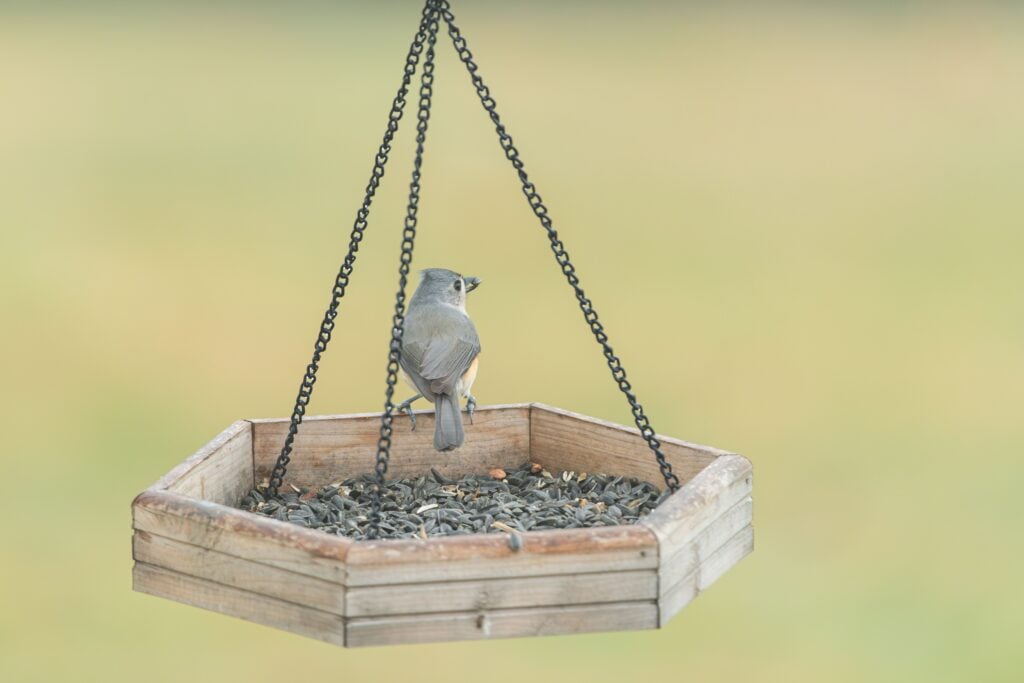
Peanuts provide birds with protein and fat, which makes them a popular food for several larger backyard species. Blue jays, titmice, woodpeckers, and similar birds may readily visit a feeder offering peanuts.
Stick with unsalted peanuts since birds don’t need the extra sodium found in salted snacks. Shelled or chopped peanuts are also easier for smaller birds to eat, and they can be offered in a platform feeder or specialized peanut feeder.
Millet
Millet is a small seed that attracts birds that like to feed on the ground or from low platform feeders. Sparrows, juncos, doves, and several other species may eat it.
It’s also a common ingredient in mixed seed blends, so you may already be offering it without realizing it. If you want to attract more ground-feeding birds, try placing a small amount of food in a clean feeding area where they can easily reach it.
Safflower Seeds
Safflower seeds are another option for backyard feeders. Cardinals, chickadees, grosbeaks, and other seed-eating birds may enjoy them, and their slightly bitter taste can make them less appealing to some squirrels.
That can be helpful if squirrels are emptying your feeder before the birds get a chance to eat. Safflower seeds can be offered on their own or mixed with other seeds, giving you another way to change up what’s available in your yard.