You pull a head of garlic from the pantry and notice little green shoots poking out from the cloves. If the garlic has been sitting around for a while, this is pretty common, and it can make you wonder whether the whole bulb needs to go in the trash.
In most cases, sprouted garlic is still perfectly usable. The green shoot is a sign that the clove has started growing, not necessarily a sign that it has spoiled. The flavor may change a little as the garlic ages, but that doesn’t mean you have to throw it away.
Before tossing those cloves, take a closer look. Knowing why garlic sprouts, what happens to its flavor, and which signs indicate actual spoilage can help you decide whether to use it or let it go.
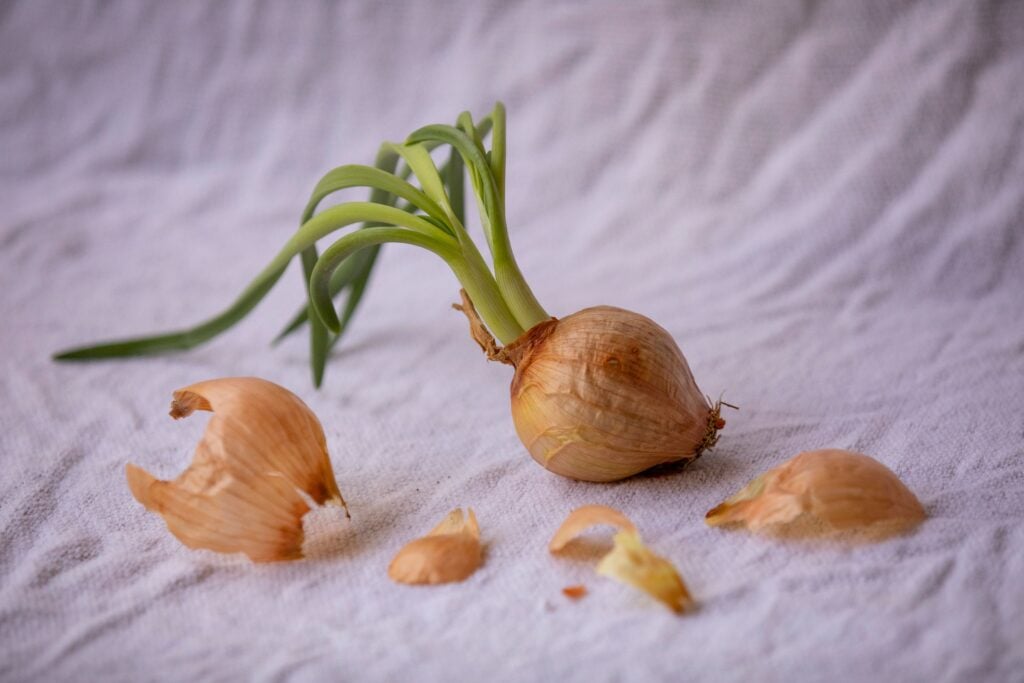
Why Does Garlic Sprout?
Garlic is a bulb with everything it needs to start growing again. As it ages, the clove can use the nutrients stored within it to produce a small green shoot. Warm temperatures, moisture, and exposure to light can all encourage this process.
You may notice sprouting after garlic has been sitting in your pantry for several weeks or months. It can happen sooner in a warm kitchen, especially if the garlic is kept somewhere that gets a lot of sunlight.
That green shoot is simply the beginning of new growth. If you planted the sprouted clove in soil, the shoot would continue growing and eventually develop into a new garlic plant.
Related: 15 Vegetables That Can Turn a Raised Bed Into a Productive Garden
Is Sprouted Garlic Safe to Eat?
Sprouted garlic is usually safe to eat if the clove is still fresh and shows no signs of spoilage. The green shoot doesn’t make the garlic poisonous, so seeing a little green inside the clove isn’t, by itself, a reason to throw it away.
The main difference is flavor. As the shoot grows, it uses some of the sugars and nutrients stored in the clove. This can give older sprouted garlic a sharper, stronger, or slightly bitter taste compared with a fresh clove.
The texture may change too. A sprouted clove can become softer or less juicy as it gets older, but that doesn’t automatically make it unusable. If the clove is still firm and shows no signs of spoilage, you can use it in plenty of dishes.
For the best flavor, use sprouted garlic sooner rather than letting it sit around for even longer.
Related: Are Sprouted Potatoes Safe to Eat? Here’s What You Need To Know
Can You Eat the Green Sprout?
Yes, the green shoot inside a garlic clove is edible. The catch is that it can have a stronger, more bitter flavor than the rest of the clove, which is why some people prefer to remove it.
Getting rid of the shoot is easy. Cut the garlic clove in half lengthwise, and you’ll see the green center running through the middle. Use the tip of a knife to lift it out, then prepare the garlic as you normally would.
Removing the green center can make a bigger difference in dishes where the garlic is eaten raw. If you’re making a salad dressing, dip, or fresh sauce, the bitterness can stand out more than it would in a cooked dish.
For soups, roasted vegetables, pasta sauces, and sautéed dishes, the difference is usually much less noticeable. If the garlic tastes fine to you, there’s no need to remove the shoot simply because it’s green.
When Should You Throw Sprouted Garlic Away?
Sprouting isn’t the same thing as spoilage. What matters more is the condition of the clove itself. If the garlic has become soft, wet, moldy, or foul-smelling, it’s time to throw it away.
Watch for these signs:
- Soft or mushy cloves
- Mold or dark spots on the surface
- A sour, rotten, or unpleasant odor
- Cloves that are extremely shriveled or hollow
- Sticky or wet layers inside the clove
A healthy garlic clove should feel fairly firm and dry. If the only thing you notice is a green shoot in the center, the garlic may still be fine to use. If several signs of spoilage are present, it’s better to discard the clove.
How to Use Sprouted Garlic
You can use sprouted garlic in many of the same recipes you’d use fresh garlic in. If the flavor is a little stronger than usual, cooking it with other ingredients can help mellow the taste.
Try it in soups and stews, pasta sauces, stir-fries, roasted vegetables, marinades, braised dishes, and recipes where garlic is cooked along with other ingredients. It’s a handy way to use up older garlic instead of wasting it.
You can also remove the green shoot if you don’t like the stronger flavor. Once the sprout is removed, use the remaining clove just as you would any other garlic.
There is another option if your garlic has already started growing. Plant the sprouted clove in soil and let it continue growing. The green shoots can be harvested and used in cooking much like mild green onions.
How to Prevent Garlic From Sprouting
Good storage can help your garlic stay fresh for longer. Garlic does best in a cool, dry place with plenty of air circulation, so a pantry or cupboard is usually a better spot than a damp area of the kitchen.
A few simple storage habits can help slow down sprouting:
- Store garlic in a dry, well-ventilated container or mesh bag.
- Keep it in a cool pantry or cupboard away from direct sunlight.
- Avoid plastic bags that can trap moisture around the cloves.
- Keep whole heads of garlic out of the refrigerator, since the moisture and temperature changes can encourage sprouting.
Whole heads also last longer than individual cloves in many cases. Once you break apart the bulb, the exposed cloves have more contact with air and can dry out or start sprouting sooner.
So, the next time you spot a little green shoot coming out of your garlic, don’t assume the whole bulb belongs in the trash. Check the clove for signs of spoilage, remove the shoot if you don’t like its flavor, and use the garlic while it’s still in good shape.