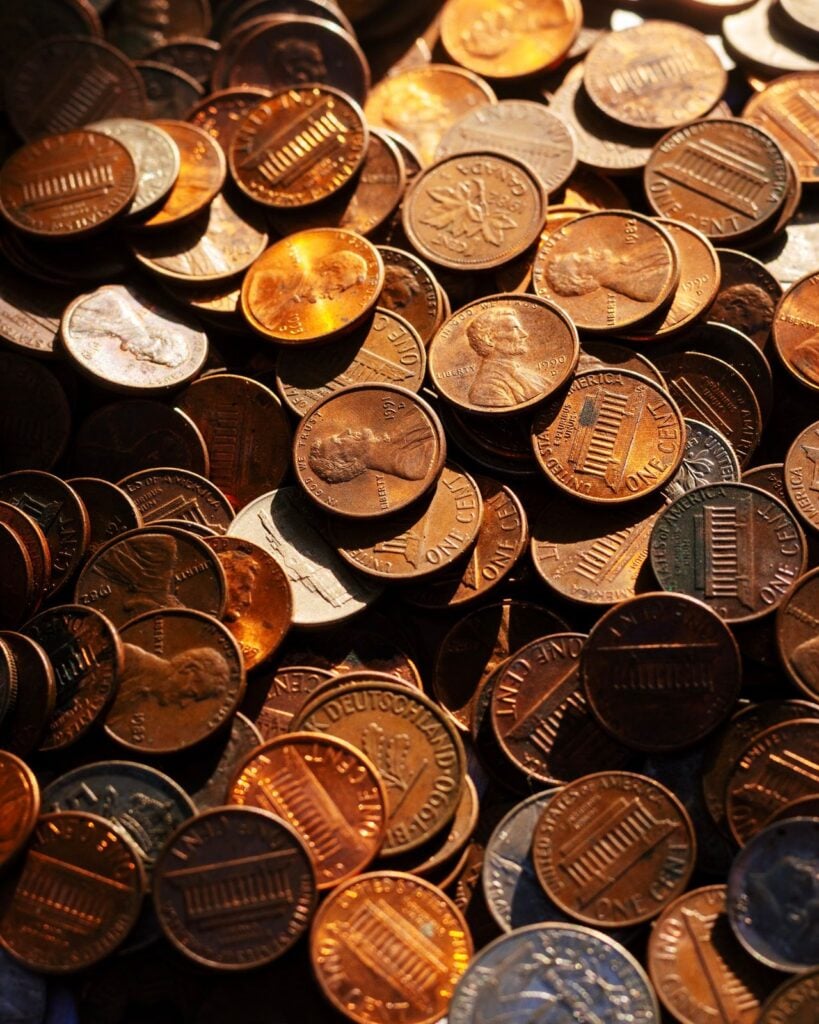
Most of us have a collection of pennies somewhere at home. They end up in coffee cans, change jars, kitchen drawers, and the bottom of purses, where they sit for years because spending them never seems worth the trouble.
Now that the U.S. Mint has stopped producing new pennies for general circulation, you might be wondering whether it’s time to empty that jar or hold onto it. The good news is that the pennies you already have are still legal tender, so there’s no need to rush to get rid of them.
Whether you have a handful of coins or a container you can barely lift, here are a few ways to use them.
Spend Them on Everyday Purchases
You don’t need to save your pennies just because new ones are no longer being produced. Existing pennies remain valid currency, and you can still use them when paying with cash at businesses that accept them.
If you have a small collection, try bringing a few along when you shop rather than letting them pile up at home. Some businesses may round cash totals to the nearest nickel as pennies become harder to obtain, so check how a store handles cash payments before counting out your change.
Take Them to Your Bank
If your change jar is overflowing, ask your bank or credit union whether it accepts penny deposits. Some branches take loose coins, while others require you to sort and roll them before bringing them in.
A standard penny roll holds 50 coins and is worth 50 cents. Rolling a large collection takes time, but it may be worth the effort if your bank accepts the rolls without charging a fee.
Related: 10 Bank Fees That Drain Your Wallet—and How to Avoid Them
Try a Coin-Counting Machine
Don’t want to spend an afternoon sorting pennies? A coin-counting machine may be a more convenient way to turn a large pile of change into usable money.
Check the machine’s fees and payout options before pouring in your coins. Depending on the location, you may be able to receive cash, a voucher, or another form of credit, and some options may cost less than others.
Look for Pennies That Collectors Might Want
Before you cash in every coin, take a closer look at the dates and designs. Most pennies are worth only one cent, but certain rare dates, minting errors, and varieties can be worth more to collectors.
Wheat pennies, which feature two wheat stalks on the reverse, are an easy type to recognize and set aside for a closer look. Their age alone doesn’t make them valuable, though, so check the specific date, mint mark, and condition before assuming you’ve found something special.
Related: 8 Misprinted Coins That Went From Mint Errors to Collector Gold
Set Aside Older Copper Pennies
Pennies dated before 1982 are worth a second look because most were made primarily from copper, unlike the copper-plated zinc pennies produced in later years. Some collectors and coin enthusiasts choose to keep these older coins separate from their everyday change.
That doesn’t mean every pre-1982 penny will bring a higher resale price, and you shouldn’t assume its metal content makes it worth melting down. If you have a large collection, a reputable coin dealer can help you understand whether any are worth keeping or selling.
Donate Your Spare Change
If you’d rather put your pennies toward something useful than count them yourself, consider donating them. A jar that has been collecting dust for years could become a contribution to a local charity, school fundraiser, or community organization.
Call ahead to find out whether the organization accepts loose coins or would prefer that you exchange them for cash first. That way, your donation helps without leaving volunteers with an unexpected sorting job.
Keep a Few as Mementos
You don’t have to choose between saving every penny and getting rid of them all. Keeping a few coins from meaningful years such as the year you were born or the year you bought your first home can be a simple way to mark the end of an era.
They may never be worth more than their face value, but they can still hold personal meaning. A small envelope or coin holder is all you need to preserve a few favorites without keeping an entire jar.
Use a Few for Crafts or Learning Activities
Pennies can also be useful for simple projects, from counting and sorting activities with children to adding a meaningful date to a scrapbook or memory box. If you enjoy crafts, you could use a few common coins in a decorative project rather than leaving them forgotten in a drawer.
Keep coins away from young children who might put them in their mouths, and check applicable rules before altering coins for a project. If you think a penny might be collectible, leave it in its original condition until you’ve had a chance to identify it.