You don’t necessarily have to reach for a pesticide every time something starts munching on your vegetable garden. Some of the plants you may already grow can help make your garden less inviting to pests or attract the beneficial insects that naturally keep them under control.
That’s one reason I love companion planting. You’re making the space you already have work a little harder by mixing vegetables with herbs and flowers that can benefit the garden in more than one way.
Marigolds
Marigolds are one of the most popular companion plants because their strong scent can help deter pests such as whiteflies, thrips, and squash bugs. Their flowers also bring beneficial insects into the vegetable garden, making them an easy plant to tuck around cucumbers and other crops.
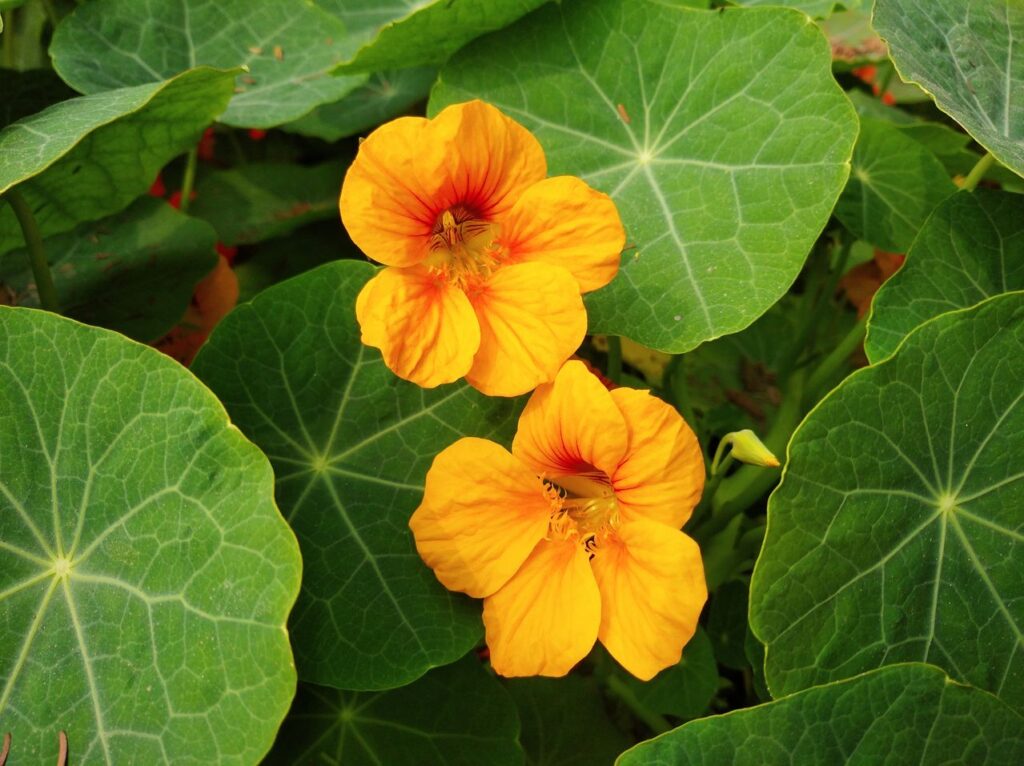
Nasturtiums
Nasturtiums can work as a trap crop by drawing aphids away from vegetables you’d rather protect. Plant them around cabbage and other susceptible crops so pests are more likely to gather on the nasturtiums instead.
Alyssum
Sweet alyssum’s tiny flowers attract hoverflies and parasitic wasps, both of which help control pests such as aphids and cabbage worms. Since it stays low to the ground, alyssum can also work as a living mulch that shades the soil and retains moisture.
Thyme
The strong fragrance of thyme can help discourage cabbage worms, cabbage loopers, and aphids from settling around nearby vegetables. It’s particularly useful around cabbage and other brassicas and doesn’t take up much room in the garden.
Chives
Chives are a useful companion for cucumbers because their strong aroma can help deter cucumber beetles. Planting a few clumps nearby also gives you an edible herb that comes back year after year in many gardens.
Onions
The strong smell of onion foliage can make the area around your vegetables less appealing to certain garden pests. Cucumbers can also provide some afternoon shade for onions during hotter weather, making the pairing beneficial in more than one way.
Dill
Dill’s flowers attract parasitoid wasps and other beneficial insects that prey on common vegetable garden pests. If pest control is your goal, allow at least a few plants to flower rather than harvesting all your dill early.
White Clover
White clover creates a low-growing ground cover while also helping add nitrogen to the soil. It can be particularly useful around heavy-feeding crops such as cabbage while providing habitat that encourages beneficial insects.
Borage
Borage attracts pollinators and beneficial insects that can help keep pest populations under control. As its leaves break down, they also return nutrients such as potassium and calcium to the soil.
Mint
Mint’s unmistakable scent can help discourage some insects from hanging around nearby vegetables. Because mint spreads aggressively, it’s usually better to grow it in pots placed around the garden rather than planting it directly in your vegetable beds.
Rosemary
Rosemary’s aromatic foliage can help deter pests while its flowers attract pollinators and other useful insects. Since rosemary prefers relatively dry, well-drained conditions, keeping it in a nearby pot can make it easier to pair with vegetables that need more water.
Sage
Sage is another strongly scented herb that can be useful around vegetables frequently bothered by cabbage pests. Plant it near cabbage and other brassicas, but give the herb enough room and drainage to grow without competing with your vegetables.
Oregano
Oregano’s fragrant leaves can help make the garden less attractive to certain pests, while its flowers attract beneficial insects once the plant blooms. It works especially well around the edges of vegetable beds where it won’t crowd smaller crops.
Calendula
Calendula brings pollinators and beneficial predatory insects into the garden, helping create a more balanced environment around your vegetables. Its bright flowers also make it an easy companion to scatter along garden borders rather than sacrificing valuable vegetable-growing space.
Other Topics You Might Like
- 13 Gardening Antiques Collectors Love and Often Pay Up For
- I Stopped Buying Fertilizers After Years of Gardening and Started Using This Instead
- Some of the Best Gardening Tips I Ever Got That Break All the Rules
- 9 Vintage Gardening Tools Hiding in Grandma’s Potting Shed— Some Could Be Worth a Small Fortune