Pulling weeds can feel like a job that never really ends. Clear out a garden bed one weekend, and before long, new weeds are popping up again. They compete with flowers and vegetables for sunlight, water, and nutrients, leaving you with another round of work.
One way to cut down on weeding is to fill bare areas with plants that spread and cover the soil. Groundcovers, low-growing perennials, and vigorous plants can shade the ground and leave less open space for weeds to grow. Many of them also provide food for bees, butterflies, and other pollinators.
If you want a garden that takes less time to weed while still giving pollinators plenty to visit, these 14 plants are worth a look. Keep local growing conditions in mind, since some spreading plants can become invasive in certain areas.
Bee Balm (Monarda didyma)
Bee balm is a favorite with bees, butterflies, and hummingbirds. Its colorful flowers appear through the summer, and the plant can form broad clumps once established. That thick growth helps cover bare soil and gives weeds fewer open spots to fill.
Related: 18 Strong Plants That Can Handle Common Garden Problems
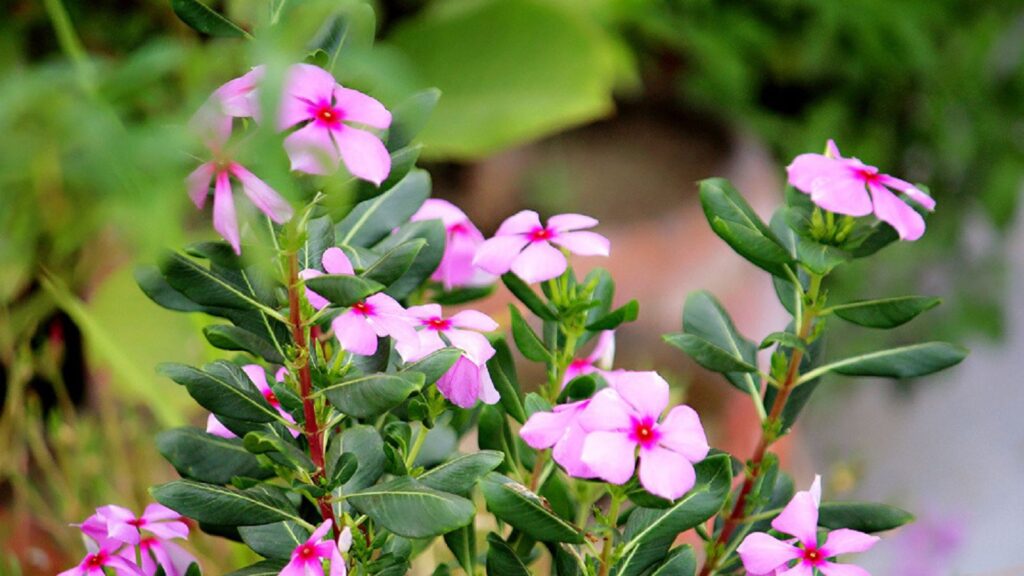
Periwinkle (Vinca minor)
Periwinkle is an evergreen groundcover that does well in shady spots. Its glossy leaves form a dense carpet, while its blue-purple flowers provide an early-season food source for pollinators.
Because periwinkle can spread aggressively in some regions, check with your local extension service before planting it.
Hosta (Hosta spp.)
Hostas are best known for their large, attractive leaves, but their summer flowers also bring bees to the garden. As the plants mature, their leaves form thick clumps that shade the soil below. That makes it harder for many weeds to get enough light to grow.
Related: 13 Popular Gardening Tips That Could Actually Hurt Your Plants
Lenten Rose (Helleborus orientalis)
Lenten rose is one of those plants that can bloom early in the year, sometimes before many other garden flowers have opened. Its evergreen foliage stays close to the ground and provides good coverage in shady beds.
The early flowers can also give bees a food source at a time when fewer plants are blooming.
Sweet Woodruff (Galium odoratum)
Sweet woodruff makes a soft carpet of green leaves and small white flowers. It prefers shade and can spread across open areas of a garden bed, helping cover exposed soil where weeds might otherwise appear.
It also blooms in spring, giving early-season bees another source of nectar.
Yarrow (Achillea millefolium)
Yarrow is a hardy perennial that handles sunny locations and less-than-perfect soil. Its fern-like foliage forms a low, spreading clump, while its flat clusters of flowers attract bees, butterflies, and other helpful insects.
Once established, yarrow can fill in around other plants and reduce the amount of bare soil available to weeds.
Related: 12 Invasive Plants That Can Quickly Take Over Your Garden
Trailing Lantana (Lantana montevidensis)
Trailing lantana has a sprawling growth habit that makes it useful for covering larger areas. Its colorful flowers can continue for much of the growing season, attracting bees and butterflies along the way.
Give it enough room to spread, and it can fill spaces where weeds might otherwise take hold. Check local recommendations before planting, since lantana species can be invasive in some climates.
Creeping Phlox (Phlox subulata)
Creeping phlox puts on a spectacular display in spring, covering itself in small, colorful flowers. After blooming, its low-growing foliage continues to form a dense mat close to the ground.
That coverage can help limit open areas where weed seeds might otherwise germinate. Bees and other early pollinators also visit the flowers for nectar.
Azaleas (Rhododendron spp.)
A single azalea can add plenty of color, but planting several together can also create a dense layer of foliage that shades the soil beneath them. Less exposed soil can mean fewer places for weeds to grow.
Azaleas bloom in spring, and their flowers can provide food for bees during the early part of the growing season.
Clematis (Clematis spp.)
Clematis is usually associated with trellises, fences, and other vertical supports, but some varieties can spread across the ground. Their vigorous growth can cover open soil, while their flowers attract bees and other pollinators.
Choose a variety that suits your garden and give it enough space to grow without smothering nearby plants.
Bugleweed (Ajuga reptans)
Bugleweed forms a low, dense mat of foliage and sends up spikes of blue-purple flowers in spring. Its quick-spreading growth can cover bare areas and make it harder for weeds to break through.
Since ajuga can spread beyond its original planting area, check whether it is considered invasive where you live before adding it to your garden.
Hardy Plumbago (Ceratostigma plumbaginoides)
Hardy plumbago spreads through garden beds and creates a low layer of foliage that can cover exposed soil. Its bright blue flowers appear later in the growing season, giving bees another source of nectar after some spring and summer plants have finished flowering.
It can work well around the edges of beds or in areas where you want low-growing color.
Creeping Thyme (Thymus serpyllum)
Creeping thyme makes a fragrant groundcover for sunny spots. It works especially well between stepping stones, along paths, or around the edges of garden beds.
Tiny flowers appear during the growing season and can attract plenty of bees. Its low, spreading growth also leaves less bare soil for weeds to occupy.
Lavender (Lavandula angustifolia)
Lavender brings fragrant foliage and purple flowers to sunny garden beds. Bees are frequent visitors when the plant is in bloom, making it a useful addition to a pollinator-friendly garden.
Its compact growth can also help cover the soil around the plant, leaving fewer open patches for weeds. Lavender prefers good drainage and can struggle in soil that stays wet for long periods.
Other Topics You Might Like
- 13 Gardening Antiques Collectors Love and Often Pay Up For
- I Stopped Buying Fertilizers After Years of Gardening and Started Using This Instead
- Some of the Best Gardening Tips I Ever Got That Break All the Rules
- 9 Vintage Gardening Tools Hiding in Grandma’s Potting Shed— Some Could Be Worth a Small Fortune