Pulling weeds is one of those gardening chores that never seems to end. Just when you think you’ve cleared a bed, a fresh crop of unwanted plants appears, competing with your flowers and vegetables for water, sunlight, and nutrients.
One of the easiest ways to reduce weeding is to let plants do some of the work for you. Dense groundcovers, spreading perennials, and vigorous bloomers can fill empty spaces, shade the soil, and leave very little room for weeds to take hold. Even better, many of these plants are favorites of bees, butterflies, and other beneficial pollinators.
If you’d like a garden that’s both lower-maintenance and more pollinator-friendly, these plants deserve a spot in your landscape.
Bee Balm (Monarda didyma)

Few plants attract pollinators quite like bee balm. Its vibrant blooms draw bees, butterflies, and hummingbirds by the dozens, while its vigorous growth helps fill empty spaces and crowd out competing weeds.
Periwinkle (Vinca minor)

Periwinkle is a fast-spreading evergreen groundcover that thrives in shady areas where many other plants struggle. Its dense mat of glossy foliage helps smother weeds while its cheerful blue-purple flowers provide an early nectar source for pollinators.
Hosta (Hosta spp.)
Hostas are often grown for their beautiful foliage, but their tall summer flower spikes are surprisingly attractive to bees. As mature plants expand, they create thick clumps that shade the soil and make it difficult for weeds to gain a foothold.
Lenten Rose (Helleborus orientalis)
Lenten rose is one of the earliest bloomers in the garden, often flowering when little else is available for pollinators. Its large evergreen leaves create excellent ground coverage that naturally suppresses weed growth in shady locations.
Sweet Woodruff (Galium odoratum)
Sweet woodruff forms a lush carpet of bright green foliage topped with delicate white flowers in spring. It spreads steadily through shady beds, helping block weeds while providing nectar for early-season bees.
Yarrow (Achillea millefolium)
Yarrow is a tough perennial that thrives in sunny locations and poor soil. Once established, its spreading habit and dense foliage help shade out weeds while its flat flower clusters provide an important food source for pollinators.
Trailing Lantana (Lantana montevidensis)
Trailing lantana quickly covers large areas with colorful blooms that can last for months. The sprawling growth habit leaves little room for weeds, while the flowers are constantly buzzing with bees and butterflies.
Creeping Phlox (Phlox subulata)
In spring, creeping phlox transforms into a blanket of colorful blooms that almost completely hides its foliage. The dense mat it forms throughout the year helps prevent weed seeds from germinating while providing valuable nectar for pollinators.
Azaleas (Rhododendron spp.)

When planted in groups, azaleas create dense canopies that shade the ground and limit weed growth underneath. Their spectacular spring flowers are also highly attractive to bees searching for early-season nectar.
Clematis (Clematis spp.)
Clematis is best known for climbing trellises and fences, but some varieties also sprawl across garden beds. Its vigorous growth can help cover bare soil while its large blooms attract bees throughout the growing season.
Bugleweed (Ajuga reptans)
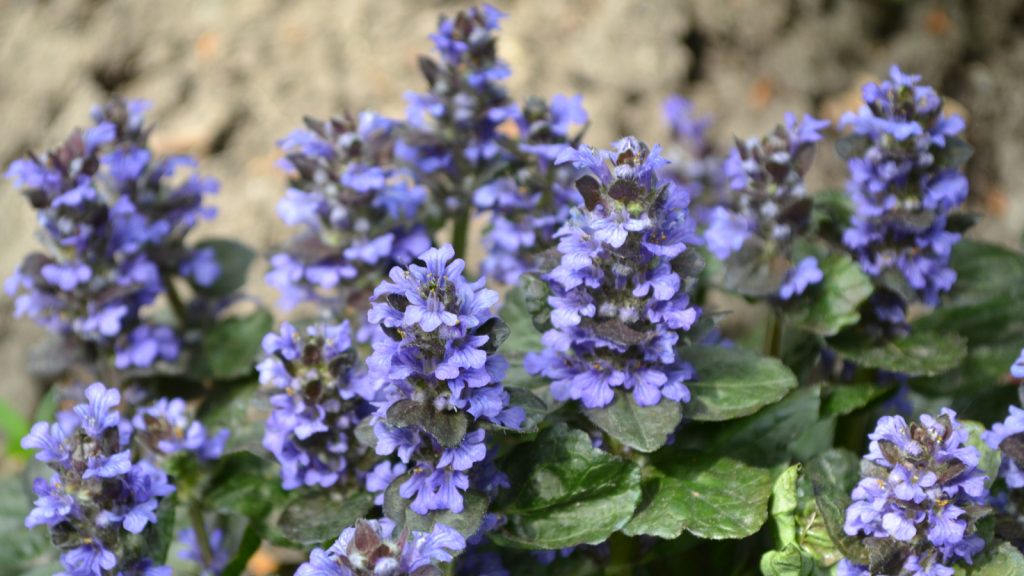
Bugleweed spreads rapidly to form dense mats of colorful foliage that make it difficult for weeds to emerge. In spring, spikes of blue-purple flowers provide a valuable nectar source for pollinators.
Hardy Plumbago (Ceratostigma plumbaginoides)
Hardy plumbago spreads steadily through garden beds, creating dense coverage that discourages weeds. Its vivid blue flowers provide a late-season nectar source when many other plants have stopped blooming.
Creeping Thyme (Thymus serpyllum)
Creeping thyme forms a fragrant living carpet that works beautifully between stepping stones or along pathways. Its tiny flowers are a magnet for bees, while the dense growth helps keep weeds from taking over.
Lavender (Lavandula angustifolia)
Lavender is one of the most reliable pollinator plants you can grow. Its woody growth habit and dense foliage help limit weeds, while its fragrant purple flowers attract bees throughout the summer.
Other Topics You Might Like
- 13 Gardening Antiques Collectors Love and Often Pay Up For
- I Stopped Buying Fertilizers After Years of Gardening and Started Using This Instead
- Some of the Best Gardening Tips I Ever Got That Break All the Rules
- 9 Vintage Gardening Tools Hiding in Grandma’s Potting Shed— Some Could Be Worth a Small Fortune