A colorful flower garden doesn’t have to mean spending every weekend watering, weeding, and checking on plants. Some flowers are surprisingly forgiving and can give you months of blooms with very little work once they’re established.
Many of these plants also bring bees, butterflies, hummingbirds, and other pollinators into the yard. Some return from their roots each year, while others reseed themselves and pop up again on their own. If you want a garden that looks full and colorful without demanding constant attention, these flowers are worth a spot.
Coneflower (Echinacea purpurea)
Coneflowers are a favorite among gardeners who want something that can handle a little neglect. Their daisy-like flowers come in purple, pink, orange, yellow, and white, and they attract plenty of bees and butterflies throughout the summer.
Once established, coneflowers can handle heat and dry spells quite well. They may also drop seeds that sprout in later seasons, giving you more plants without having to start from scratch.
Related: Perennial Flowers That Pop Up Every Blooming Season
Black-Eyed Susan (Rudbeckia hirta)
Black-Eyed Susans bring a sunny burst of yellow to the garden, with dark centers that make the flowers easy to recognize. They can bloom from summer into fall, giving bees and butterflies plenty of time to visit.
These plants handle heat, less-than-perfect soil, and periods without rain. Once they’re happy in a spot, they can reseed and create larger patches over time.
Foxglove (Digitalis purpurea)
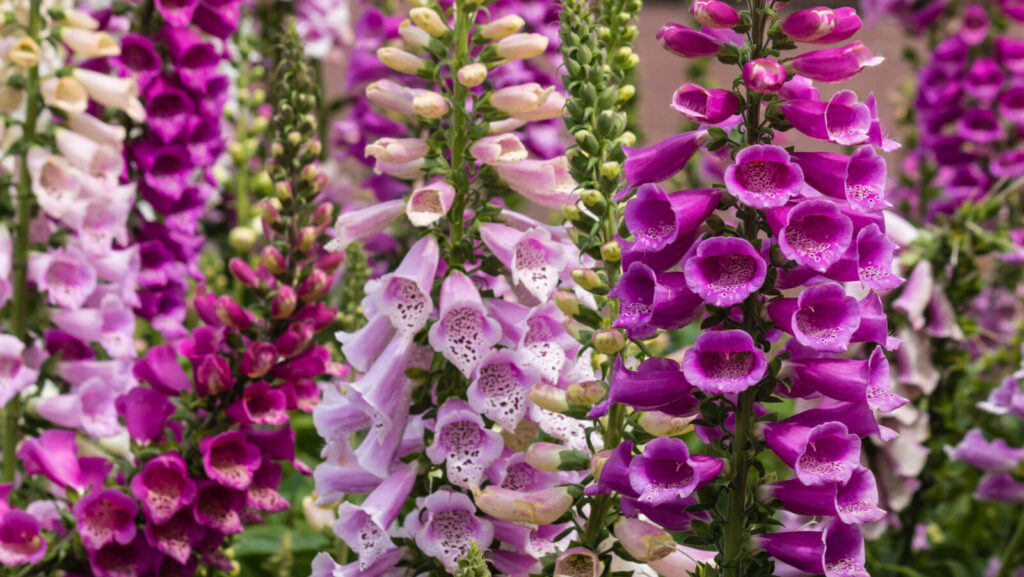
Foxglove stands out with tall flower spikes covered in bell-shaped blooms. Bees are drawn to the tubular flowers, making foxglove a useful addition to a pollinator-friendly garden.
Foxglove is often grown as a biennial, meaning its life cycle usually spans two years. It can reseed itself freely, though, so new plants may appear in the garden from year to year. Keep in mind that foxglove is toxic if eaten, so it should be planted with care around children and pets.
Snapdragons (Antirrhinum majus)
Snapdragons bring tall spikes of flowers in shades of pink, yellow, red, orange, and white. Their blooms can last for months, and they often keep going as temperatures start to cool.
In suitable climates, snapdragons can drop seeds that sprout in later seasons. A little watering during dry periods and occasional removal of spent flowers can keep them looking good for much of the growing season.
Shasta Daisy (Leucanthemum × superbum)
Shasta Daisies have the classic white petals and yellow centers many people associate with a traditional flower garden. They work well in beds, borders, and cutting gardens.
These perennials return each year and can form larger clumps as they mature. Butterflies often stop by the blooms during the warmer months, adding even more activity to the garden.
Related: Plant These 23 Colorful Perennials Once and Enjoy Years of Gorgeous Blooms
Bee Balm (Monarda didyma)
If you want a flower that brings plenty of visitors, Bee Balm is a great pick. Bees, butterflies, and hummingbirds are all attracted to its red, pink, purple, or white flowers.
Bee Balm likes sunny spots and reasonably moist soil. Once established, it can spread into a generous patch, so give it enough room to grow. A little trimming after flowering can help keep the plant looking tidy.
Aster (Symphyotrichum spp.)
Asters bring color to the garden later in the year, right when many summer flowers are starting to fade. Their daisy-like blooms provide nectar for bees and butterflies during the late growing season.
They are fairly easy-going plants and can grow in a range of garden conditions. Asters are especially useful in pollinator gardens because their fall flowers help provide food when fewer plants are blooming.
Yarrow (Achillea millefolium)
Yarrow is a tough perennial that doesn’t need rich soil or frequent watering. Its flat clusters of tiny flowers can be yellow, white, pink, red, or peach, depending on the variety.
It does best in a sunny spot with well-drained soil and can handle dry conditions once established. Bees and other beneficial insects are frequent visitors to its flowers.
Poppies (Papaver spp.)
Poppies have delicate-looking petals, but many varieties are surprisingly easy to grow. Their flowers come in bold shades of red, orange, pink, white, and purple and add plenty of color to sunny garden beds.
Many poppies readily reseed, which means new plants can appear the following year without having to buy more seeds. They prefer plenty of sun and soil that drains well.
Blanket Flower (Gaillardia)
Blanket Flowers bring warm shades of red, orange, and yellow to the garden and can keep flowering through much of the summer. They’re especially handy for hot, dry areas where other flowers may struggle.
These plants can handle poor soil and periods of drought once established. Give them plenty of sun, and they’ll often keep producing flowers with little day-to-day care.
Sweet Alyssum (Lobularia maritima)
Sweet Alyssum stays low to the ground and produces clusters of tiny, fragrant flowers. It’s a nice choice for edging garden beds, filling containers, lining pathways, or adding color around rocks.
Bees and other small pollinators are attracted to its flowers. In mild weather, Sweet Alyssum can bloom for a long stretch and may reseed itself in the garden.
Candytuft (Iberis sempervirens)
Candytuft produces masses of small white flowers in spring, creating a bright display above its dark green foliage. The leaves stay green after the flowers fade, giving the plant some interest beyond its bloom period.
Once established, Candytuft can handle dry conditions fairly well. Trimming the plant after flowering helps keep it compact and encourages fresh growth.
Coreopsis (Coreopsis spp.)
Coreopsis, often called tickseed, can produce flowers from early summer well into fall. Yellow is the familiar color, but you can also find varieties with orange, pink, red, and two-tone flowers.
These plants tolerate heat, dry conditions, and poor soil better than many garden flowers. Removing old blooms can encourage more flowers, though Coreopsis can still perform well if you leave it alone.
Columbine (Aquilegia spp.)
Columbine has distinctive flowers with delicate petals and long spurs that make it stand out from more familiar garden blooms. Hummingbirds are often attracted to the flowers, making Columbine a nice choice for wildlife-friendly gardens.
It can grow in sun or partial shade, depending on the climate and variety. Columbine also drops seeds readily, so established plants may give you new seedlings in nearby areas each year.
Related: 18 Strong Plants That Can Handle Common Garden Problems
Milkweed (Asclepias spp.)
Milkweed has a special place in butterfly gardens because monarch caterpillars depend on milkweed as their host plant. Adult monarchs and other pollinators also visit the flowers for nectar.
Once established, many milkweed varieties can handle heat and dry conditions. The plants produce clusters of flowers in shades such as pink, orange, white, or purple, depending on the species. Choose a milkweed native to your area when possible, since local species are often a better fit for regional pollinators.
Other Topics You Might Like
- 13 Gardening Antiques Collectors Love and Often Pay Up For
- I Stopped Buying Fertilizers After Years of Gardening and Started Using This Instead
- Some of the Best Gardening Tips I Ever Got That Break All the Rules
- 9 Vintage Gardening Tools Hiding in Grandma’s Potting Shed— Some Could Be Worth a Small Fortune