There’s a point every year when fruit flies seem to come out of nowhere. One minute the kitchen is perfectly fine, and the next, tiny flies are hovering around the fruit bowl, sink, trash can, and your morning coffee.
They may be small, but a few fruit flies can turn into dozens surprisingly fast. And while they usually aren’t dangerous, having them constantly buzzing around your kitchen is enough to become a serious annoyance.
The good news is that you usually don’t need to call an exterminator. The trick is finding out where they’re coming from and dealing with the problem from several directions at once.
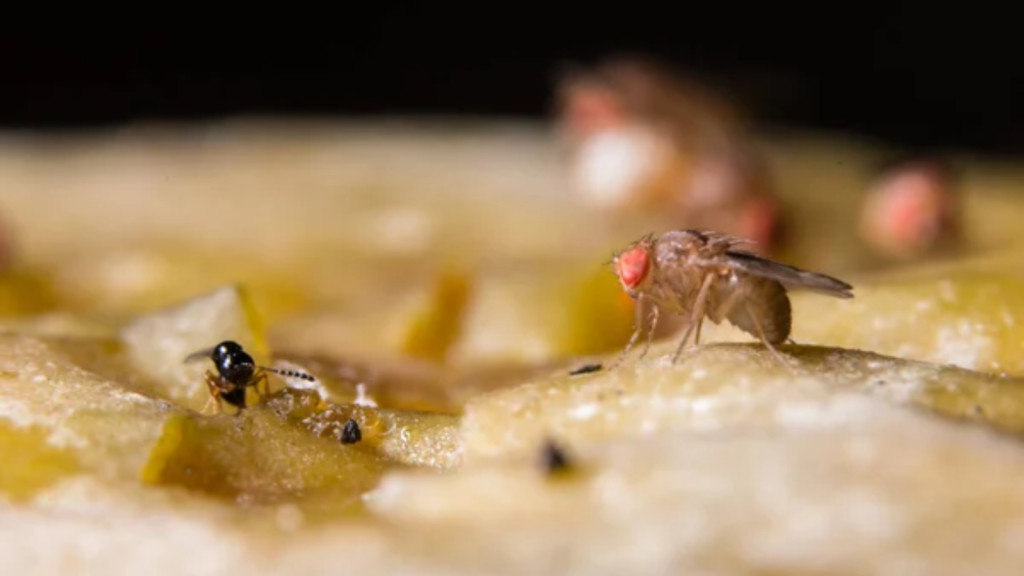
Find the Source Before You Do Anything Else
Killing the adult flies is only part of the job. If there’s still a place where they can feed and reproduce, more will keep showing up.
Fruit flies are often linked to overripe produce, but that isn’t always where the problem starts. A forgotten potato in the pantry, a sticky spill beneath an appliance, an old piece of produce in a cabinet, or food residue inside a container can be enough to keep them around.
Check your fruit bowl, pantry, trash can, recycling bin, cabinets, and the spaces behind and underneath appliances. Look for anything damp, sticky, or starting to decay.
Once you find the source, throw it away and clean the area well. Pay attention to small spills and food residue that may have been missed during regular cleaning.
Related: 5 Ways to Get Rid of Gnats and Fruit Flies Around the House
Don’t Forget the Drains
Sometimes the flies aren’t coming from your food at all. They may be coming from the drains.
Organic material can build up inside pipes over time, giving flies a place to feed and reproduce. That can explain why you still see them after cleaning your counters and throwing out old produce.
Pouring boiling water down the drains can help loosen some of the buildup. Repeat this for several days and make sure you treat more than just the kitchen sink.
Check bathroom sinks, tubs, floor drains, and sink overflow openings, too. If the infestation is persistent, an enzyme-based drain cleaner made for organic buildup may help break down material inside the pipes.
Avoid mixing cleaning products, especially bleach with vinegar or other cleaners. Combining household chemicals can create dangerous fumes.
Covering drains overnight with silicone drain covers can also keep flies from coming back up while you work on the problem.
Related: Tired of Swatting Flies? 16 Things You Can Do to Keep Them Away All Summer
Set More Than One Trap
A homemade vinegar trap is a classic for a reason. Pour some apple cider vinegar into a small container and add a few drops of dish soap. The vinegar attracts the flies, while the soap makes it harder for them to escape.
Put several traps near the places where you see the most activity instead of relying on one trap in the middle of the kitchen.
Store-bought fruit fly traps are another option if you’d rather skip the DIY setup. Many come with an attractant and can sit on a counter without making much of a mess.
Wine, beer, and other sweet liquids can also attract fruit flies. A container with a few small openings can give the flies a way in while making it harder for them to get back out.
For flies that keep hanging around after the main infestation has been dealt with, indoor insect traps with UV lights and sticky pads can help catch some of the remaining adults.
Check Your Houseplants
Not every tiny flying insect in your kitchen is a fruit fly.
If you have several houseplants, you could be dealing with fungus gnats. These insects are commonly found around moist potting soil and may fly up whenever you water or disturb the plant.
If that sounds familiar, cleaning the kitchen won’t solve the problem. Start by allowing the soil to dry more between waterings, provided the plant can safely handle it.
Yellow sticky traps placed near the soil can catch adult gnats. For a larger infestation, some gardeners use products such as mosquito bits to target larvae living in the soil.
Removing dead leaves and avoiding constantly wet soil can also make your plants less inviting to fungus gnats.
Clean the Places You Usually Miss
A quick wipe of the kitchen counter may make everything look clean, but fruit flies are looking for tiny sources of food and moisture.
Check around the garbage disposal, sink drain, refrigerator, dishwasher, trash can, recycling bin, and the edges of countertops. Look underneath small appliances and behind anything that rarely gets moved.
Wash reusable food containers soon after using them, and rinse cans and bottles before putting them in the recycling bin.
During peak fruit fly season, keeping ripe fruit in the refrigerator can also help. Give produce a quick check when you bring it home and throw away anything that is already spoiled.
Take kitchen trash outside rather than leaving a full bag sitting near the door or on a balcony. A trash can with a tight-fitting lid can also help keep food smells contained.
Cut Down the Adult Flies
While you’re dealing with the source, there’s no reason to let the adult flies keep multiplying.
A handheld vacuum can quickly remove flies from walls, windows, counters, and other surfaces. Just empty the vacuum afterward so the insects don’t remain inside.
An electric fly swatter can also take care of individual flies that are difficult to catch.
A small fan can help, too. Fruit flies are weak fliers, so moving air can make it harder for them to hover around food, sinks, or other areas where they normally gather.
Removing as many adults as possible gives you fewer flies capable of laying more eggs.
Look for Ways They’re Getting Inside
If you’ve cleaned your kitchen, treated the drains, and still keep seeing new flies, check around doors, windows, vents, and other openings.
Small gaps can give insects an easy way into the house. Fine mesh screens on vents and windows can help block them, while a door sweep can close the gap beneath an exterior door.
Outdoor trash, compost containers, or rotting fruit from nearby trees can also attract flies close to the house. If the problem keeps returning, check the area around your home for possible sources.
Give the Problem a Few Days
Fruit flies won’t disappear instantly after you throw away one piece of spoiled fruit. Eggs or larvae may already be present, so it can take several days of cleaning and trapping before the numbers drop.
Keep the traps out, clean the drains, remove food sources, and stay on top of the trash. If houseplants are involved, keep treating the soil until the adult gnats are gone.
The goal is to break the cycle rather than simply kill the flies you can see.
Once the breeding source is gone and the remaining adults are caught, the infestation should gradually fade. Keeping ripe produce refrigerated, cleaning drains, and taking out food waste regularly can also make your kitchen much less appealing to them.