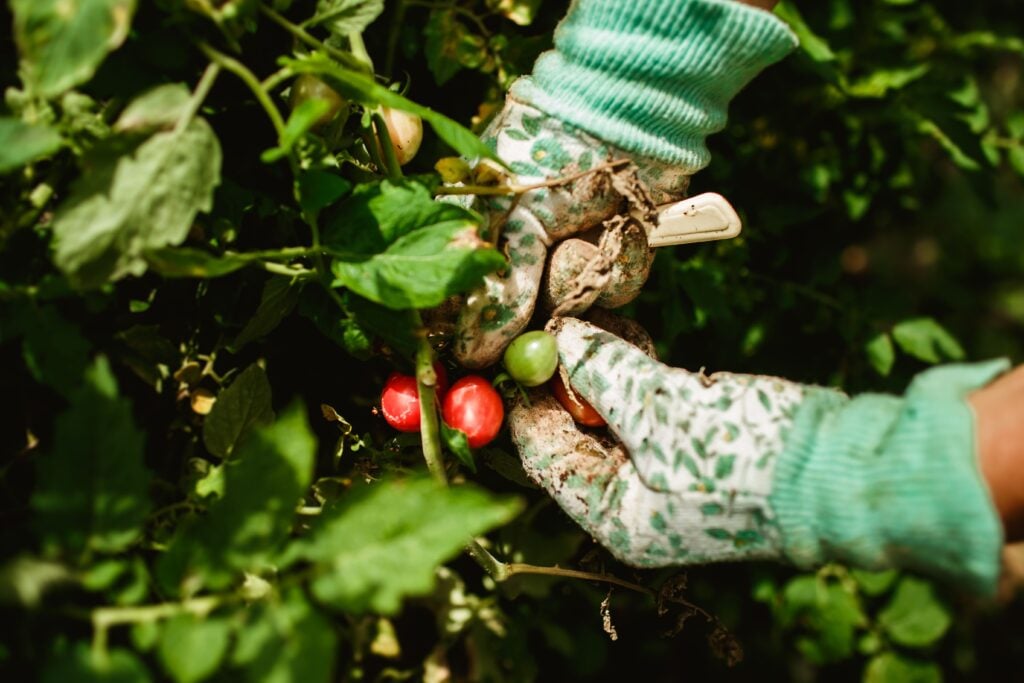
There’s a special kind of frustration that comes with waiting weeks for tomatoes to ripen, only to discover that a squirrel got to them first. Sometimes it won’t even eat the whole thing. It takes a few bites, leaves the tomato hanging there, and moves on to the next one.
You probably won’t be able to keep every squirrel out of your yard, but you can make your tomato plants harder and less appealing to raid. A few simple changes around the garden may be enough to cut down on the damage.
Plant Squirrel-Repelling Companions
Certain plants have strong scents that squirrels may find unpleasant. Marigolds, garlic, mint, nasturtiums, and geraniums are all options worth trying around your tomato plants.
They also add color and variety to the garden, so you aren’t giving up much space just to test whether the squirrels stay away.
Related: 10 Ways to Reuse Plastic Grocery Bags Around the House
Remove Easy Food Sources
If your yard is already full of easy snacks, squirrels have plenty of reasons to stick around. Fallen fruit, spilled birdseed, nuts, and other food can keep them coming back.
Pick up fallen tomatoes and clean up other food sources around the yard. You may find that removing these easy meals makes your garden less interesting to them.
Create a Coffee Ground Barrier
Used coffee grounds are sometimes used as a mild scent deterrent around garden plants. Sprinkle a thin layer around the base of your tomato plants and replace it after heavy rain.
It won’t work for every squirrel, but it’s inexpensive and easy to try if you already have coffee grounds at home.
Related: How to Use Coffee Grounds on Houseplants
Let Your Pets Help Patrol
A dog spending time in the backyard can make squirrels think twice before hanging around. The same goes for the presence and scent of other household pets.
You don’t need your pet to chase squirrels around the garden. Simply having a dog nearby or regular activity in the yard may make the area feel less safe to them.
Offer an Alternative Food Source
Some gardeners try giving squirrels something else to eat away from the vegetable garden. A feeding station placed well away from your tomato plants may draw their attention to another part of the yard.
This isn’t guaranteed to work, and it can attract even more wildlife if you’re not careful. If you try it, keep the feeding area far from the garden and watch to see whether it actually reduces damage.
Install Motion-Activated Lights
Squirrels are active during the day, so lights aren’t going to solve every tomato problem. Still, motion-activated lights can be useful around areas where squirrels may be visiting at dawn, dusk, or after dark.
The sudden light can startle them and may make the area less comfortable.
Related: Does Turning Off the Lights Really Lower Your Electric Bill?
Use Motion-Activated Sprinklers
A sudden spray of water can send a squirrel running. Motion-activated sprinklers detect movement and give an unexpected burst of water when an animal gets too close.
They’re harmless when used properly and can make squirrels think twice about returning after a few surprises.
Add a Water Source
During hot, dry weather, animals may look for easy sources of water. Some gardeners find that a shallow dish of clean water placed away from the vegetable garden gives squirrels another place to get a drink.
Change the water regularly and keep the dish away from your tomato plants. This won’t stop every squirrel from sampling your tomatoes, but it may reduce the temptation if thirst is part of the problem.
Try an Owl Decoy
An owl is a natural predator of squirrels, so an owl decoy may make them more cautious about spending time in your garden.
The trick is to move the decoy every so often. If it stays in exactly the same spot for weeks, squirrels may figure out that it’s just a plastic bird and ignore it.
Use Predator Scents
Some commercial garden products use scents associated with predators such as foxes or coyotes to discourage animals from entering an area.
These products usually need to be reapplied, especially after rain. Follow the product directions and keep any treatment away from edible parts of the plant unless the label says it’s safe to use there.
Protect Plants With Cages
A physical barrier is one of the more dependable ways to keep squirrels away from ripe tomatoes. You can cover tomato cages with bird netting or another suitable garden barrier, leaving enough room for the plants to grow.
Make sure the openings are small enough to keep squirrels out and check the barrier regularly for gaps. You still want plenty of sunlight and airflow around the plants.
Spray With Hot Pepper Solutions
Capsaicin, the compound responsible for the heat in hot peppers, can discourage some animals from chewing on treated surfaces. Hot pepper sprays are available commercially, or you can use a garden product labeled for this purpose.
Don’t spray anything directly on edible tomatoes unless the product label says it’s safe for use on food crops. Reapply according to the directions, especially after rain.
Use Apple Cider Vinegar as a Scent Deterrent
The strong smell of apple cider vinegar may discourage some squirrels from hanging around a particular spot. One method gardeners use is soaking cotton balls in vinegar and placing them around the garden.
Keep the cotton balls away from the plants themselves and replace them once the smell fades. Rain can wash the scent away quickly, so this method usually takes regular upkeep.
Related: 16 Old-Fashioned Apple Cider Vinegar Uses That Still Work Today
Harvest Tomatoes a Little Early
You don’t have to wait until every tomato is completely red before picking it. Tomatoes can finish ripening indoors once they’ve started to develop their mature color.
If squirrels are constantly getting to your nearly ripe tomatoes, picking them a little early may give you a chance to enjoy the harvest yourself. Learn how to ripen green tomatoes indoors and move them somewhere safe at room temperature.
Plant More Than You Think You’ll Need
Sometimes squirrels are going to get a few tomatoes no matter what you do. That’s part of gardening.
Planting a few extra tomato plants can give you some breathing room. You may lose a handful to wildlife and still end up with more than enough tomatoes for salads, sandwiches, sauces, and everything else you planned to make.
Other Topics You Might Like
- 13 Gardening Antiques Collectors Love and Often Pay Up For
- I Stopped Buying Fertilizers After Years of Gardening and Started Using This Instead
- Some of the Best Gardening Tips I Ever Got That Break All the Rules
- 9 Vintage Gardening Tools Hiding in Grandma’s Potting Shed— Some Could Be Worth a Small Fortune