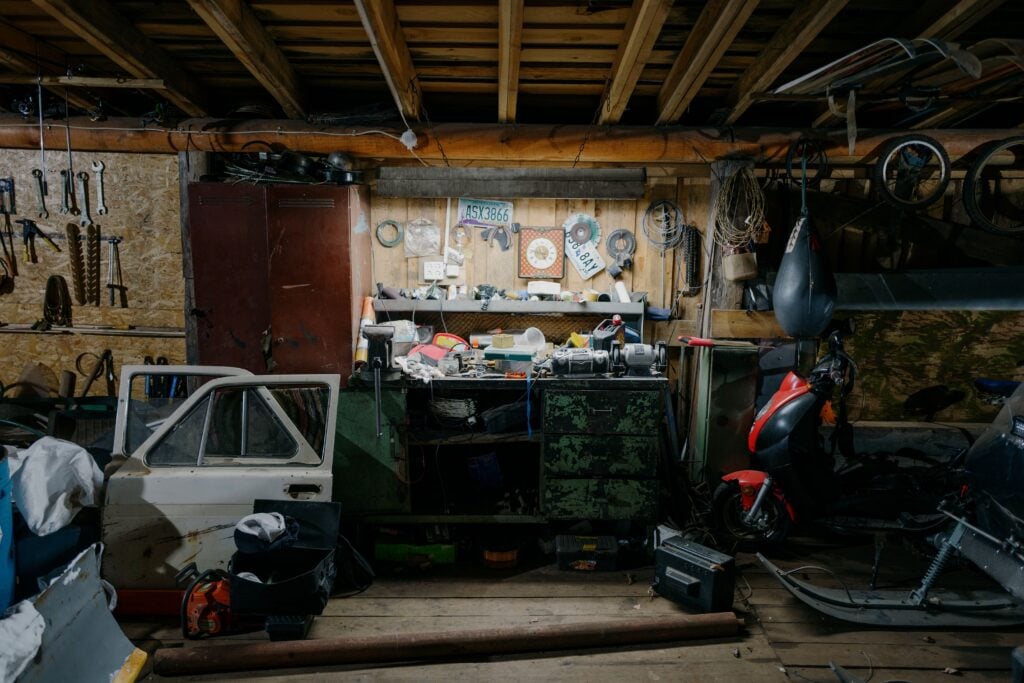
The garage often becomes the place where everything goes when there’s no room left inside the house. It’s convenient for extra storage, but big temperature swings, moisture, dust, and pests can damage many of the belongings people leave there.
Some items can fade, warp, spoil, or become safety hazards after sitting in a garage for months. Before putting away another box, check whether any of these 14 things would be better off stored somewhere else.
1. Important Documents
Birth certificates, passports, insurance policies, tax records, and other paperwork can be damaged by moisture, mold, insects, or rodents. Keep these records inside your home in a waterproof, fire-resistant safe or a dry filing cabinet rather than a cardboard box in the garage.
Related: 14 Unexpected Items in the Garage That Deserve the Boot
2. Family Photos and Keepsakes
Old photographs, handwritten letters, children’s artwork, and scrapbooks can fade, stick together, or develop mold when exposed to heat and humidity. Store these memories indoors in archival-quality boxes or photo albums, away from direct sunlight and damp areas.
Related: 8 Childhood Keepsakes You’ll Regret Throwing Away Years Later
3. Books
Books can absorb moisture from the air, leaving pages warped, covers damaged, or a musty smell that is hard to remove. Keep your favorite titles in a cool, dry room, and store them upright or flat in a way that prevents bending and crushing.
Related: Say What? People are Freezing their thrifted books
4. Electronics
Old computers, gaming consoles, cameras, televisions, and other electronics can suffer from humidity, extreme heat, condensation, and dust buildup. Store working devices and electronics you’re saving for later in a dry indoor space, and recycle unwanted equipment through a suitable electronics recycling program.
5. Paint
Paint can separate, thicken, freeze, or become unusable after exposure to extreme temperatures. Keep leftover paint in its original, tightly sealed container in a temperature-controlled area that follows the manufacturer’s storage instructions, and label each can with the color and room where it was used.
6. Wine
High temperatures and repeated temperature changes can damage wine’s flavor and quality, particularly over long periods. Store bottles in a cool, dark place with a relatively steady temperature rather than leaving them in a garage that heats up during the day.
7. Pet Food
Open bags of dog or cat food can attract insects and rodents, while heat and humidity can speed up spoilage. Keep the food in its original packaging inside a clean, airtight container in a cool, dry indoor location, and follow the label’s storage instructions.
8. Pantry Food
Flour, cereal, snacks, canned goods, birdseed, and bulk ingredients can be affected by heat, moisture, and pests in a garage. Keep food in a suitable pantry or other temperature-controlled area, since prolonged heat can shorten shelf life and high temperatures can affect the quality of canned goods.
9. Clothing and Bedding
Extra blankets, seasonal clothes, sleeping bags, and linens can develop musty odors or attract pests when left in damp conditions. Wash and dry items before storing them indoors in clean containers or breathable garment bags, and make sure everything is completely dry before packing it away.
10. Camping Gear
Tents, backpacks, sleeping bags, and air mattresses can deteriorate if they’re put away wet or left in a hot, humid garage for months. Clean and dry equipment after each trip, then store it in a cool, dry area according to the manufacturer’s instructions.
11. Firewood
Firewood stacked inside a garage can bring insects, spiders, and other pests closer to the house. Store it outdoors on a raised rack, away from the home and other structures, with enough airflow to keep the wood dry.
12. Oily Rags
Rags soaked with linseed oil, wood stain, or certain finishing products can heat up and catch fire on their own if piled together. Follow the product label and local disposal guidance, and use an approved metal safety container with a tight-fitting lid for temporary storage when specified.
13. Propane Tanks
Portable propane cylinders should not be stored inside an attached garage because a leak can allow flammable gas to collect in an enclosed space. Keep cylinders outdoors in an approved location, upright and away from ignition sources, while following the manufacturer’s instructions and local fire safety rules.
14. Gasoline and Other Flammable Liquids
Gasoline, lighter fluid, paint thinner, and similar products can release flammable vapors and ignite near heat, sparks, or flames. Keep them in approved, clearly labeled containers and follow the product instructions and local fire codes for storage, including limits on where and how much fuel may be kept.