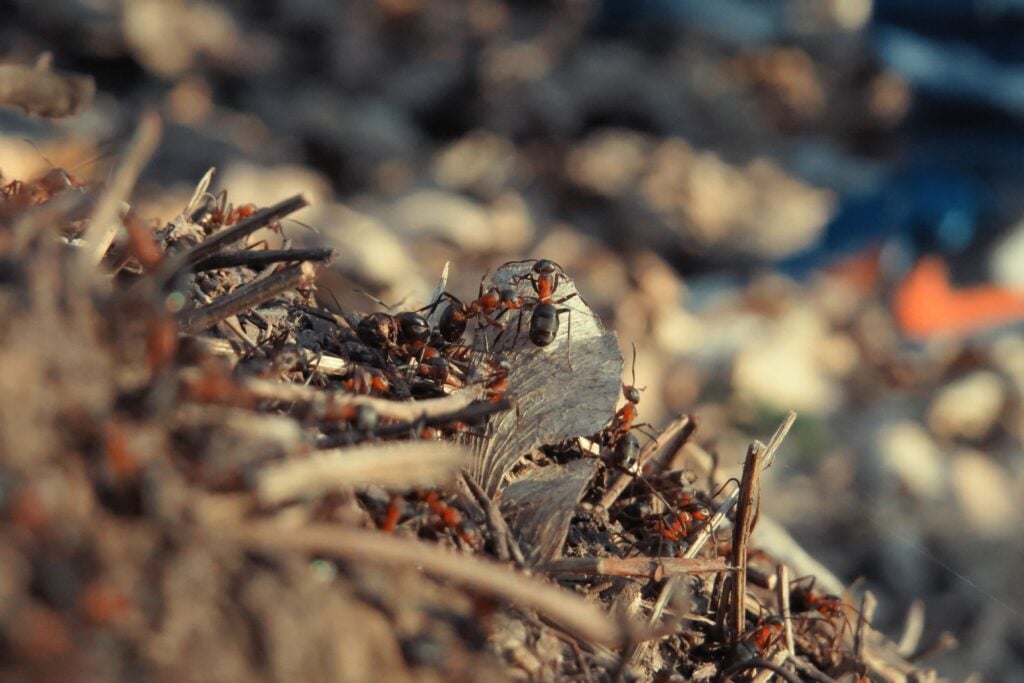
A few ant hills around the yard usually aren’t a big deal, but things can get frustrating once the mounds spread or grow larger. They can make mowing awkward, leave piles of loose dirt across the grass, and get in the way of barefoot walks or time spent in the garden.
Ants play a useful part in the yard by turning over soil and feeding on other insects. You don’t have to remove every colony, but a nest near a walkway, play area, or garden may need attention, especially if the ants bite or sting.
Many popular home remedies do little to remove an established colony, and some can damage grass or nearby plants. For a stubborn mound, a bait or treatment labeled for the ant type and intended outdoor area is usually better than pouring household ingredients into the nest.
Pour Boiling Water Into the Mound
Very hot water can kill some ants, but it often fails to reach the queen and deeper chambers where much of the colony lives. It can also scorch grass, injure nearby plants, and cause serious burns, so it’s a poor choice for mounds surrounded by lawn or landscaping.
Related: Maintaining a Healthy and Weed-Free Lawn All Year Around
Sprinkle Diatomaceous Earth Around the Nest
Diatomaceous earth can harm insects that come into direct contact with it, but sprinkling it over a mound is unlikely to eliminate an established underground colony. Use only a product labeled for outdoor ant control, avoid breathing the dust, and keep it away from children and pets as directed on the label.
Set Out a Boric Acid Bait
Slow-acting ant baits can work because worker ants carry the bait back to the nest, where it may reach the queen and other colony members. A ready-made outdoor bait is safer than a homemade mixture, and you should place it near active trails as directed and keep it out of reach of children and pets.
Related: If Your Lawn Keeps Getting Worse, These Habits Are Worth Checking
Dig Up and Move the Colony
Digging into an ant hill may disturb the surface nest, but it rarely reaches every chamber or removes the queen. Some ants may rebuild nearby, and disturbing a nest can trigger defensive behavior, so don’t dig into an unidentified mound, particularly if the ants may be fire ants.
Use Orange Peels
Orange peels contain citrus oils, but placing them on an ant hill hasn’t been shown to reliably remove a colony or drive it away. Save the peels for composting rather than relying on them to clear an established nest from your lawn.
Spray a Vinegar Solution
Diluted vinegar can help remove scent trails from hard surfaces, but it won’t reliably eliminate an underground ant colony. Vinegar can also damage grass and other plants, so avoid spraying it on the lawn or in flower beds.
Related: If Your Lawn Doesn’t Look Like It Used To, These Habits Could Be the Reason
Cover the Mound With Cinnamon
Cinnamon may discourage some ants from crossing a treated surface, but it won’t destroy an underground nest or reliably make the colony leave. Sprinkling it over a mound is unlikely to solve a larger ant problem, so use a labeled outdoor bait or treatment if you need to remove the nest.
Break Up Their Trails With Lemon Juice
Lemon juice may mask the scent trails ants follow for a short time, but it won’t reach the queen or eliminate the nest. Avoid pouring it over grass and flower beds, since concentrated acidic liquids may injure plants.
Scatter Cornmeal Nearby
Cornmeal is sometimes suggested to starve ants, but there is no good evidence it clears out established colonies. Skip this remedy and choose a labeled ant bait if you need to reduce activity around a mound.
Pour Club Soda Into the Nest
Club soda does not reliably eliminate ants living deep underground, so pouring a bottle into the mound is unlikely to solve the problem. Save it for drinking and use a treatment labeled for the ant species if the colony is causing trouble.
Related: Before You Blame Your Grass, Check These Lawn Care Habits
Use Soapy Water
Soapy water may kill ants it reaches, but pouring it over a mound can leave deeper chambers and the queen untouched. Household dish soap can also damage grass or garden plants, so avoid soaking the lawn and follow product directions for any treatment you choose.
Other Topics You Might Like
- 13 Gardening Antiques Collectors Love and Often Pay Up For
- I Stopped Buying Fertilizers After Years of Gardening and Started Using This Instead
- Some of the Best Gardening Tips I Ever Got That Break All the Rules
- 9 Vintage Gardening Tools Hiding in Grandma’s Potting Shed— Some Could Be Worth a Small Fortune