A beautiful garden doesn’t have to mean spending every weekend treating sick plants or replacing flowers that didn’t make it. Choosing varieties that can handle common growing conditions and resist many garden diseases can save you time and frustration.
No plant is completely trouble-free, and even hardy varieties can struggle with poor drainage, extreme weather, pests, or too much moisture. Still, some plants are naturally tougher than others and can grow well without constant attention.
If you’d rather spend more time enjoying your garden than dealing with plant problems, these 18 varieties are worth considering.
Black-Eyed Susan
Black-eyed Susan brings cheerful yellow flowers with dark centers to sunny garden beds. This North American native usually grows 2 to 3 feet tall and handles a range of conditions, with good resistance to many common plant diseases.
It prefers full sun and well-drained soil and grows in USDA Zones 3–9. Its flowers typically appear through much of the summer, making it a dependable choice for a colorful garden.
Related: 10 Plants That Actually Grow Better in Shade
Purple Coneflower
Purple coneflower is a hardy perennial with pinkish-purple petals surrounding a raised orange-brown center. Once established, it can handle dry spells and usually doesn’t need much attention.
It typically reaches 2 to 4 feet tall and blooms from early summer into fall. Plant it in full sun or partial shade with well-drained soil, and it should do well in Zones 3–9.
Bee Balm
Bee balm adds bright color to flower beds, with blooms that range from red and pink to purple. Bees, butterflies, and hummingbirds are frequent visitors, making it a popular choice for pollinator gardens.
It grows best in full sun or partial shade with moist, well-drained soil. Bee balm can spread quickly, so give it room and keep an eye on its growth; it generally does well in Zones 4–9.
Related: 18 Ground Cover Plants That Choke Out Weeds Naturally
Blazing Star
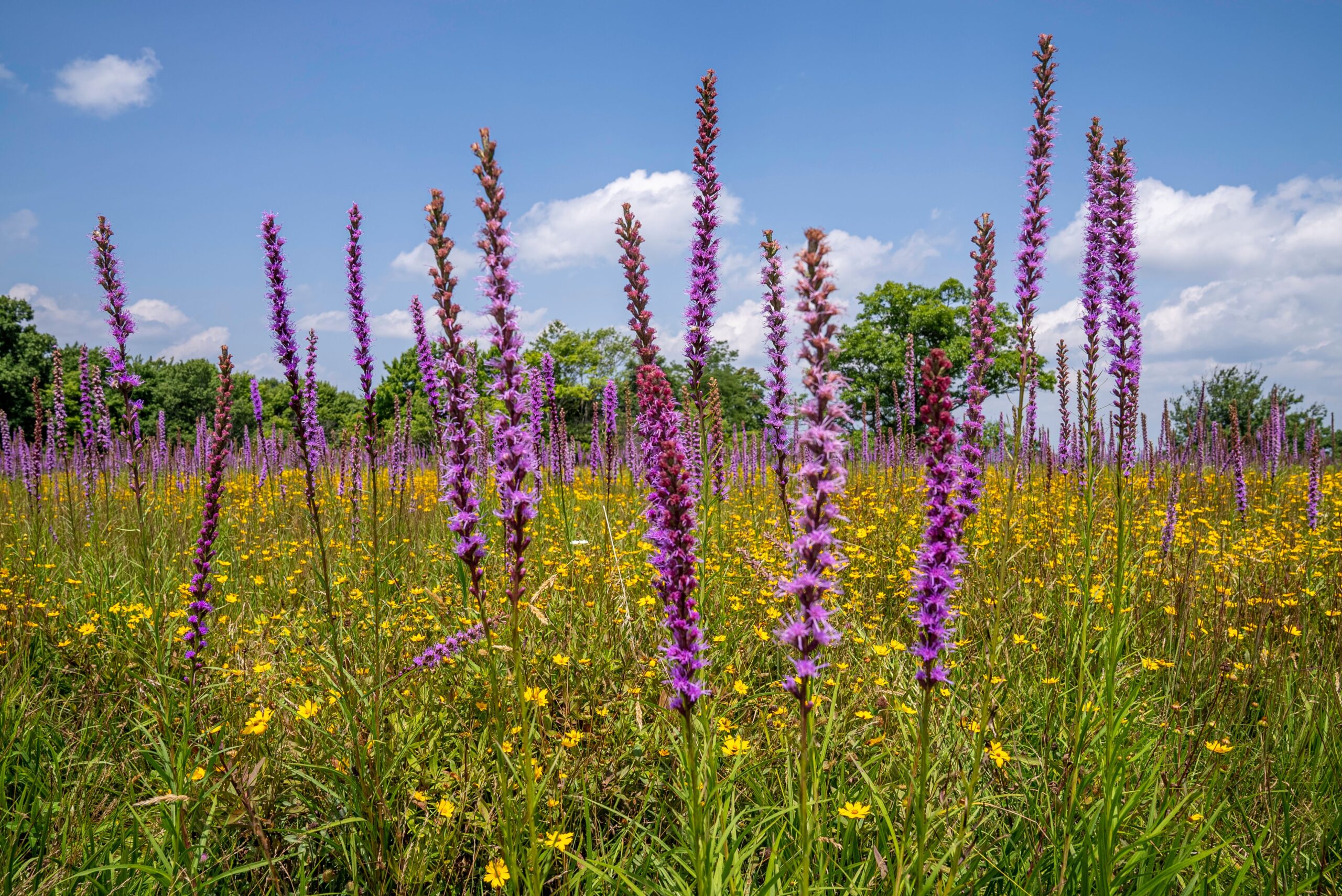
Blazing star stands out with tall flower spikes covered in purple blooms. It adds height to flower beds and generally doesn’t require much day-to-day care.
Most varieties grow about 2 to 4 feet tall and prefer full sun with well-drained soil. They also tend to resist many common pests and diseases, making them a good fit for a range of garden settings.
Blue False Indigo
Blue false indigo is a long-lived perennial with upright spikes of blue, pea-shaped flowers that appear in late spring. Its rounded, bushy shape also looks attractive after the blooms have faded.
It can reach around 4 feet tall and grows well in full sun or partial shade. Once established, it needs little care and can tolerate a variety of growing conditions.
Related: 9 Plants That Repel Mosquitoes Better Than Bug Spray
New England Aster
New England aster brings color to the garden late in the season, with purple or pink petals surrounding yellow centers. It’s also a useful choice for gardeners dealing with heavier soil because it can tolerate clay and periods of wet weather.
Bees and butterflies are drawn to its flowers, making it a welcome addition to pollinator-friendly gardens. For more plants that can handle difficult soil, see Fast-Growing Ground Cover Plants for Tough Clay Soil.
Butterfly Weed
Butterfly weed is easy to spot once its clusters of bright orange flowers open. Butterflies and other pollinators love it, and its compact growth makes it a good fit for sunny flower beds.
It grows in clumps and prefers full sun and well-drained soil. Once established, it can tolerate dry conditions and usually needs very little attention.
Joe-Pye Weed
Joe-Pye weed is a good choice if you want a tall plant that adds height to the garden. It can grow around 7 feet tall and produces large clusters of pinkish-purple flowers that attract butterflies.
It prefers moist soil and grows well in full sun or partial shade. For a plant of its size, it’s relatively easy to care for and has good resistance to many common diseases.
Coral Bells
Coral bells are popular for their colorful leaves, which can range from green and silver to burgundy and purple depending on the variety. They also produce small flowers on slender stems, adding another point of interest to the garden.
These compact perennials are well suited to shady beds and woodland-style gardens. They tend to have few disease problems when planted in suitable conditions and given the right amount of moisture.
Penstemon
Penstemon produces upright stems lined with tubular flowers, often in shades of white or pink. Bees and other pollinators are frequent visitors when the plants are in bloom.
Once established, penstemon handles dry weather fairly well and grows in full sun or partial shade. Plant it in well-drained soil, since constantly wet roots can lead to problems.
Related: 12 Invasive Plants That Can Quickly Take Over Your Garden
Lavender
Lavender is a favorite for sunny gardens thanks to its fragrant leaves and familiar purple flowers. It’s also a good option for gardeners who prefer plants that don’t need frequent watering or attention.
Give lavender plenty of sunlight and soil that drains well. Once established, it needs little water and tends to have few problems with pests or deer, but avoid planting it where water collects.
Eastern Red Columbine
Eastern red columbine produces distinctive red-and-yellow flowers in spring and early summer. Its nodding blooms look delicate, but the plant can grow in a range of garden settings.
It does well in full sun or partial shade and grows in USDA Zones 3–8. It’s a good fit for rain gardens and naturalized areas, and it may reseed itself when conditions are right.
Cardinal Flower
Cardinal flower adds a striking splash of red with tall stems covered in tubular blooms. Hummingbirds are especially attracted to its flowers, making it a lovely addition to a pollinator garden.
It usually grows 2 to 4 feet tall and prefers moist soil with partial shade. It can also handle more sunlight when the soil stays damp, making it a useful choice for wetter parts of the yard.
Creeping Phlox
Creeping phlox spreads close to the ground, forming a carpet of flowers in spring. Depending on the variety, the blooms may be pink, purple, white, or red.
It works well along garden borders, on slopes, and in rock gardens where it has room to spread. Give it full sun and well-drained soil, and it can tolerate some light foot traffic once established.
Prairie Smoke
Prairie smoke has small pink flowers followed by unusual seed heads that resemble wisps of smoke. Those feathery seed heads give the plant an interesting look long after its flowers have faded.
It grows well in Zones 3–7 and prefers full sun or partial shade. Well-drained soil is a must, making prairie smoke a good choice for gardens that tend to stay on the dry side.
For more colorful options, see Pink Annuals That Will Add Timeless Beauty to Your Garden.
Yarrow
Yarrow is a tough perennial that handles dry weather, poor soil, and plenty of sunshine. Its flat clusters of tiny flowers come in white, yellow, pink, and other colors depending on the variety.
Most plants grow between 1 and 3 feet tall. It’s a good option if you don’t want to spend much time watering or feeding your flower beds.
For a softer-looking flower bed, check out 15 Eye-Catching White Flowers That Will Make Your Garden Feel Calm and Inviting.
Goldenrod
Goldenrod is a hardy native plant that grows in many soil types. Its clusters of yellow flowers appear in late summer and fall, bringing color to the garden as many other flowers begin to fade.
Its height depends on the species, with some varieties reaching several feet tall. Goldenrod prefers sunny locations and usually needs little care once established.
For more bright blooms, see Bright Yellow Annual Flowers to Light Up Your Landscape.
Blanket Flower
Blanket flower adds warm shades of red, orange, and yellow to sunny garden beds. Its daisy-like blooms can keep appearing through much of the summer, especially if you remove spent flowers.
It prefers full sun and well-drained soil and can handle dry conditions once established. Blanket flower grows in USDA Zones 3–10 and is a good choice for gardeners who want plenty of color without frequent watering.
Other Topics You Might Like
- 13 Gardening Antiques Collectors Love and Often Pay Up For
- I Stopped Buying Fertilizers After Years of Gardening and Started Using This Instead
- Some of the Best Gardening Tips I Ever Got That Break All the Rules
- 9 Vintage Gardening Tools Hiding in Grandma’s Potting Shed— Some Could Be Worth a Small Fortune