A successful yard sale isn’t about having the most stuff; it’s about making it easy for shoppers to find, browse, and buy what you have. With a little planning and smart pricing, you can clear out clutter, earn extra cash, and avoid hauling half your items back into the house at the end of the day.
If your goal is to sell as much as possible rather than bring boxes back inside, these simple strategies can make a huge difference.

Choose the Right Location
A busy, easy-to-find location can dramatically increase the number of shoppers who stop by. If your street doesn’t get much traffic, consider teaming up with friends or neighbors for a multi-family sale that naturally attracts larger crowds.
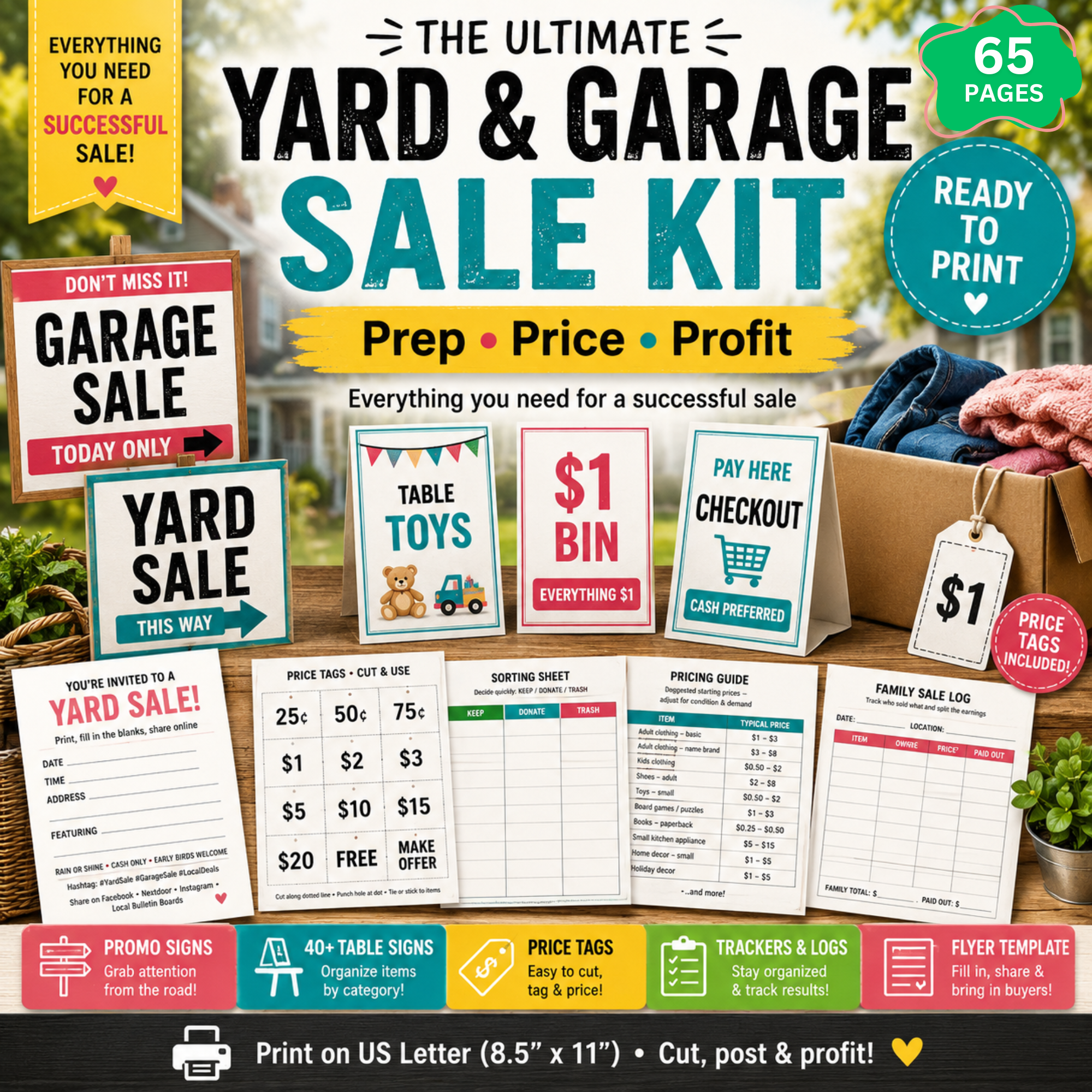
Organize your next yard or garage sale with this complete printable bundle featuring garage sale signs, price tags, flyer templates, checkout signs, trackers, and table category signs.
Advertise Early and Often
Don’t rely on a few handwritten signs alone. Post your sale on Facebook Marketplace, local community groups, neighborhood apps, Craigslist, and anywhere local shoppers look for weekend sales.
Use Large, Easy-to-Read Signs
Your signs should be impossible to miss from the road. Use bold lettering, simple directions, and place signs at major intersections leading to your sale, adding balloons if local regulations allow to make them stand out.
Price Items to Sell
Most yard sale shoppers expect bargains, not retail prices. Pricing items fairly from the beginning encourages faster sales and reduces the need for constant haggling throughout the day.
Label Everything Clearly
Nothing slows down a sale faster than shoppers constantly asking for prices. Put a price sticker on every item so buyers can shop independently while you help other customers.
Put Your Best Items Front and Center
Eye-catching furniture, tools, bicycles, collectibles, and electronics should be visible from the street. Great display pieces encourage people to stop, even if those aren’t the items they ultimately purchase.
Skip Broken or Worn-Out Items
Most people won’t pay for stained clothing, damaged furniture, or items missing important parts. Donate, recycle, or dispose of anything that’s beyond its useful life instead of letting it clutter your sale.
Organize Like a Store
Group similar items together so shoppers can browse easily. Keeping clothes, toys, kitchen items, books, and décor neatly arranged makes your sale feel more inviting and encourages people to spend more time shopping.
Have Plenty of Change
Many shoppers still pay with cash, especially for smaller purchases. Start the day with plenty of small bills and coins so you can quickly make change without losing sales.
Offer Digital Payment Options
Not everyone carries cash anymore. Accepting services like Venmo, Cash App, PayPal, or Zelle can help you close sales that might otherwise walk away.
Schedule Your Sale Strategically
Friday and Saturday mornings typically bring the biggest crowds because serious bargain hunters start early. Begin your sale as advertised and be ready before the first shoppers arrive.
Know What Sells Best
Clothing, children’s items, tools, kitchen gadgets, home décor, small furniture, electronics, shoes, and video games consistently attract buyers. Display these popular categories prominently to draw attention and create more traffic throughout your sale.
Bundle Low-Priced Items
Instead of pricing every small item individually, create bundle deals like “Fill a Bag for $5” or “Three Books for $2.” Bundle pricing helps move inexpensive items much faster while increasing the average purchase.
Keep the Sale Clean and Welcoming
A tidy display makes everything look more valuable. Straighten tables throughout the day, remove empty boxes, and keep walkways clear so shoppers can browse comfortably.
Have a Plan for Leftovers
Decide before the sale what you’ll do with anything that doesn’t sell. Donate usable items immediately and recycle or dispose of the rest so the clutter doesn’t end up back in your garage.