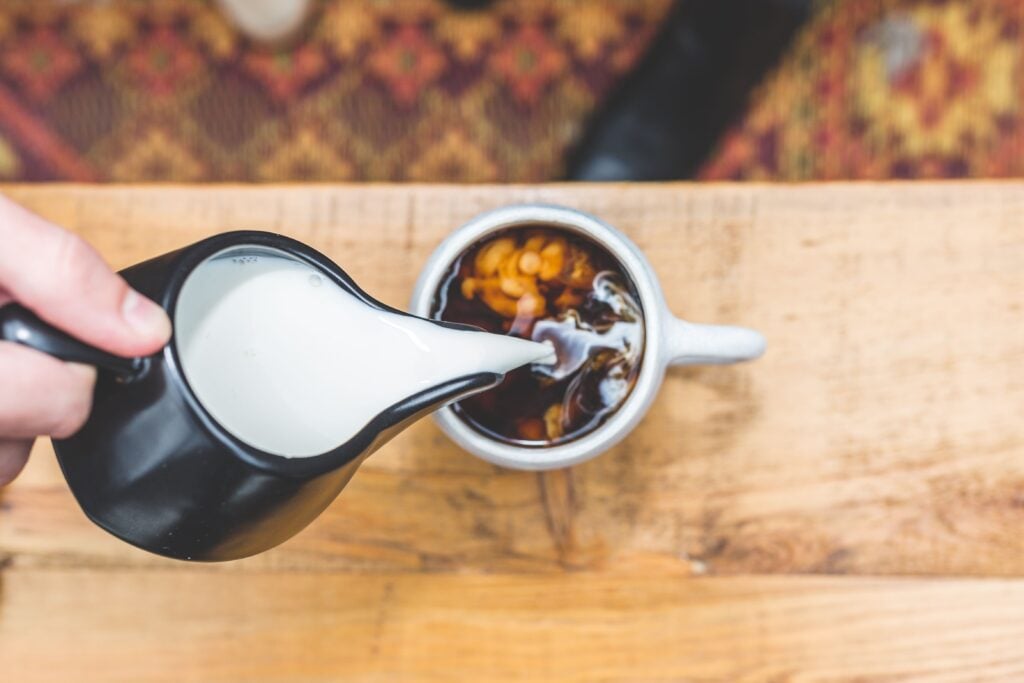
For many people, coffee is part of the morning routine. Some drink it black, while others like a little creamer to make their cup sweeter, smoother, or taste more like a favorite dessert.
Coffee itself often gets most of the attention, but what you add to it matters too. A splash of creamer might seem insignificant, yet some popular brands contain added sugar, oils, artificial flavors, preservatives, and other ingredients that can add quite a bit to your daily cup.
This is one reason some coffee drinkers have started reading the labels more closely. If you have several cups a day and add a generous pour each time, those extra ingredients and calories can add up without you giving them much thought.
If coffee creamer has become a regular part of your morning, taking a look at the ingredient list can give you a better idea of what you’re actually adding to your coffee.
Often Made With Artificial Ingredients
Many coffee creamers contain artificial flavors, colors, stabilizers, and other additives that help give the product its familiar taste and texture. These ingredients can also help the creamer stay consistent during storage and give it a longer shelf life.
That doesn’t mean every ingredient is harmful, but it does mean you’re getting more than just something that makes coffee creamy. Some people also report headaches or digestive discomfort after consuming certain additives, so paying attention to how your body reacts can be useful.
Related: 15 Incredible Ways to Repurpose Used Coffee Grounds
“Non-Dairy” Doesn’t Always Mean Dairy-Free
The words “non-dairy” on a coffee creamer can be confusing, especially for people who avoid milk because of an allergy or sensitivity. Some products with this label contain sodium caseinate, a milk-derived protein that helps give the creamer a smooth texture and keeps the ingredients mixed together.
For someone who needs to avoid milk proteins, that distinction matters. Checking the full ingredient list and allergen information is a safer way to figure out whether a particular creamer fits your needs than relying on the front of the package alone.
Loaded With Preservatives
Shelf-stable creamers need ingredients that help keep them fresh for longer periods. Potassium sorbate and other preservatives or stabilizers can be found in some products for this reason.
These ingredients are permitted in food, but some people prefer to limit the number of additives they consume. If that’s a concern for you, comparing ingredient lists can help you find a creamer with fewer added preservatives.
Some Contain Whitening Agents
Some creamers use ingredients that help give the product its bright color and creamy appearance. Titanium dioxide is one whitening ingredient that has been used in certain processed foods, although its use and safety have been debated in recent years.
Concerns about this ingredient have led some shoppers to look for products without it. Reading the label is the easiest way to see what is actually included in the creamer sitting in your refrigerator or pantry.
They Offer Very Little Nutritional Value
Coffee creamer can make a plain cup taste much better, but many varieties don’t provide much nutrition. They often contain added sugars, oils, and other ingredients while offering little protein, fiber, vitamins, or minerals.
That can make creamer an easy source of extra calories without giving you much in return nutritionally. If you use several servings throughout the day, those calories can become a regular part of your diet. Regularly consuming empty calories can make it harder to keep your overall diet balanced.
May Contribute to Inflammation
Some coffee creamers contain refined sugars and highly processed ingredients, which can be part of a diet that is higher in ultra-processed foods. Diets high in these types of foods have been associated with health concerns, including inflammation and metabolic problems.
A small amount of creamer now and then is different from having several sweetened cups every day. Looking at your overall eating habits matters more than focusing on one ingredient in isolation. Cutting back on heavily processed everyday foods can be one way to make room for more nutrient-rich choices.
Extra Calories Add Up Quickly
One tablespoon of creamer might contain around 30 to 40 calories, depending on the brand and variety. The trouble is that many people don’t measure it and end up using much more than the serving size listed on the bottle.
If you drink two or three cups of coffee a day, a generous pour each time can add hundreds of calories over the course of a week. Liquid calories are also easy to overlook because they don’t tend to make you feel as full as food does. Over time, those small additions can contribute to weight gain if they push your daily calorie intake higher than you realize.
Some Creamers Contain Unhealthy Fats
Traditional coffee creamers often use vegetable oils to create a smooth texture. The type of oil varies from product to product, so checking the nutrition and ingredient labels can tell you more than the word “creamer” on the front of the package.
Trans fats are a bigger concern because they can raise LDL cholesterol and increase the risk of heart disease. A label showing zero grams of trans fat doesn’t always mean there is absolutely none in the product, since very small amounts can be rounded down when the serving is small.
High in Added Sugar
Flavored creamers can turn a regular cup of coffee into something closer to a sweet treat. Vanilla, caramel, hazelnut, and other varieties may contain several grams of added sugar in a single serving.
The amount can climb quickly if you use more than the listed serving size or have multiple cups throughout the day. A high intake of added sugar is associated with problems such as weight gain and a greater risk of type 2 diabetes. Cutting back on sweetened creamer or choosing an unsweetened option can lower the amount of added sugar in your daily routine without giving up coffee.