Most people keep a bottle of Murphy’s Oil Soap around for one main reason: cleaning wood floors. It’s been a familiar household cleaner for generations, and many people like it because it cleans without leaving behind the strong smell of some other products.
Then we started hearing about people using it for jobs that had nothing to do with floors. Kitchen cabinets, patio furniture, tools, baseboards, and a few other things came up often enough that we decided to see how well it actually worked.
So we pulled out the bottle and tried it in different spots around the house and outside. Some uses worked as expected, while a few were much more useful than we thought.
Here are the Murphy’s Oil Soap uses that worked well for us and are worth trying with the proper surface precautions.
Greasy Kitchen Cabinets
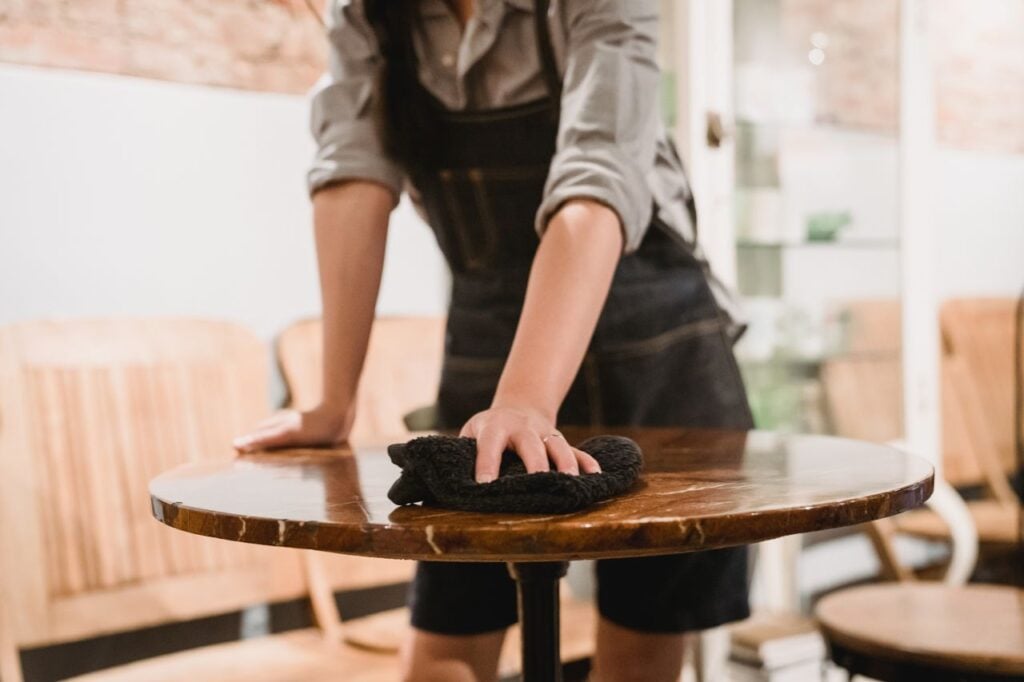
Kitchen cabinets quietly collect grease and grime, especially around the handles and the cabinets closest to the stove. We mixed about ½ cup of Murphy’s with warm water, wrung out a cloth really well, and wiped down the surfaces.
It did a good job cutting through everyday grease without leaving the cabinets feeling coated or sticky. After wiping everything with clean water and drying it with a soft cloth, the cabinets looked much cleaner without needing a heavy-duty degreaser.
Wood Furniture Touch-Ups
We put a small amount of Murphy’s Oil Soap on a soft rag and used it on a side table and a set of dining chairs. It picked up fingerprints, dust, and everyday grime while leaving the wood looking clean and lightly polished.
We liked that it didn’t leave a thick, waxy layer behind. As with any wood cleaner, it’s smart to test a hidden spot first since finishes can vary from one piece of furniture to another.
Related: How to Clean Wood Furniture
Stainless Steel Appliances
Murphy’s Oil Soap is marketed for wood, so stainless steel wasn’t the first place we expected to use it. We diluted a small amount, wiped down the refrigerator and dishwasher, and found that it handled fingerprints and light smudges fairly well.
Afterward, we went over the surfaces with a clean, dry cloth to remove any leftover moisture or film. It worked for basic cleanup, though a product made for stainless steel may still be a better choice for heavier grease or stubborn marks.
Bathroom Surfaces
We mixed Murphy’s with water and used the solution for light cleaning on bathroom counters, sinks, and tile. It worked well for everyday dirt and grime and didn’t leave behind a strong chemical smell.
This is more of a basic cleaner than a disinfectant, so it shouldn’t replace a disinfecting product where one is needed. For routine cleanup, though, it handled the job without much fuss.
Glass Stovetop Grease
We sprayed a diluted solution on light grease and splatter buildup on a glass stovetop and wiped it clean with a soft cloth. It handled the everyday mess without scratching the surface during our test.
For burned-on food and thick grease, you’ll still need a cleaner meant for that kind of buildup and the proper stovetop scraper or tool. Murphy’s worked better here as a quick cleaner for fresh or light messes.
Leather Conditioning
We were more cautious with this one because leather finishes can vary quite a bit. Using a very small amount of diluted cleaner on a cloth, we wiped down a leather chair and then buffed the surface dry right away.
The chair felt cleaner and a little softer afterward, but we wouldn’t use this on expensive leather without checking the manufacturer’s care instructions first. A hidden-spot test is a must before putting any cleaner on visible leather.
Clothing Stain Treatment
We tried a small amount on an oil-based stain before washing the clothing. The cleaner helped loosen the spot more than we expected, and the stain came out better after laundering.
Still, this is one trick where the fabric matters a lot. Test a small, hidden area first, and check the garment’s care label before applying any household cleaner to clothing.
Carpet Spot Cleaning
Applied lightly to a small stain on the carpet, we let it sit for about 15 minutes before blotting the area with a clean cloth. It lifted some surface staining and made the spot look noticeably better.
This worked best on a fresh, smaller stain rather than something that had been sitting for a long time. Carpet fibers and dyes can react differently to cleaners, so test an out-of-the-way area first.
Reviving Paint Brushes
Old paint brushes can be frustrating to clean once paint has started drying into the bristles. We soaked a few brushes in diluted Murphy’s Oil Soap, and the dried paint loosened enough that the brushes were much easier to clean.
It won’t bring every ruined brush back to life, especially if the paint has been sitting there for a very long time. For brushes that still have a little life left, though, it was worth trying before throwing them away.
Removing Sticky Labels
A few drops of Murphy’s Oil Soap helped soften adhesive residue left behind after removing labels from glass. We let it sit briefly, then wiped the area clean and repeated the process where needed.
It worked especially well on light, stubborn residue. Since different materials and finishes can react differently to cleaners, test the product on a small area before using it on something valuable.
Crayon and Scuff Marks
We diluted Murphy’s in a spray bottle and used a small amount on crayon marks left on a painted wall. With gentle wiping, some of the marks came off without much effort.
This is another case where the paint finish matters. Test a hidden section first, especially on flat or matte paint, since some finishes can show shiny spots after cleaning.
Outdoor Furniture
We mixed Murphy’s with warm water and used it on wood and plastic patio furniture that had picked up dirt during the season. It removed everyday grime and left the furniture looking cleaner without a heavy residue.
For outdoor furniture, we found it most useful for regular seasonal cleanup rather than deep stains. Rinse the surfaces well when you’re finished, and let everything dry fully before putting cushions or covers back in place.
Garden Tools
Dirty hand tools can collect soil, plant residue, and grime pretty quickly. We used a diluted Murphy’s mixture to wipe down our garden tools, and it did a good job removing the everyday dirt left behind after working outside.
After cleaning, we dried the tools thoroughly so moisture wouldn’t sit on the metal parts. It’s a simple extra step that can help keep tools looking cleaner between uses.
Quieting Squeaky Hinges
We tried a small amount on a squeaky hinge, and the noise dropped noticeably. It worked as a quick fix, though it isn’t the type of long-term lubricant you’d choose for a hinge that needs regular maintenance.
For a door that squeaks occasionally, it can be a handy trick. For ongoing problems, a proper lubricant is the better choice.
Related: 15 Surprising Uses for WD-40 Around the House
Mild Garden Spray
This was the one use we would be most careful with. A homemade mixture of Murphy’s, water, oil, and lemon juice is sometimes suggested as a garden spray, but household soap products can damage plants when the mix is too strong or applied in the wrong conditions.
If you decide to test a homemade spray, use it on a small area first and watch the plant for a few days. For insects or plant diseases that keep coming back, a product labeled for garden use is a safer bet than relying on a homemade mixture.
Other posts you might like:
- Banana Peels Might Be the Most Underrated Natural Boost for Your Garden
- I Stopped Using Dryer Sheets in the Dryer—Here’s Where I Use Them Instead
- Stop Throwing Away Orange Peels — Some Call Them Trash, Others Call Them Kitchen Gold
- Simple DIY Fixes for the Most Annoying Problems Around the House
- 14 Practical Uses for Windex
- 15 Incredible Ways to Repurpose Used Coffee Grounds