It’s easy to toss something into the trash and never think about it again. Once the garbage truck takes it away, it feels like the item has disappeared. In reality, most trash has a much longer story.
Some everyday materials can remain in landfills or the environment for decades, centuries, or even longer. Others don’t really disappear at all. They break into smaller pieces, such as microplastics, that can remain in the environment long after the original item is gone.
The exact amount of time an item takes to break down depends on factors such as sunlight, moisture, temperature, and where it ends up. Still, looking at common household waste this way can make you think twice about what goes into the trash.
Here are 12 everyday items that can stick around much longer than most people expect.
Styrofoam Cups
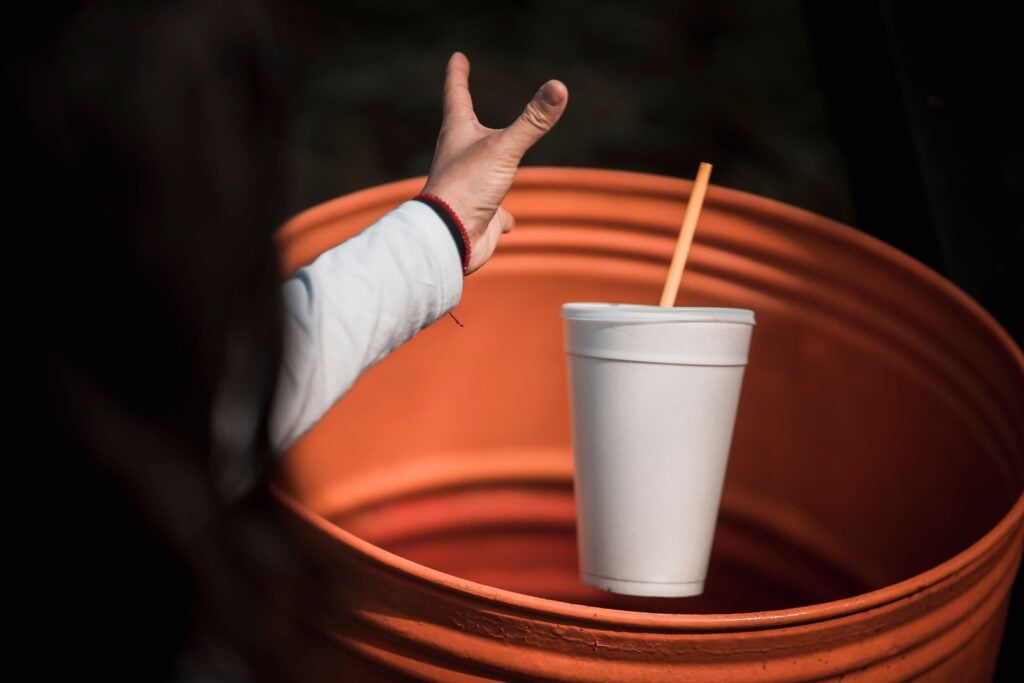
Styrofoam cups are cheap, lightweight, and convenient, which explains why they’ve been used for everything from coffee to takeout drinks. The problem is that expanded polystyrene doesn’t break down easily in the environment.
There’s no single number that applies to every Styrofoam cup because landfill conditions vary. Estimates often place its persistence at hundreds of years or more, meaning a cup used for a few minutes can remain around for generations.
The lightweight material can also blow away from trash areas and end up in waterways or other parts of the environment. That’s one reason reducing the use of disposable foam products can be helpful.
Plastic Bags
Plastic grocery bags are so thin that it’s easy to forget they’re still plastic. Their small size doesn’t mean they disappear quickly after being thrown away.
Depending on environmental conditions, plastic bags can remain for decades or much longer. Sunlight and weather may cause them to break apart, but that doesn’t necessarily mean the material has completely disappeared. Instead, larger pieces can break down into smaller plastic fragments and microplastics.
Related: Are You Supposed to Bag Your Own Groceries at Trader Joe’s?
Cigarette Butts
Cigarette butts are tiny, but they’re one of the most common forms of litter. Many filters are made from cellulose acetate, a type of plastic that doesn’t readily break down in the environment.
A cigarette filter can take years to break down, and estimates often put the timeline at around a decade or more. When left outdoors, discarded cigarette butts can also release chemicals and plastic fibers into the surrounding soil and water.
Because they’re so small, they’re easy to overlook during cleanup. But millions of discarded filters can add up quickly.
Aluminum Foil
Aluminum foil is one of those kitchen items that often gets tossed without much thought. It’s used for everything from covering leftovers to lining baking sheets, but the material itself can last a very long time if it ends up in a landfill.
Some estimates put aluminum’s landfill lifespan at hundreds of years. Unlike many disposable items, though, aluminum has a major advantage: it can be recycled repeatedly without losing its basic properties.
Before throwing foil away, check whether your local recycling program accepts it. Clean foil is often recyclable, while foil covered in food or grease may need to go in the trash.
Nylon Fabric
Nylon shows up in all kinds of everyday products, including clothing, bags, stockings, outdoor gear, and other synthetic fabrics. It’s made to be tough, which is useful when you’re wearing it or carrying something made from it.
That same durability becomes a problem after the item is discarded. Nylon can take decades or longer to break down, depending on where it ends up and the conditions it’s exposed to.
Washing synthetic fabrics can also release tiny fibers, which is another reason some people choose natural fabrics or try to keep synthetic clothing in use for as long as possible.
Batteries
Batteries shouldn’t be treated like ordinary household trash. Depending on the type, they can contain materials that may pose environmental or safety concerns if they’re damaged, improperly disposed of, or left in a landfill.
The timeline for a battery to break down varies widely by battery type and its components, so there’s no single number that applies to every battery. What matters most is that many batteries can be recycled through designated collection programs rather than being tossed into the regular trash.
Check your local waste or recycling service to find out where household batteries can be dropped off. Some stores and community recycling centers also collect them.
Shoe Soles
A pair of shoes may eventually fall apart after years of use, but that doesn’t mean all of the materials have disappeared. Modern footwear can contain rubber, foam, synthetic fabrics, adhesives, and plastics that can persist long after the shoes are thrown away.
Some estimates put the breakdown time for certain shoes at several decades or longer. The exact timeline depends heavily on what the shoes are made of and the conditions under which they’re discarded.
If a pair is still wearable but no longer works for you, donating it or passing it along can keep it in use much longer than sending it straight to a landfill.
Toothbrushes
Most toothbrushes have plastic handles and other synthetic components. Since dentists commonly recommend replacing toothbrushes every few months, a household can go through quite a few of them over the years.
The plastic handle can remain in a landfill for a very long time. Estimates sometimes put the lifespan of a plastic toothbrush at hundreds of years, although the actual breakdown time depends on the material and landfill conditions.
The next time you replace one, check whether your local recycling program accepts the type of toothbrush or packaging you’re throwing away. Some specialized recycling programs also collect oral-care products.
Plastic Bottles
Plastic bottles are among the most familiar pieces of household waste. They’re convenient, lightweight, and easy to carry, but the plastic used to make many beverage bottles can remain in the environment for hundreds of years.
The commonly quoted estimate is around 450 years, but that’s only a rough figure, not a guaranteed timeline. Plastic doesn’t simply vanish at the end of that period, either. Sunlight, heat, and weather can cause it to fragment into smaller pieces.
Those smaller pieces can become microplastics that move through soil, waterways, and other parts of the environment. Recycling or reusing bottles when appropriate can help reduce the amount of new plastic waste.
Aluminum Cans
Aluminum cans are another everyday item that can last a very long time if they end up in a landfill. Estimates vary, but an aluminum can may remain there for decades or even centuries.
The upside is that aluminum is highly recyclable. Recycling a can gives the metal another use instead of sending it to a landfill, and producing recycled aluminum generally requires much less energy than producing new aluminum from raw materials.
That makes the soda or sparkling-water can in your recycling bin a little more useful than it may seem.
Glass Bottles
Glass is one of the strangest materials on this list because it can last an extremely long time and is highly recyclable. Some estimates suggest that glass could take hundreds of thousands of years, or even longer, to break down under natural conditions.
Glass doesn’t break down in the same way as organic materials such as food scraps. A bottle may simply remain intact for a very long time, gradually breaking into smaller pieces through weathering and physical damage.
The good part is that glass can often be recycled and turned into new glass products. Reusing bottles and jars can also keep them in circulation without requiring new raw materials.
Disposable Diapers
Disposable diapers are convenient, but they’re made from several different materials. A typical diaper can contain plastics, absorbent polymers, cellulose fibers, adhesives, and other components that don’t break down quickly.
You may see estimates claiming that a disposable diaper takes around 500 years to decompose. That’s a rough figure, and the actual timeline can vary based on landfill conditions and the materials used in the diaper.
The bigger point is that a product designed to be used for only a few hours can remain in a landfill for a very long time. With children going through thousands of diapers in their early years, those individual pieces of waste can add up.
Other Posts You Might Like
- How to Clean a Couch with a Steam Cleaner
- This Is What People With Clean, Organized Homes Do Differently
- 12 Hidden Habits of People Who Always Have An Immaculately Clean and Organized Home
- 19 Airbnb Cleaning Hacks (Cleaning Secrets for Hosts)
- Grandma’s Best Kept Cleaning Tips That Put Today’s Cleaning Routines to Shame