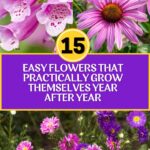
If you love the look of a colorful flower garden but don’t want to spend every weekend weeding, watering, and fussing over plants, you’re in luck. Some flowers are remarkably easy to grow and reward gardeners with months of blooms while asking for very little in return.
Many of these flowers are also favorites of bees, butterflies, hummingbirds, and other beneficial pollinators. Once established, they return year after year, filling garden beds with color and helping support local wildlife. Whether you’re planting a cottage garden, pollinator border, or low-maintenance landscape, these easy-growing flowers deserve a spot in your yard.
Coneflower (Echinacea purpurea)

Coneflowers are among the easiest perennials to grow, thriving in a wide range of conditions. Their daisy-like blooms appear throughout summer in shades of purple, pink, orange, yellow, and white, attracting bees and butterflies in large numbers.
Once established, coneflowers tolerate drought, heat, and neglect remarkably well. They often self-seed, creating even more blooms throughout the garden in future years.
Related: Perennial Flowers That Pop Up Every Blooming Season
Black-Eyed Susan (Rudbeckia hirta)
With cheerful golden-yellow petals surrounding dark centers, Black-Eyed Susans bring bright color to the garden from midsummer into fall. Their long bloom period makes them valuable for both gardeners and pollinators.
These tough plants tolerate poor soil, heat, and occasional drought, making them one of the easiest flowering perennials to grow. They often reseed naturally, creating larger displays each season.
Foxglove (Digitalis purpurea)

Foxglove produces dramatic spires covered in bell-shaped blooms that add height and elegance to flower beds. Bees are especially attracted to the tubular flowers, which provide an excellent nectar source.
While often grown as a biennial, foxglove frequently self-seeds, allowing it to return year after year with very little effort from the gardener.
Snapdragons (Antirrhinum majus)
Snapdragons are beloved for their colorful flower spikes that bloom in shades of pink, yellow, red, orange, and white. They provide long-lasting color and can often continue blooming well into cooler weather.
In many regions, snapdragons reseed themselves freely, popping up throughout the garden year after year. They require little more than occasional watering and deadheading to stay productive.
Shasta Daisy (Leucanthemum × superbum)
Few flowers are as classic as the Shasta Daisy. Its bright white petals and sunny yellow center bring a cheerful look to garden beds, borders, and cutting gardens.
These reliable perennials are easy to grow and return every year with larger clumps of blooms. Butterflies frequently visit the flowers throughout the growing season.
Related: Plant These 23 Colorful Perennials Once and Enjoy Years of Gorgeous Blooms
Bee Balm (Monarda didyma)
Bee Balm is a pollinator magnet that attracts bees, butterflies, and hummingbirds in impressive numbers. Its colorful blooms appear in shades of red, pink, purple, and white during the heat of summer.
This hardy perennial spreads readily and thrives in sunny locations with average moisture. Once established, it often forms large patches that require very little attention.
Aster (Symphyotrichum spp.)

When many summer flowers begin to fade, asters are just getting started. Their colorful blooms provide valuable late-season nectar for pollinators preparing for winter.
Asters are easy-going perennials that tolerate a variety of garden conditions. Their dependable fall display makes them a favorite in pollinator gardens.
Yarrow (Achillea millefolium)
Yarrow is one of the toughest flowers you can grow. Its flat-topped flower clusters bloom in shades of yellow, white, pink, red, and peach while attracting beneficial insects throughout the season.
This drought-tolerant perennial thrives in poor soil and sunny locations. Once planted, it often requires almost no supplemental watering.
Poppies (Papaver spp.)
Poppies are known for their delicate, paper-like flowers that seem to float above the garden. Their vibrant blooms add brilliant color in shades of red, orange, pink, white, and purple.
Many varieties readily self-seed, allowing gardeners to enjoy new flowers each year without replanting. They perform best in sunny locations with well-drained soil.
Blanket Flower (Gaillardia)
Blanket Flower produces bright blooms in fiery shades of red, orange, and yellow throughout the summer months. These cheerful flowers continue blooming even during periods of heat and drought.
Because they tolerate poor soil and dry conditions, Blanket Flowers are excellent choices for gardeners seeking beauty with minimal maintenance.
Sweet Alyssum (Lobularia maritima)
Sweet Alyssum creates a carpet of tiny fragrant flowers that attract bees and beneficial insects. Its low-growing habit makes it perfect for borders, containers, pathways, and rock gardens.
This easy-growing flower often reseeds itself and can bloom for months with little care, especially during cooler weather.
Candytuft (Iberis sempervirens)
Candytuft produces masses of bright white flowers that nearly cover the foliage each spring. The evergreen leaves provide year-round interest even after flowering ends.
Once established, Candytuft is drought-tolerant and requires very little maintenance beyond occasional trimming after bloom.
Coreopsis (Coreopsis spp.)
Often called tickseed, Coreopsis delivers a nonstop display of cheerful daisy-like flowers from early summer into fall. Bright yellow varieties are most common, although orange, red, pink, and bicolor cultivars are also available.
These hardy plants tolerate heat, drought, and poor soil while continuing to bloom heavily throughout the season.
Columbine (Aquilegia spp.)
Columbine offers unique, nodding flowers that look unlike almost anything else in the garden. Their intricate blooms attract hummingbirds and add charm to borders and woodland gardens.
Many varieties self-seed gently, allowing them to naturalize over time without becoming invasive. They are especially useful for partially shaded areas.
Milkweed (Asclepias spp.)
Milkweed is one of the most important plants for monarch butterflies. It serves as both a nectar source for adult butterflies and the only host plant for monarch caterpillars.
Beyond its ecological value, milkweed is incredibly easy to grow and highly drought-tolerant once established. Its clusters of colorful blooms attract countless pollinators throughout summer.
Other Topics You Might Like
- 13 Gardening Antiques Collectors Love and Often Pay Up For
- I Stopped Buying Fertilizers After Years of Gardening and Started Using This Instead
- Some of the Best Gardening Tips I Ever Got That Break All the Rules
- 9 Vintage Gardening Tools Hiding in Grandma’s Potting Shed— Some Could Be Worth a Small Fortune