A tree can bring shade, privacy, and plenty of appeal to a yard. Problems can start when a large or fast-growing tree is planted too close to a driveway, sidewalk, foundation, or underground utility.
Some tree roots spread much farther than people expect, especially as the tree gets older. Roots growing close to the surface can push against pavement, worsen existing cracks, and contribute to uneven sidewalks or driveways.
The roots aren’t always the only concern either. Certain trees have brittle branches, messy fruit, or lots of seeds that can create extra cleanup and maintenance around the house.
Before planting a new tree, it helps to think about how large the tree and its root system may become. These eight trees are worth giving plenty of room, especially if you’re planting near hard surfaces or structures.
Weeping Willow (Salix babylonica)
Weeping willows are hard to miss, with their long, flowing branches and graceful shape. They also prefer moist conditions and can develop broad root systems as they search for water.
That can make them a poor choice for a tight residential space. Planting one too close to a driveway, patio, foundation, or buried utility can create problems as the tree and its roots grow, so a large planting area is a much better fit.
Related: 15 Surprisingly Dangerous Trees Found Across the U.S.
Poplar (Populus species)
Poplars and Lombardy poplars are often planted because they grow quickly and can provide privacy in a relatively short time. Their fast growth can also come with widespread roots that stay fairly close to the surface.
Those roots can contribute to lifting or cracking pavement as they mature, particularly when the tree is planted in a narrow strip between a lawn and a driveway. Some poplars also produce suckers, which can create extra work around the yard.
Sweetgum (Liquidambar styraciflua)
Sweetgum trees are known for their colorful fall leaves, so they can look fantastic during the right time of year. The problem is that the tree can become a nuisance near areas where people walk and park.
Its roots can grow near the surface and contribute to uneven pavement as the tree gets larger. Then there are the hard, spiky seed balls that drop across lawns, sidewalks, and driveways, creating a constant cleanup job.
Related: I’m a Gardener, But These Popular Plants Stay Out of My Yard
American Elm (Ulmus americana)
American elms have a classic shape and a broad canopy that can provide plenty of shade. Their root systems can also spread widely, with many roots growing fairly close to the surface.
That can create problems around sidewalks, driveways, and other paved areas as the roots increase in size. An established elm can also drop plenty of leaves, seeds, and small branches, which means more yard cleanup throughout the year.
Mulberry (Morus species)
Mulberry trees can grow quickly and develop large root systems, so location matters a lot when planting one. Giving the tree plenty of room can help reduce future problems around pavement and other structures.
The fruit is another issue for some homeowners. Ripe mulberries can fall across driveways and other surfaces, leaving dark stains on concrete and cars while also attracting birds and other wildlife.
Bradford Pear (Pyrus calleryana)
Bradford pears became popular because of their spring flowers and neat-looking shape, but the tree has a reputation for weak branch structure. Its narrow branch angles can make some limbs more likely to split, particularly during strong winds, ice, or heavy storms.
That can become a real problem if the tree is growing beside a driveway, walkway, or parked vehicle. Bradford pears can also produce unpleasant-smelling flowers, and their fallen petals can add another layer of mess to nearby pavement.
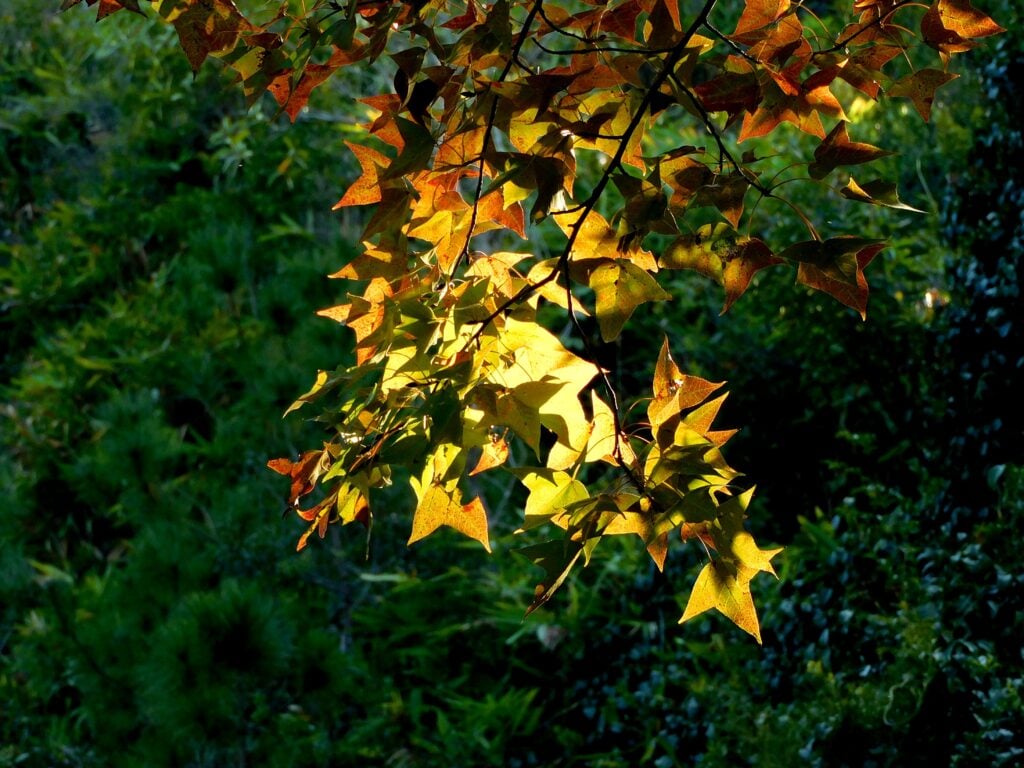
Silver Maple (Acer saccharinum)
Silver maples grow quickly and can provide a large amount of shade, which explains why they became such common yard trees. Their roots can spread near the soil surface and may cause problems when the tree is planted too close to paved areas.
As the roots grow thicker, they can contribute to raised or uneven sections of concrete. Silver maples can also drop a large number of seeds and have branches that are more likely to break during severe weather, adding to the maintenance.
Related: 18 Ground Cover Plants That Keep Weeds Under Control
Norway Maple (Acer platanoides)
Norway maples are valued for their dense canopy and the shade they provide during the warmer months. Their roots can spread outward and remain fairly close to the surface, which can be a concern when the tree is planted near sidewalks or driveways.
A mature tree can contribute to raised pavement if the roots grow beneath hard surfaces. Norway maples also produce winged seeds that can spread around the yard, and storm damage can become another concern as the tree ages.
Other Topics You Might Like
- If a neighbor’s tree falls on your home in California, who is responsible?
- Need to Block a Neighbor’s View of Your Yard? Here’s How to Do It Without Starting a War
- If a fence falls between neighbors in California, who is responsible for repairs?
- If You Spot These Vintage Garden Pieces at a Garage Sale, Grab Them Fast