You grab an onion from the pantry, cut off the outer layer, and notice a green shoot growing from the center. It’s a common sight, and it often raises the same question: Is this onion still good, or should it be thrown away?
The good news is that a sprouted onion isn’t automatically spoiled. Sprouting is a natural part of the onion’s life cycle and usually means it has been stored for a while. In many cases, the onion is still safe to eat, though its texture and flavor may have changed a bit.
Before you toss that onion into the trash, it helps to know what those green shoots mean, when the onion is still usable, and what signs suggest it’s time to replace it.
Why Do Onions Sprout?
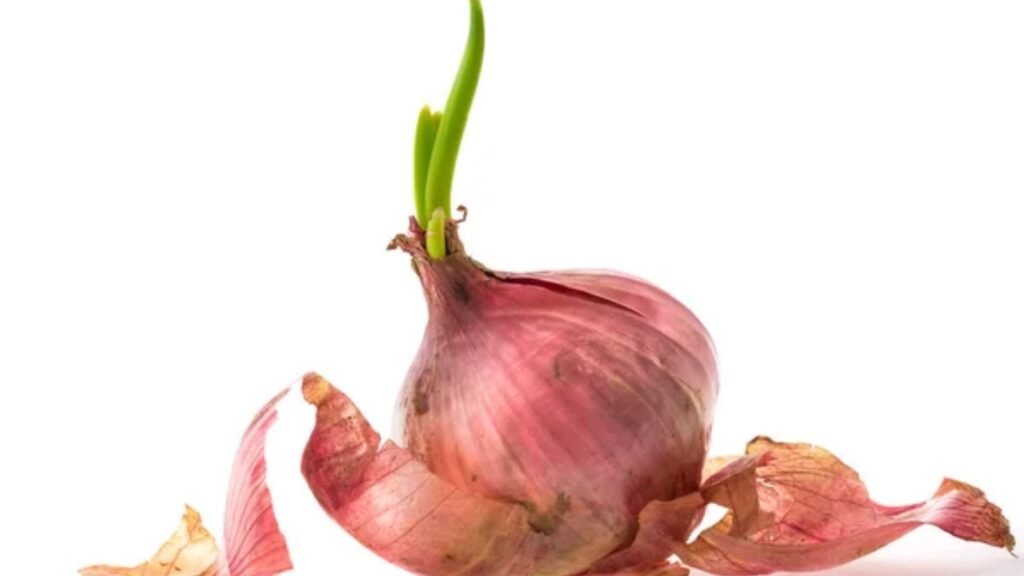
Onions sprout when they are exposed to conditions that encourage growth. Light, warmth, and moisture can all trigger the onion to start producing a new shoot. This often happens when onions sit in the kitchen for a while, especially if they are stored in a bright or humid space.
Because onions are bulb plants, sprouting is simply part of their life cycle. The bulb stores energy and nutrients that allow the plant to grow. When a sprout appears, the onion is essentially trying to grow into a new plant.
Related: Are Sprouted Potatoes Safe to Eat? Here’s What You Need To Know
Are Sprouted Onions Safe to Eat?
Sprouted onions are generally safe to eat as long as the onion itself has not spoiled. The sprout does not produce harmful toxins, and it does not increase the risk of foodborne illness. Unlike potatoes, which can develop toxic compounds when they sprout, onions remain safe in most cases.
However, sprouting does slightly change the onion. As the green shoot grows, it pulls nutrients from the bulb. Over time, this can make the onion softer and slightly more bitter. For the best flavor, it is usually a good idea to use a sprouted onion sooner rather than later.
As with any produce, onions should be rinsed under cool running water before preparing them.
Can You Eat the Green Sprout?
The green shoot growing from a sprouted onion is also edible. It has a stronger, more pungent flavor than the onion bulb and tends to be firmer and more fibrous.
Some people chop the sprout and use it in cooked dishes such as chili, taco fillings, stir-fries, or other meals with bold flavors. The taste is more intense, so it is usually best mixed into recipes rather than eaten on its own.
When to Throw a Sprouted Onion Away
Even though sprouting alone is not a problem, there are signs that an onion has gone bad. A sprouted onion should be discarded if you notice any of the following:
- Mold or dark fuzzy patches
- A slimy or very soft texture
- Wet or leaking layers
- A strong, unpleasant odor
- Discolored flesh inside the onion
- Signs of decay or pests
If the onion still feels firm and looks normal aside from the sprout, it can usually still be used.
How to Use Sprouted Onions
Sprouted onions can be used the same way as regular onions, but they tend to work best in cooked dishes. Because the flavor may be slightly stronger and the texture softer, they blend well with other ingredients in recipes.
They are often a good fit for dishes such as soups, stews, chili, casseroles, meatloaf, or sautéed vegetable dishes. They are less ideal for recipes where raw onions are the star, such as salads, sandwiches, or dishes that rely on a crisp onion texture.
When preparing a sprouted onion, many cooks simply slice it in half and remove the green core before using the rest of the bulb.
How to Prevent Onions From Sprouting
Proper storage can slow down sprouting and help onions last longer. The best place to keep onions is a cool, dry, well-ventilated area away from direct light.
Some helpful storage tips include:
- Store onions in a mesh bag, basket, or wire bowl for good airflow
- Keep them in a dark cupboard or pantry
- Avoid storing onions in the refrigerator, where humidity can encourage sprouting
- Keep onions separate from potatoes and apples, which release gases that can cause onions to spoil more quickly
With the right storage conditions, onions can stay fresh for weeks before sprouting