When it comes to washing raw chicken, people seem to fall into two camps: you either always wash your chicken or the thought of putting it anywhere near the kitchen sink makes you cringe. And if you’re someone who washes it, chances are you’ve been doing it for years and probably don’t think twice.
For many people, it’s simply part of preparing chicken. You open the package, rinse the chicken under the faucet, and then season or cook it, because washing it first just feels cleaner.
But the USDA says that extra step isn’t making your chicken any safer.
In fact, washing raw chicken can create a problem you can’t necessarily see. Here’s why the USDA says it’s one kitchen habit you should skip.
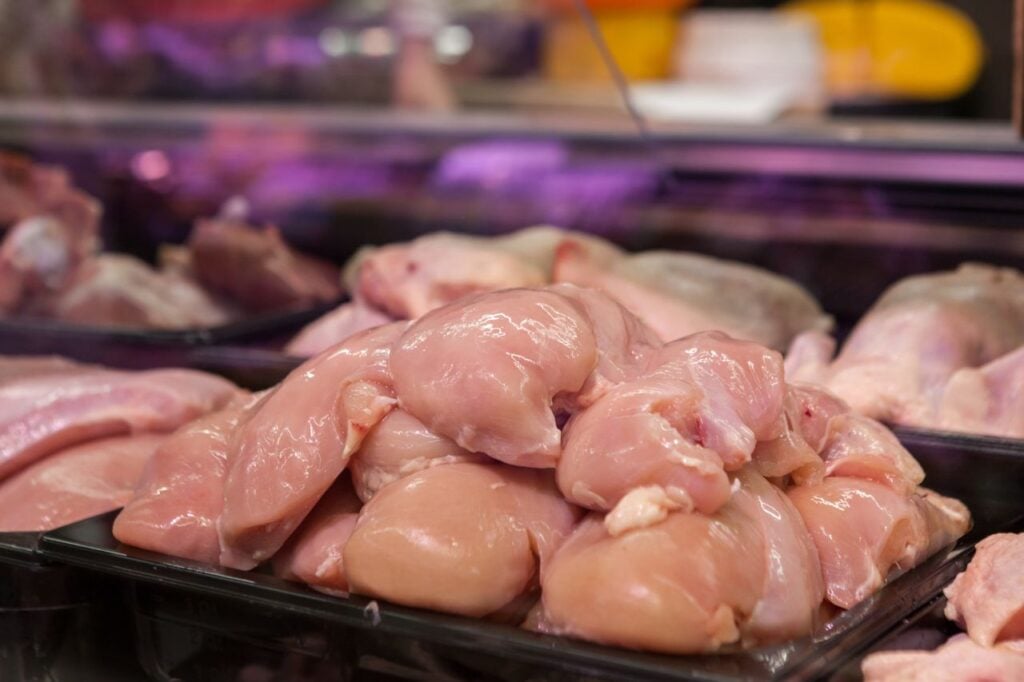
Why the USDA Says You Shouldn’t Wash Chicken
The problem isn’t that washing chicken doesn’t get it clean enough. It’s that rinsing raw chicken can actually increase the chance of spreading bacteria around your kitchen.
According to the USDA, when you rinse raw chicken under running water, bacteria can splash onto your sink, countertops, and other nearby surfaces. You may not even realize it’s happening because those tiny droplets aren’t necessarily something you’re going to see.
That means something you’re doing because it feels cleaner could actually create more opportunities for cross-contamination. And washing the chicken isn’t necessary in the first place because rinsing it doesn’t make raw poultry safe to eat.
What You Should Do Instead
The USDA says proper cooking destroys harmful germs, not washing it beforehand. Chicken and other poultry should reach an internal temperature of 165°F, and using a food thermometer is the only sure way to know it has reached a high enough temperature.
So you really can skip the sink. Handle the raw chicken carefully, keep its juices away from other foods and surfaces, and let proper cooking do the job you may have thought that rinse was doing all along.