Sunny garden beds get plenty of attention, but plenty of plants are happier without hours of direct sun. Some actually look better in shady spots, with fuller foliage, longer-lasting flowers, and less stress during hot afternoons.
If you have a woodland garden, a spot beneath mature trees, or a part of the yard that only gets a few hours of sunlight, work with what you have. These plants can thrive in conditions where many sun-loving flowers struggle, and they can make those darker areas of the yard feel like a garden instead of an empty space.
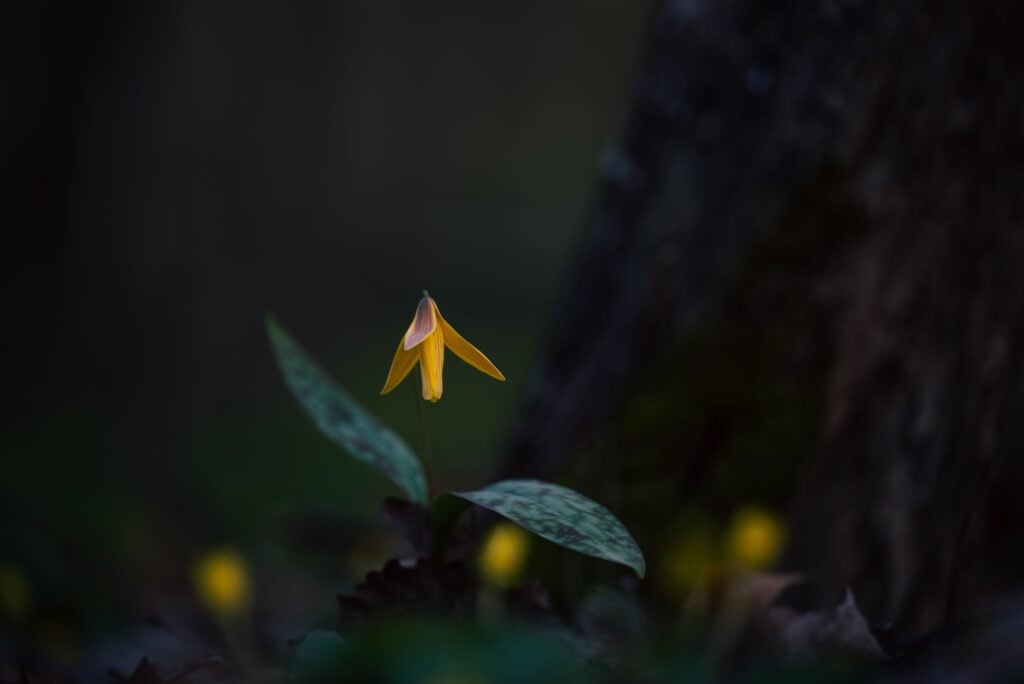
Jack-in-the-Pulpit (Arisaema triphyllum)
Jack-in-the-pulpit is a fascinating native woodland plant with unusual flowers that almost look like they belong in a storybook. It naturally grows beneath trees, where the soil stays cool and the light is filtered.
Deep shade can work well for this plant, especially in areas with moist, rich soil. It also brings a woodland feel to the garden without needing a wide-open, sunny spot.
Related: 10 Climbing Plants That Practically Grow Themselves
Wild Ginger (Asarum canadense)
Wild ginger makes a thick carpet of glossy, heart-shaped leaves that works well in shady parts of the yard. It can fill in areas where grass and other ground covers often have a hard time growing.
This native plant prefers rich, moist soil and filtered or full shade. Too much direct sun can leave the leaves looking stressed, so a spot beneath trees or along a shaded garden path can be a much better fit.
Virginia Bluebells (Mertensia virginica)
Virginia bluebells are one of those plants that can make a spring garden feel completely different. Pink buds open into clusters of soft blue flowers, creating a beautiful display beneath trees and in woodland-style gardens.
They do well in dappled shade and bloom early in the season before going dormant during summer. Once the flowers fade, the plant dies back, leaving room for other plants to take center stage.
Related: 18 Strong Plants That Can Handle Common Garden Problems
Bellwort (Uvularia grandiflora)
Bellwort produces small yellow flowers that hang from arching stems in early spring. It naturally grows on forest floors, so a shady garden bed is much closer to its preferred growing conditions than an exposed sunny spot.
It works especially well beneath trees or alongside other woodland plants. The flowers add a little spring color without needing hours of direct sunlight.
Related: Perennial Flowers That Pop Up Every Blooming Season
Jacob’s Ladder (Polemonium reptans)
Jacob’s ladder is known for its soft, fern-like foliage and clusters of blue or purple flowers that appear in spring. It can handle some sunlight, but partial to full shade can help the foliage stay fuller and greener.
This is a good choice for gardeners who want flowers and attractive foliage in an area that doesn’t get much direct sun.
Woodland Phlox (Phlox divaricata)
Woodland phlox can turn a shady garden bed into a colorful spring display. Its fragrant flowers come in shades of blue, lavender, and pink, and they look especially pretty beneath trees or along shaded paths.
Too much direct sunlight can cause the flowers to fade sooner. A spot with filtered light gives woodland phlox the conditions it naturally prefers.
Solomon’s Seal (Polygonatum biflorum)
Solomon’s seal is a classic woodland perennial with arching stems and small white, bell-shaped flowers that hang beneath the foliage. It prefers cool, moist, shady conditions and can slowly spread into a lovely group of plants.
Once established, it can return year after year with very little fuss. Its graceful shape also gives shady garden beds some height and structure.
Related: Plant These 23 Colorful Perennials Once and Enjoy Years of Gorgeous Blooms
Foamflower (Tiarella cordifolia)
Foamflower gets its name from the small clusters of white or pale pink flowers that rise above the foliage. The blooms have a light, airy look, while the leaves add interest even after the flowers are gone.
It does well in shady areas with moist soil and makes a nice choice for woodland gardens, borders, and spots beneath trees where other flowering plants may struggle.
Bleeding Heart (Lamprocapnos spectabilis)
Bleeding heart is easy to recognize thanks to its heart-shaped flowers hanging from long, arching stems. The flowers have a delicate look, but the plant is a reliable choice for shady garden beds.
It prefers protection from hot afternoon sun, especially in warmer areas. A shaded or partly shaded location can help the plant stay healthier and keep its flowers looking good longer.
Coral Bells (Heuchera spp.)
Coral bells are popular for their foliage just as much as their flowers. Depending on the variety, the leaves can come in shades of green, burgundy, bronze, purple, or other colors.
Some varieties can handle more sun than others, but many do well in partial shade. Keeping them out of the hottest afternoon sun can help prevent stress and keep the foliage looking full throughout the growing season.
Other Topics You Might Like
- 13 Gardening Antiques Collectors Love and Often Pay Up For
- I Stopped Buying Fertilizers After Years of Gardening and Started Using This Instead
- Some of the Best Gardening Tips I Ever Got That Break All the Rules
- 9 Vintage Gardening Tools Hiding in Grandma’s Potting Shed— Some Could Be Worth a Small Fortune