Most people peel an onion, toss the dry outer layers in the trash, and move on. Onion skins look like kitchen scraps, but they can actually be useful for cooking, gardening, crafts, and a few simple household projects.
Onion skins have been reused for generations, especially for natural dyes and cooking. They’re easy to save, take up very little space, and can be kept in a bag or container until you have enough to use.
Before you throw away your next batch, here are 22 ways to put those papery skins to work.
Make Homemade Vegetable Stock
Onion skins can give homemade vegetable stock a deeper golden color and a mild savory flavor. Save them in the freezer with other vegetable scraps, then add a handful to your next pot of stock.
Let everything simmer together, then strain the stock well before using it in soups, sauces, rice, or other recipes. Skip any skins that are dirty, moldy, or otherwise spoiled.
Related: What It Means When Your Onions Start Sprouting
Add Flavor and Color to Rice
A few clean onion skins can be added to the pot while rice cooks. They can give the rice a warm golden tint and a very mild onion flavor without adding another ingredient to your recipe.
Place the skins on top of the rice or tuck them into the cooking water, then remove them before serving. This works especially well with white or brown rice when you want a little extra color.
Boost Soups and Stews
Soup, stew, and broth are easy places to use leftover onion skins. Add a few clean pieces to the pot while everything cooks; they will give the broth a richer color and a subtle savory note.
Strain the skins out before serving. This is also an easy way to use skins that have been collecting in your freezer along with carrot ends, celery leaves, and other vegetable scraps.
Related: 24 Cozy Soups, Chilis, and Stews to Keep You Extra Warm
Make Onion Skin Seasoning
If you have a good amount of clean, completely dry onion skins, you can turn them into a seasoning powder. Dry them further if needed, then grind them into a fine powder using a spice grinder or food processor.
The finished powder has a mild onion flavor and can be sprinkled into soups, mashed potatoes, roasted vegetables, sauces, or homemade seasoning blends. Store it in a dry, airtight spice jar and use it in small amounts.
Make Onion Peel Tea
Onion peel tea is one of the older ways people have used leftover onion skins. To make it, simmer clean skins in water for about 10 to 15 minutes, then strain the liquid and serve it warm.
The taste can be fairly strong, so some people add lemon or another mild flavor. Onion skins contain plant compounds such as quercetin, but claims that onion tea treats health problems or improves sleep are not well supported by evidence, so it’s better to think of this as a simple homemade drink rather than a treatment.
You can also use leftover peels in other ways instead of sending them straight to the trash.
Try It as a Traditional Remedy for Muscle Cramps
Onion peel tea is sometimes used as a home remedy for leg cramps and muscle discomfort. The practice is based on compounds found in onion skins, but there isn’t strong evidence that drinking onion peel tea prevents or treats muscle cramps.
If you enjoy tea, there’s little reason not to have it as an occasional beverage. Persistent or painful muscle cramps are a different matter and may need attention from a healthcare professional.
Related: 15 Vegetables That Can Turn a Raised Bed Into a Productive Garden
Have Onion Peel Tea Before Bed
Some people drink onion peel tea in the evening as part of their bedtime routine. Onion skins contain small amounts of L-tryptophan and other plant compounds, which have led to claims that the tea can support relaxation and sleep.
There isn’t enough evidence to say that onion peel tea will improve sleep. Still, a warm, caffeine-free drink can be a pleasant addition to a nighttime routine if you enjoy the taste.
Try It on Itchy Skin
Onion skins contain compounds with antimicrobial and antioxidant activity, which is one reason they appear in traditional home remedies. Some people cool the water left from simmering onion skins and apply it to minor skin irritation.
There isn’t enough evidence to recommend onion peel water as a treatment for rashes, fungal infections, or other skin conditions. If you try it, test a small area first and stop if your skin becomes more irritated.
Related: Simple Ways to Keep Avocados From Turning Brown So Fast
Make a Simple Face Mask
Powdered onion skins can be mixed with ingredients such as honey to make a homemade face mask. If you want to try it, use a very small amount of finely ground powder and avoid getting the mixture near your eyes.
Leave it on for about 10 to 15 minutes, then rinse thoroughly. Onion skins contain antioxidants, but homemade onion skin masks haven’t been proven to treat skin problems, so keep expectations modest.
For another simple DIY skincare idea, try these homemade sugar scrub recipes.
Use Onion Peel Water as a Hair Rinse
Onion peel water has also been used as a homemade hair rinse. After simmering clean onion skins in water, let the liquid cool completely and strain out the solids before applying it to the hair.
The sulfur compounds and other plant compounds in onions are often mentioned in natural hair care recipes. There isn’t enough evidence to say that onion peel water will strengthen hair or treat dandruff, but some people enjoy using it as an occasional rinse.
Try a Scalp Treatment
Another homemade option is mixing finely ground onion skin powder with a little olive oil to make a scalp treatment. Massage a small amount onto the scalp, leave it on briefly, and wash your hair thoroughly afterward.
Onion-based hair treatments are often promoted for hair growth, but evidence for onion skins specifically is limited. If you have sensitive skin, test a small area before applying anything to your entire scalp.
For another useful idea, check out these odd but useful olive oil hacks.
Make Natural Hair Dye
Onion skins can produce warm golden, copper, and brown tones when simmered in water. The final color depends on the type of onion, the amount of skin used, the cooking time, and the color of the hair or fiber being dyed.
This can be a fun option for experimenting with natural color, but the results on hair will be subtle and unpredictable. Always test the dye on a small section first before using it more widely.
Make Liquid Fertilizer for Plants
Onion skins can be soaked in water to make a homemade plant liquid. Place clean skins in a container of water and let them sit for about 24 hours, then strain the liquid before using it.
Onion skins contain minerals and plant compounds, but homemade onion skin water shouldn’t be treated as a complete fertilizer. It can be used occasionally alongside regular plant care rather than replacing a balanced plant food.
Try it on your houseplants or garden plants and see how they respond.
Make a Garden Pest Spray
Onion skins are sometimes used in homemade garden sprays because onions contain sulfur compounds and other substances that may discourage some insects. To make one, steep clean skins in water, strain the liquid, and dilute it before spraying.
Test the mixture on a small part of a plant first. Homemade sprays can sometimes damage leaves, and they won’t work against every type of garden pest.
Use Dry Skins Around Plants
Dry onion skins can be scattered around the soil near garden plants. As the material breaks down, it becomes part of the organic matter in the soil.
This won’t replace a proper layer of mulch, but it gives you another place to put clean kitchen scraps. Avoid putting large amounts around plants, and mix the skins into compost if you have enough to spare.
Feed Your Compost Pile
Onion skins are a natural fit for the compost pile. They break down over time and add organic material to the mix along with fruit and vegetable scraps, leaves, grass clippings, and other compostable materials.
Cutting or tearing larger pieces into smaller bits can help them break down sooner. You can also add plenty of everyday household items to your compost pile instead of throwing them away.
Help Plant Cuttings Root
Some gardeners use homemade mixtures containing onion skins and aloe vera when starting plant cuttings. The idea is that the plant compounds in onion skins may offer some protection from microbes while the cutting develops roots.
There isn’t strong evidence that onion skin water or onion skin mixtures work as a rooting hormone. For reliable results, use a rooting product made for cuttings and treat onion skin mixtures as an experiment rather than a replacement.
Give Orchids a Mild Plant Rinse
Onion skin water is sometimes used as an occasional rinse for orchids and other plants. The minerals released into the water can add a small amount of organic material, though the mixture shouldn’t replace regular orchid fertilizer.
If you try it, use a weak mixture and don’t soak the plant repeatedly. Orchids can be sensitive to excess moisture, so good drainage matters much more than homemade fertilizer.
Dye Fabric or Yarn Naturally
Onion skins are one of the easiest kitchen scraps to use for natural dyeing. Yellow and brown onion skins can produce warm gold, tan, orange, and copper shades on natural fibers such as cotton, wool, and linen.
Simmer the skins in water to release their color, strain out the pieces, and place your prepared fabric or yarn into the dye bath. The longer the material sits in the dye, the deeper the color may become.
Dye Easter Eggs
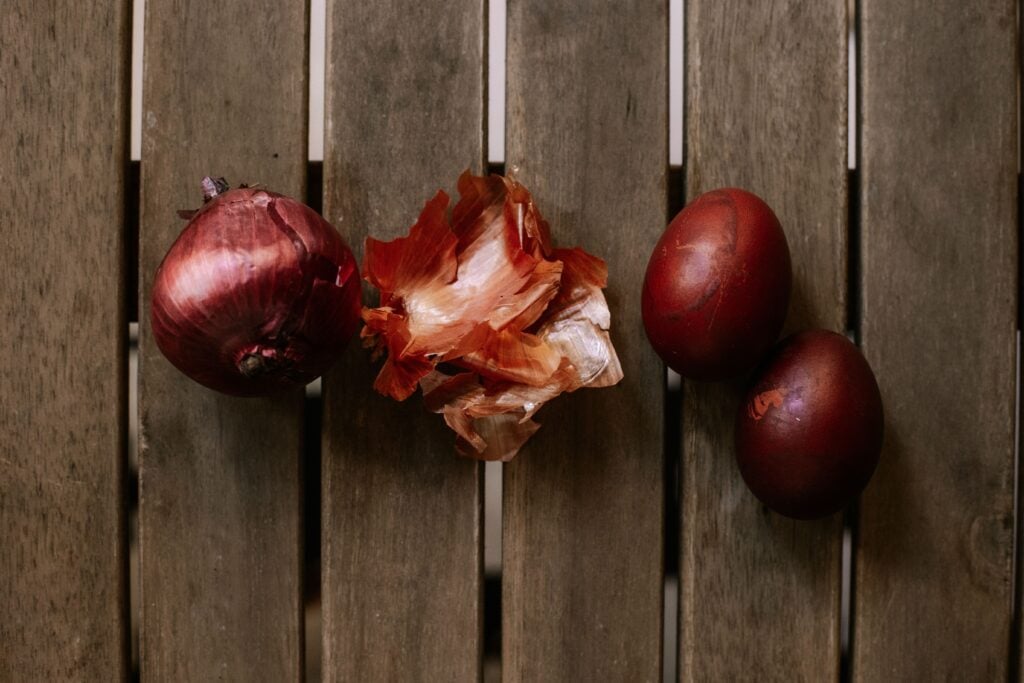
Onion skins can give Easter eggs beautiful shades of gold, brown, copper, and reddish orange. This traditional method is especially fun because you can use skins that would otherwise end up in the trash.
Wrap onion skins around uncooked eggs, secure them with fabric or string, and boil them together. Once the eggs cool, remove the skins to reveal the natural patterns and colors left behind.
Leave the Skins on When Roasting Onions
There’s no need to peel onions before roasting them if you’re cooking them whole. The outer skins can help protect the onion while it cooks and make it easier to handle.
Once the onion is soft and roasted, let it cool enough to handle and peel away the outer layers. You’ll be left with a tender roasted onion that can be used in soups, sauces, sandwiches, or side dishes.
Add a Little Onion Skin Powder to Bread
If you’ve made onion skin powder, try adding a small amount to homemade bread dough. One or two teaspoons can give the dough a subtle onion flavor and a slightly darker color.
Start with a small amount since the flavor can become stronger as you add more. It works particularly well in savory breads, rolls, and doughs that already include herbs, cheese, garlic, or other savory ingredients.
For more homemade bread ideas, check out these homemade breads that are easy to make.
Other posts you might like:
- Banana Peels Might Be the Most Underrated Natural Boost for Your Garden
- I Stopped Using Dryer Sheets in the Dryer—Here’s Where I Use Them Instead
- Stop Throwing Away Orange Peels — Some Call Them Trash, Others Call Them Kitchen Gold
- 14 Practical Uses for Windex
- 15 Incredible Ways to Repurpose Used Coffee Grounds