







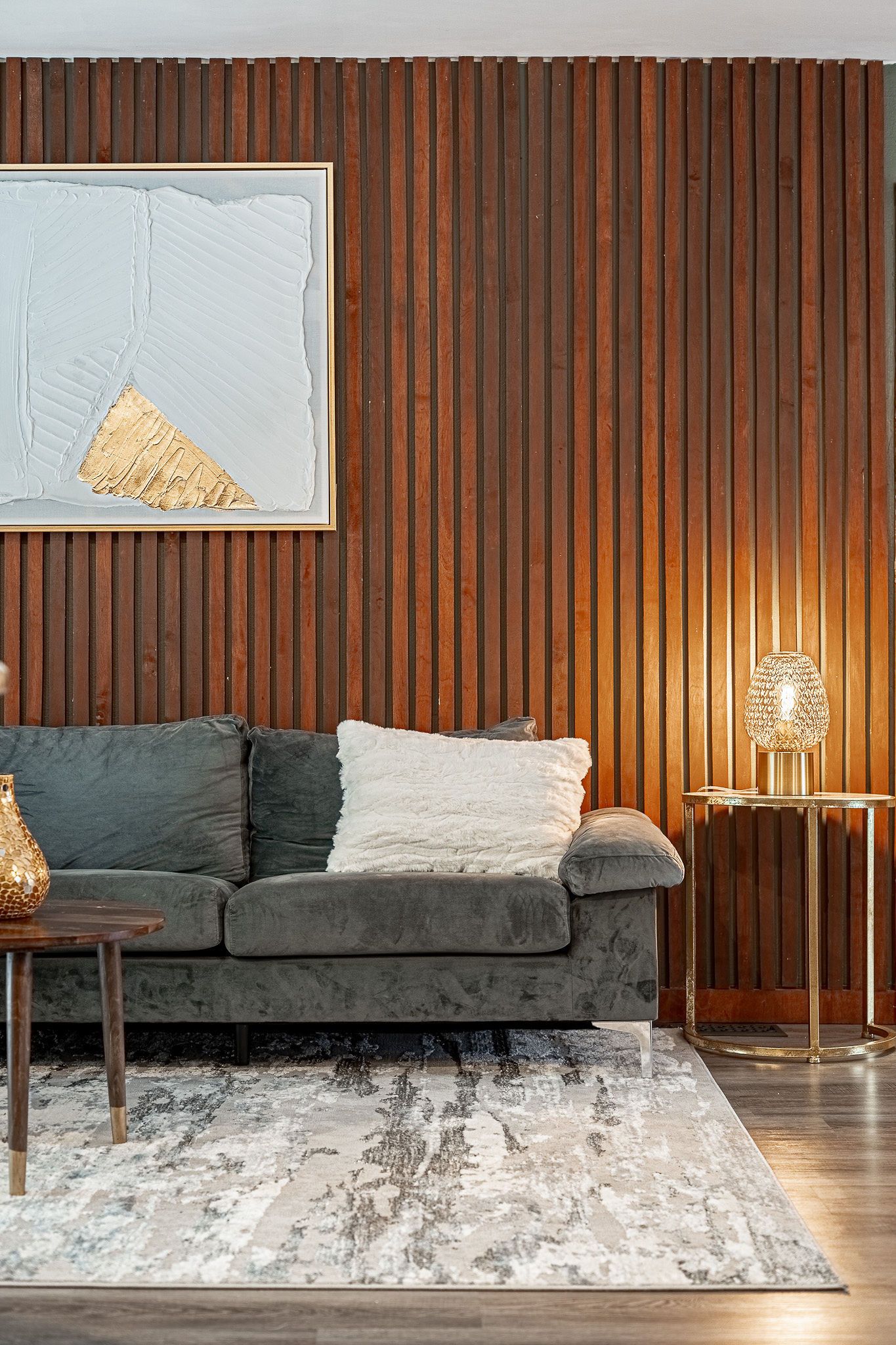
We were getting a bit bored with our plain walls and wanted to liven up our living room. A wooden slat wall seemed like a modern way to add warmth and character to our space. It’s a simple but attractive addition that can give your room a more stylish and contemporary feel. This type of slated wall has rustic charm and natural beauty that can improve any room’s atmosphere with little effort.
I eventually decided to give it a try and to be honest, it turned out to be easier than I initially thought, especially once I had all the materials ready. The most challenging part was cutting the wood board into slats.
So, if you’ve been thinking about adding something unique to your living room, I can guide you through installing slat walls – from choosing the right wood to measuring and cutting the slats, along with all the mistakes and hiccups I encountered.
So, if you’re up for it, grab your tools, and let’s get started.
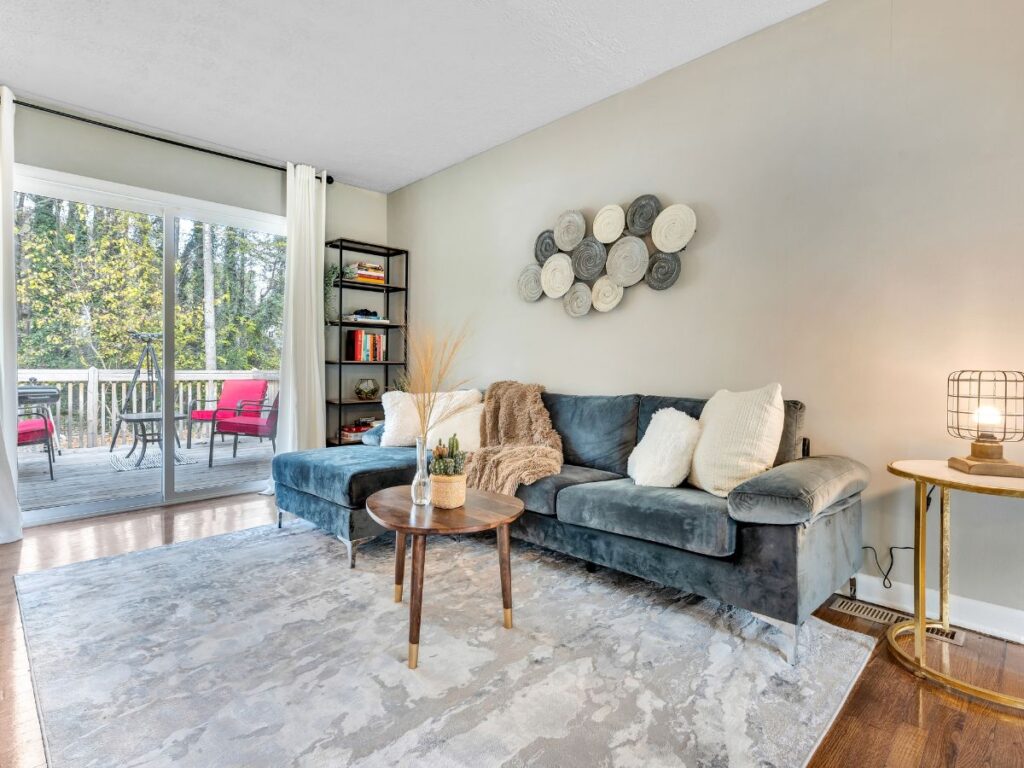
Original Look of the Wall
The current wall had been coated with Sherwin-Williams’ Mindful Gray paint. It served its purpose as a plain, neat wall for some time, but we recognized the potential to enhance it with wooden slats.
Supplies Needed
- Wood slats – I used 4×8 Sande Plywood
- Stain (optional) – We used Varathane gunstock wood stain color
- Measuring tape
- Circular saw
- Drill or screwdriver
- Brad Nailer
- Brad’s nails
- Leveler
- Wood glue
- Orbital Sander or Sandpaper
- Paint for wall (optional) – I used pewter green by Sherwin Williams
- Paintbrush
- Rag
- Drop cloth
- Painters tape
- Paint Rollers
DIY Slat Wall – Step-by-Step Guide
Step 1: Measure and plan
Before you begin, measure the wall dimensions where you want to install the wood slat wall. Account for any doors, windows, or other architectural features that may affect slat placement.
Use a measuring tape and level to mark where the slats will attach to the wall. Consider the direction in which you want the wood slats to run. A vertical wood slat wall can make a room appear taller, while horizontal slats can create a sense of width and openness. We opted for a vertical, floor-to-ceiling layout across the entire living room wall.
Next, determine the spacing between each slat. This will depend on your design preference, but a common range is 1 to 4 inches.
Step 2: Cut the wood slats
When we visited Home Depot, we originally considered purchasing these 1×2 pre-cut pine wood pieces. However, once we calculated the cost to cover the entire wall, it was well above our allocated budget. Select pine wood costs about $7.40 each, which would be well over $500 for the number of pieces we needed.
Instead, we opted to buy (3) 4’x8′ sheets of plywood for around $65 each. Each 4’x8′ sheet of plywood yielded about 27 1×2 wood slats.
We used a circular saw to cut the wood slats. We double-checked the measurements repeatedly before making any cuts to avoid mistakes.
If you have pre-cut wood slats, then you may be able to skip this step.
Step 3: Sand the wood slats
Use sandpaper or a sander to give the wood slats a smooth finish. This will help to smooth out any rough edges or surfaces. This prevents splinters and creates a more polished look. After sanding, wipe away any dust with a clean cloth.
Step 4: Stain the slats
Apply the desired finish to the wood slat wall. I used the Gunstock stain color by Varathane.
When staining, stain the front of the wood that will be seen and the sides of the slats. No need to stain the back. Let it dry overnight before moving on to the next step.
Staining is optional, but you can also let the natural wood tone shine through.
Step 5: Prepare the wall and remove baseboards
The color of the wall behind the slats is crucial, as it serves as the backdrop for the slats themselves. You might want to choose a darker shade for a more striking, contemporary look.
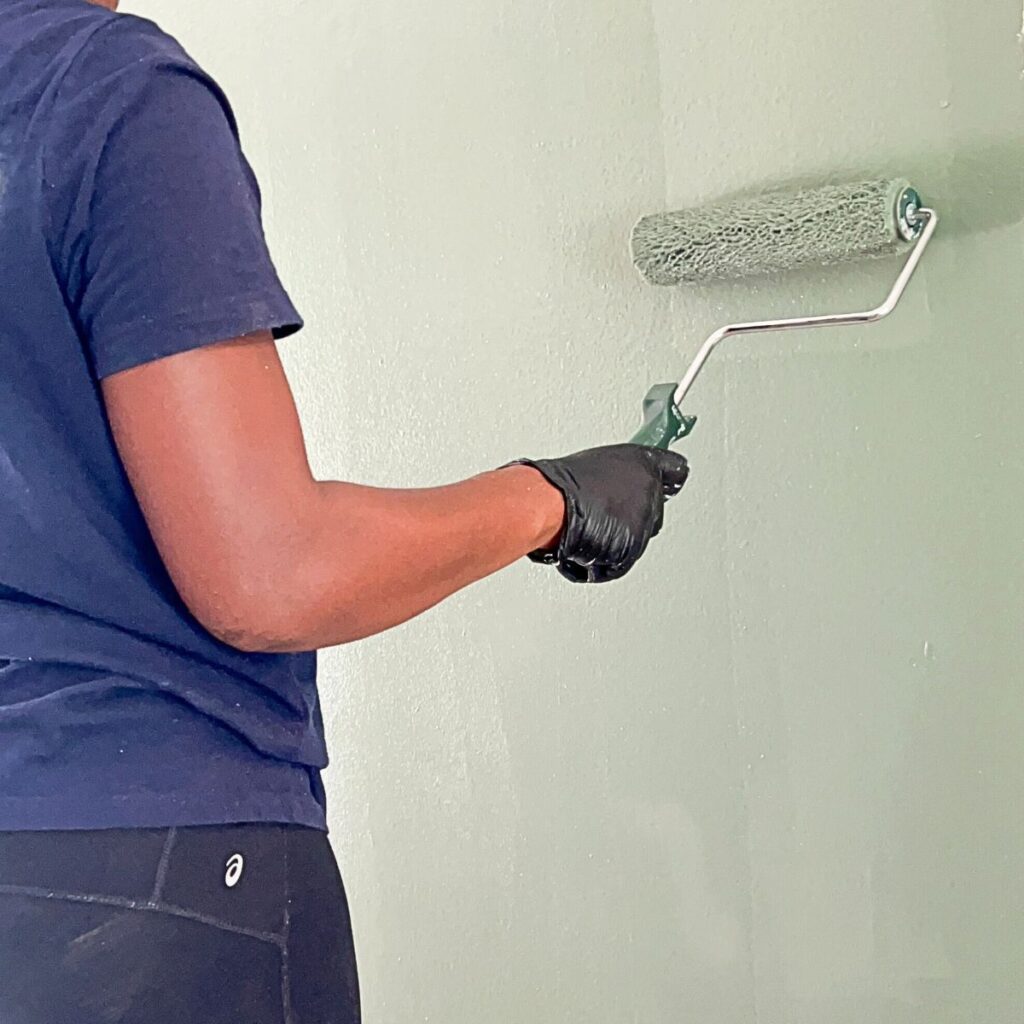
In our case, we chose a darker background and painted the wall Sherwin-Williams Pewter Green. We found this color appealing and thought it would create a pleasing contrast with the wood slats. I applied two coats using a paint roller and touched up the edges with a paintbrush.

Additionally, we had to remove the existing baseboards for this project. When we removed them, we created unique baseboards using stained pieces of plywood that matched the original baseboards’ size and style. This step isn’t mandatory; you can also remove the baseboards and have the wood slats run flush from the floor to the ceiling.

Step 6: Attach the wood slats
To begin installing your wood slats, start from either the left or right side of the wall. Before you start, think about the spacing between each slat. We used a spare wood slat as a support board to create a gap of approximately 1 inch between each vertical slat. However, standard spacing can range from 1/4 inch to 1 inch apart.
Place one wood slat on the wall at a time, paying special attention to the first one to ensure its level. Since even newer houses may not have perfectly straight walls, use a level to confirm alignment. Hold the first wood slat in the corner and check its level using the level tool before attaching it.
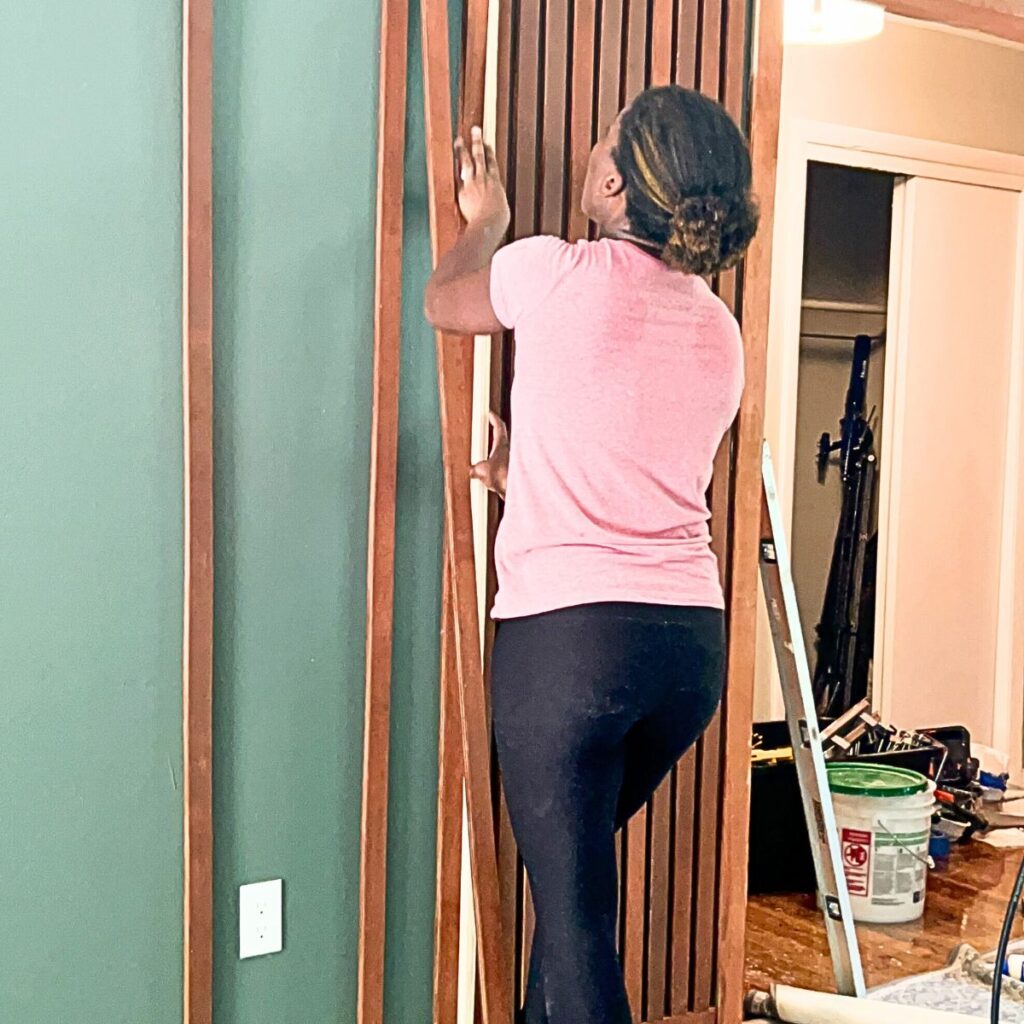

Once it’s leveled, use a brad nail gun to secure the wood slats to the wall with the brad nails. We nailed them at the bottom, top of the wall, and a few nails in the middle for added stability. You can also apply wood glue to the back of each slat before attaching it for extra support.
Now that you’ve established the first board is level, set aside the level and use a spare wood slat on its side as a spacer between the boards for the rest of the DIY slat wall installation. Continue attaching the subsequent individual slats one at a time, using the scrap piece of wood as a spacer until you reach the desired number of wood slats on the wall.
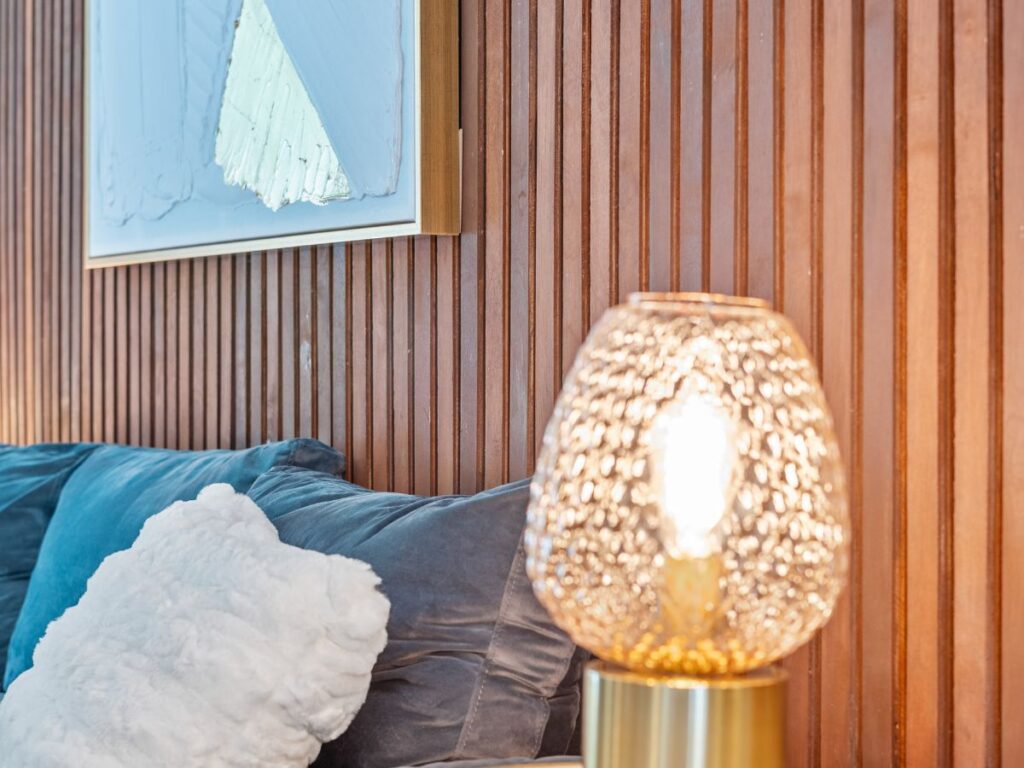
Take a step back and admire your final look. Your new wood slat wall will instantly elevate the ambiance of your space and become a conversation piece for guests.


Tips for Installing Wooden Slats
Prepare for wall abnormalities – Your walls may not be completely level, so it’s essential to measure repeatedly before cutting. You may need to adjust some slats to fit the wall length. Some wall areas were slightly off, so we adjusted the wood slats accordingly.
Consider Types of Wood – Several options are available when selecting the right type of wood for your DIY wood slat wall. Each type of wood has unique characteristics and aesthetic appeal, so choosing one that fits your design vision and budget matters. Options may include pine, cedar, hardwood, or birch.
Materials like Birch plywood, maple, or pine are solid choices with more appealing grain patterns, which is great if you plan to stain the wood or leave your slat accent wall with its natural look.
Cost of Wood – The cost of the wood slats depends on the type of wood chosen, the quantity needed, and the wood quality. Pine wood tends to be more affordable, while hardwoods like oak or walnut can be more expensive. We chose plywood because it was the most cost-effective option. However, it does require more labor and time.
Other posts you might like: