Weeds have a habit of showing up anywhere they can find a patch of bare soil. Before long, they can crowd your flowers, shrubs, and vegetables and leave you spending more time pulling weeds than enjoying the garden.
One way to cut down on that work is to plant ground covers in those empty spots. Once they fill in, their leaves shade the soil and leave less open space for weed seeds to sprout. Many ground covers also bring flowers, interesting foliage, or color to areas that might otherwise look bare.
If you’d rather spend less time weeding, these ground cover plants are worth a look.
Periwinkle (Vinca minor)
Periwinkle spreads well through shady areas, creating a thick carpet of glossy green leaves. The foliage stays green through much of the year and covers the soil so weeds have less room to grow. In spring, blue-purple flowers add a splash of color beneath trees and shrubs.
Lenten Rose (Helleborus orientalis)
Lenten rose doesn’t spread as quickly as some other ground covers, but its broad evergreen leaves do a good job of shading the soil. That can help keep weeds down through the year. Its flowers arrive in late winter and early spring, giving the garden some color before many other plants have started blooming.
Related: Perennial Flowers That Pop Up Every Blooming Season
Sweet Woodruff (Galium odoratum)
Sweet woodruff is a favorite for shady garden beds where grass and other plants may have trouble growing. It spreads into a soft-looking carpet of small leaves, filling bare spots and leaving little open soil for weeds. Small white flowers appear in spring.
Trailing Lantana (Lantana montevidensis)
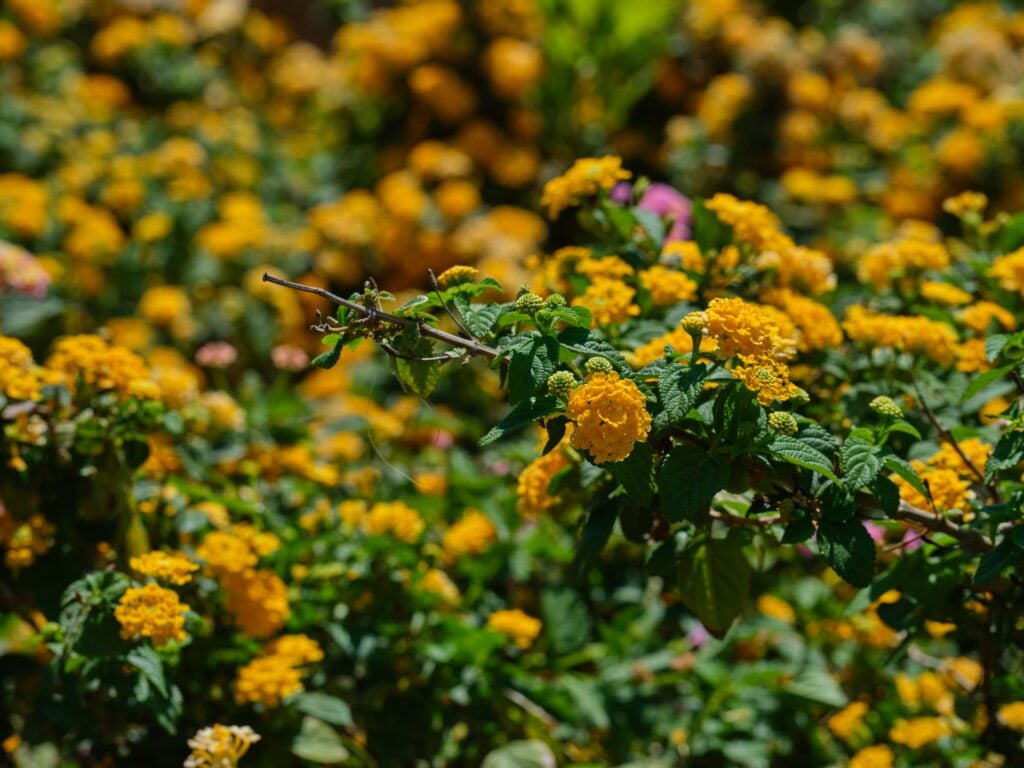
Trailing lantana is a good pick for sunny areas where you want a ground cover that spreads. Its stems trail along the soil and can quickly fill an open space with green foliage and colorful flowers. Once the plants fill in, they can make it harder for weeds to find room to grow. Butterflies also tend to visit the flowers.
Creeping Phlox (Phlox subulata)
Creeping phlox can turn a bare slope or garden border into a carpet of flowers in spring. The low-growing foliage stays behind after the flowers fade, covering the soil and helping keep weeds from filling the gaps. It works well in sunny spots and is especially pretty along paths, walls, and raised beds.
Dead Nettle (Lamium maculatum)
Dead nettle can handle shady areas where plenty of other plants struggle. Its spreading stems and silver-marked leaves create a thick cover over the soil, making it harder for weeds to get started. The foliage also helps brighten darker parts of the garden.
Related: 15 Plants You Only Have to Plant Once (They Come Back Every Year)
Candytuft (Iberis sempervirens)
Candytuft grows into low evergreen mounds that can gradually fill in around other plants. In spring, clusters of white flowers cover the plant and create a bright display. Its foliage remains after the flowers are gone, giving the soil some coverage through the rest of the year.
Lamb’s Ear (Stachys byzantina)
Lamb’s ear is easy to recognize thanks to its soft, fuzzy, silver-colored leaves. The leaves spread outward and can form a fairly thick mat over bare soil. That coverage helps shade the ground and gives weed seeds less sunlight and space to get started.
Bugleweed (Ajuga reptans)
If you have an area where weeds seem to take over quickly, bugleweed can fill the space just as quickly. It spreads along the ground and produces dense foliage, with blue-purple flower spikes appearing in spring. It can cover bare patches well, though its quick growth means you’ll need to keep an eye on where it spreads.
Sedum (Sedum spp.)
Low-growing sedums are a good match for sunny, dry spots where other ground covers may struggle. Their fleshy leaves spread across the soil and help cover bare ground. Depending on the type, sedum can also provide small flowers and interesting foliage throughout the growing season.
Hardy Plumbago (Ceratostigma plumbaginoides)
Hardy plumbago starts with green foliage that spreads across the ground and later produces striking blue flowers in late summer. Its leaves provide plenty of coverage around other plants and help shade the soil. The foliage can also take on reddish tones as the weather cools.
Creeping Thyme (Thymus serpyllum)
Creeping thyme stays close to the ground and forms a fragrant mat of tiny leaves. It likes sunny locations and can handle some foot traffic, making it useful around stepping stones and garden paths. When it flowers, the small blooms attract bees and other pollinators.
Epimedium (Epimedium spp.)
Epimedium is a useful choice for dry, shady spots, which can be some of the hardest parts of a garden to fill. Its attractive leaves spread over the ground and help cover bare soil. Once established, it can make those difficult areas much easier to manage.
Liriope (Liriope spp.)
Liriope grows in dense clumps of grass-like leaves that can spread into a thick border over time. The foliage covers the soil and leaves less room for weeds. Purple flower spikes add color during the growing season, and the plants can work well along walkways, garden borders, and beneath trees.
Pachysandra (Pachysandra terminalis)
Pachysandra is a popular choice for deep shade, especially beneath trees where other plants may struggle. Its evergreen foliage eventually forms a thick blanket over the soil. Once a planting has filled in, it can cover bare ground and help keep weeds from becoming a constant problem.
Related: 13 Little-Known Home Depot Benefits Smart Customers Take Advantage Of
Creeping Jenny (Lysimachia nummularia)
Creeping Jenny gets its name from the way its stems trail along the ground and root as they grow. It can fill an open area fairly quickly, with round leaves that range from green to bright yellow-green depending on the growing conditions. That thick coverage can leave less room for weeds.
Bearberry (Arctostaphylos uva-ursi)
Bearberry is a low-growing evergreen that handles sunny locations and poor soil. Its stems spread along the ground, providing coverage throughout the year. Small flowers appear in spring, followed by red berries that can add another bit of seasonal interest.
Allegheny Spurge (Pachysandra procumbens)
Allegheny spurge is a native ground cover that works well in woodland-style gardens and shady areas. It spreads at a slower pace than some of the other plants on this list, but it can eventually form broad patches. Its mottled leaves add plenty of interest while helping cover bare soil and keep weeds from filling the space.
Other Topics You Might Like
- 14 Wildly Unusual Perennials You Don’t See in Many Gardens
- I Stopped Buying Fertilizers After Years of Gardening and Started Using This Instead
- Some of the Best Gardening Tips I Ever Got That Break All the Rules
- 9 Vintage Gardening Tools Hiding in Grandma’s Potting Shed— Some Could Be Worth a Small Fortune