Nonstick pans are one of the most convenient tools in the kitchen. They make it easy to cook delicate foods like eggs, pancakes, and grilled cheese without worrying about sticking or scrubbing stubborn residue afterward. But over time, even the best nonstick cookware can develop scratches or chips in the coating.
Seeing those marks can raise an obvious question: Is it still safe to cook with a scratched nonstick pan?
In most cases, a few minor scratches on a modern nonstick pan are not considered a major health risk. However, the full answer depends on several factors, including the age of the pan, the extent of coating damage, and how the pan is used. Understanding what nonstick coatings are made of and what happens when they become scratched can help you decide whether to keep using the pan or replace it.
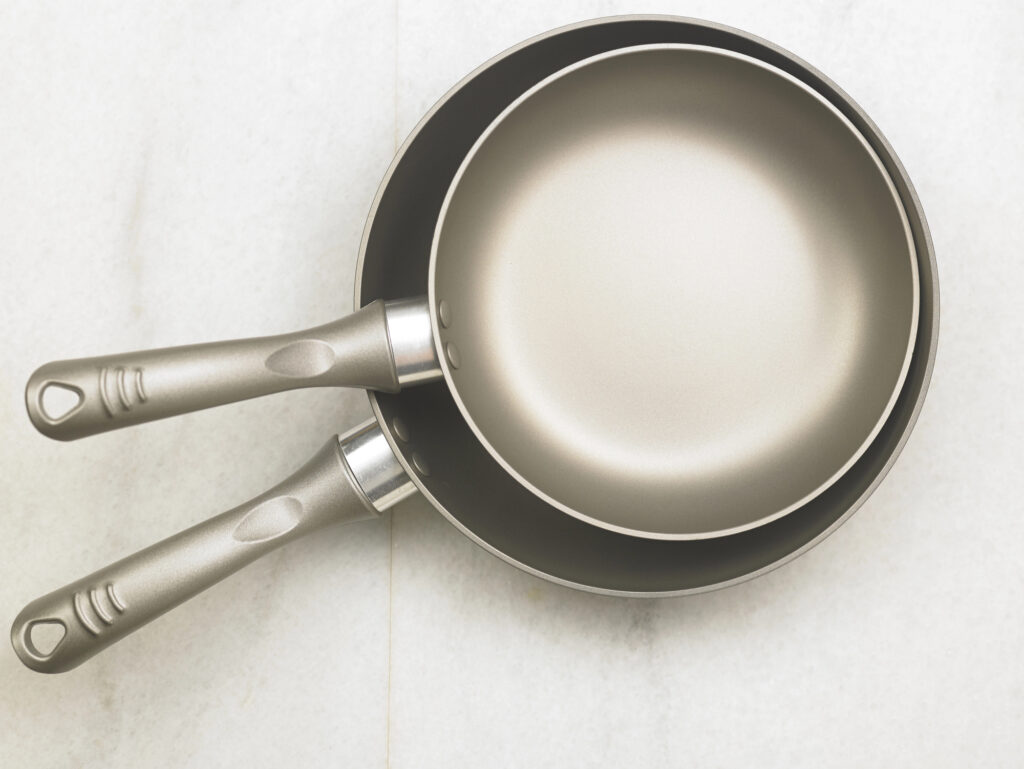
What Happens When a Nonstick Pan Gets Scratched
Scratches on nonstick pans are common and usually happen from everyday use. Metal utensils, abrasive cleaning pads, or stacking pans without protection can gradually damage the coating.
When the surface becomes scratched or chipped, tiny fragments of the coating may break off during cooking, releasing microplastic and nanoplastic particles.
Even so, the coating itself, typically made from polytetrafluoroethylene (PTFE), is considered chemically inert. According to the U.S. Food and Drug Administration, small amounts that may accidentally be ingested generally pass through the body without being absorbed.
The bigger concern with heavily scratched cookware is that the protective coating may wear away, exposing the metal underneath and affecting both cooking performance and durability.
Two Potential Risks of Damaged Nonstick Pans
Overheating the Pan
The most widely recognized safety concern with nonstick cookware is overheating. When PTFE coatings are heated above about 500°F (260°C), they can begin to break down and release fumes. Inhaling these fumes can cause temporary flu-like symptoms sometimes called polymer fume fever, according to the American Cancer Society.
This usually occurs when an empty pan is left on high heat for an extended period rather than during normal cooking.
Flaking From Scratched Coating
If the coating becomes deeply scratched or begins peeling, small flakes can mix into food during cooking. While PTFE is generally considered inert and unlikely to be absorbed by the body, damaged pans may release microplastic particles and should be replaced once the coating begins breaking down.
When a Scratched Pan Should Be Replaced
While small scratches are common and generally not dangerous, heavily damaged cookware should be replaced. Signs that a nonstick pan has reached the end of its lifespan include:
- Deep scratches that expose the metal underneath
- Large areas where the coating is peeling or flaking
- Food sticks regularly despite proper use
- Warping or uneven heating
- Discoloration that cannot be cleaned off
Many experts recommend replacing nonstick cookware when the coating becomes significantly damaged or when food consistently sticks to the surface.
Most nonstick pans typically last three to five years with regular use, depending on quality and care.
How to Extend the Life of Nonstick Cookware
Proper care can help prevent scratches and extend the lifespan of nonstick pans. Some simple habits can make a big difference:
- Use wooden, silicone, or plastic utensils instead of metal
- Wash pans by hand with a soft sponge instead of abrasive scrubbers
- Avoid cooking on very high heat
- Let the pan cool before washing to prevent warping
- Place a towel or pan protector between pans when stacking them
Taking these steps helps preserve the coating and keeps the pan performing well for longer.
A scratched nonstick pan is not automatically dangerous. Minor surface scratches on modern cookware are generally considered safe, especially if the coating is still largely intact.