Most offices aren’t exactly designed with plants in mind. The lighting is uneven at best, the air gets dry from heating or AC, and if you’re being honest, remembering to water something every week isn’t always at the top of your to-do list. It’s easy to assume you just “don’t have a green thumb” when a desk plant starts looking tired after a few weeks.
But the problem usually isn’t you, it’s choosing the wrong plant for the environment.
The truth is, some plants are far better suited for office life than others. They can handle fluorescent lighting, tolerate dry indoor air, and bounce back if you forget to water them during a busy stretch or long weekend. Instead of high-maintenance greenery that demands constant attention, these tougher varieties quietly adapt and keep growing with minimal fuss.
If you want to add a little life to your workspace without turning plant care into another responsibility, start with these 12 tough, office-friendly plants that truly survive dry air, low light, and busy schedules.
1. Snake Plant (Sansevieria trifasciata)
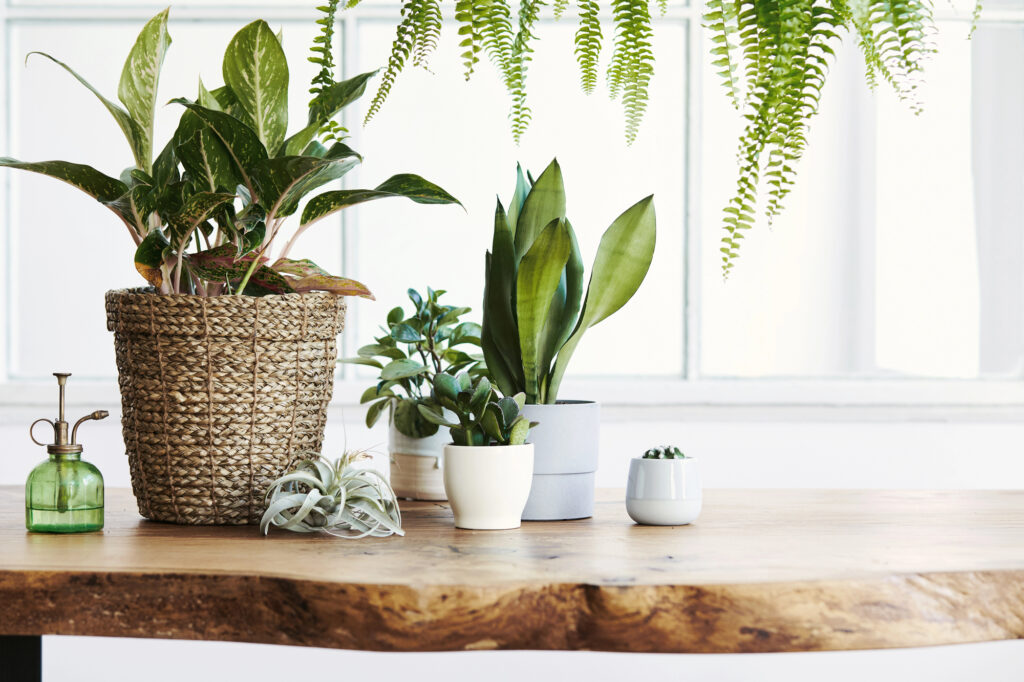
If you want a plant that basically minds its own business, this is it. Snake plants tolerate low light, don’t panic if you miss a watering, and still look sharp with their upright, structured leaves.
They’re great for corners, filing cabinets, or anywhere you want greenery without taking up desk space. Let the soil dry out completely before watering again. This is one plant that prefers you to underdo it.
2. ZZ Plant (Zamioculcas zamiifolia)
The ZZ plant is the definition of “low effort, high reward.” Its glossy leaves look almost too perfect, and it’s one of the best choices for offices with weak natural light.
It stores water in thick rhizomes, so it can go a while without attention. Water only when the pot is fully dry, and it will just keep trucking along.
3. Pothos (Epipremnum aureum)
Pothos is a friendly, forgiving vine that grows in almost any office situation. It looks great trailing off a shelf or sitting on a desk with a few vines spilling over the edge. If it gets a little droopy, that’s usually your cue that it’s thirsty, and it bounces back fast. Bonus: it’s easy to trim and propagate, so you can turn one plant into a few over time.
4. Cast Iron Plant (Aspidistra elatior)
This one earned its name. Cast iron plants handle low light, inconsistent watering, and general office neglect better than most houseplants.
The leaves are dark green and tidy, which makes it a nice choice for professional spaces. It’s also slow-growing, so it won’t suddenly outgrow its spot.
5. Chinese Evergreen (Aglaonema)
Chinese evergreens are a solid “desk-to-corner” plant because they tolerate low light and still look full and healthy. Many varieties have silver, cream, or pink patterning, so they add interest without needing flowers.
They prefer watering when the top inch or two of soil dries out. If your office runs dry, this plant usually adapts without drama.
6. Spider Plant (Chlorophytum comosum)

Spider plants are easygoing and a little fun, especially once they start producing “babies” that dangle off the sides. They handle dry indoor air better than many plants, and they’re not fussy about light as long as it’s not harsh direct sun.
If the tips brown, it’s usually due to dry air or tap water minerals; they’re still totally livable. Water when the top of the soil feels dry, and it will stay happy.
7. Heartleaf Philodendron (Philodendron hederaceum)
This is another vine that’s perfect for offices because it adapts quickly and forgives missed waterings. The leaves are a classic heart shape, and the plant can trail down from a shelf or climb a small support if you want it to look more styled.
It prefers bright, indirect light but still grows in lower light. Water when the top of the soil dries out, and trim occasionally to keep it looking full.
8. Lucky Bamboo (Dracaena sanderiana)
Lucky bamboo is great if you want something clean and simple that doesn’t involve potting soil. It can grow in water with pebbles, which makes it feel “desk-friendly” and low mess.
It does fine in low to moderate light and doesn’t need much space. Just change the water every couple of weeks and keep it out of direct sunlight.
9. Dracaena (Dracaena fragrans or Dracaena marginata)
Dracaenas are popular in offices for a reason: they tolerate low light, handle dry air, and don’t need constant watering.
They also grow upright, so they’re easy to fit into corners without spreading everywhere. Let the top few inches of soil dry out before watering again. If you want a plant that looks like it belongs in a lobby, this is a good one.
10. Peace Lily (Spathiphyllum)
Peace lilies are slightly more “communicative” than the super tough plants, but they’re still very office-friendly. They’ll let you know they need water by drooping, and they perk up quickly after a drink.
They can tolerate low light, though blooming is more likely with brighter indirect light. Keep the soil lightly moist but not soggy, and you’ll get a lush, polished-looking plant.
11. Jade Plant (Crassula ovata)
Jade is a slow-growing succulent that works well in offices because it doesn’t need much water and doesn’t mind dry air. It does best near a window, but it can still manage in decent indoor light if you’re careful not to overwater.
Let the pot dry out completely between waterings. Over time, it gets a sturdy, tree-like shape that looks great in a simple pot.
12. Ponytail Palm (Beaucarnea recurvata)
Despite the name, this isn’t a true palm; it’s basically a succulent with a fun hairstyle. The thick base stores water, so it can handle missed waterings and dry indoor air easily.
It likes bright light but adapts to moderate office light better than many “palm-looking” plants. If you want something hardy that also looks a little different, this is a good pick.