
A yard sale isn’t just about putting things on your lawn and hoping people show up. The difference between a sale that flops and one that brings in real cash usually comes down to how you set it up.
After hosting multiple yard sales over the years, one thing becomes clear: small details matter. How you price, display, and even schedule your sale can directly impact how much you make.
If you want to actually clear things out and walk away with a solid amount of money, here’s what makes the biggest difference.
Start With a Real Declutter
Give yourself at least a couple of weeks to go through your home properly. Focus on closets, garages, and storage areas where things tend to pile up. Sort everything into clear categories: keep, sell, donate, and toss. The more intentional you are at this stage, the better your sale will be.
Choose the Right Day (It Matters More Than You Think)
Saturday is by far the most profitable day for a yard sale. That’s when the biggest crowds show up and when people are actually planning to shop.
Fridays can bring in some traffic, especially from resellers or retirees, but Sundays are usually slower, and buyers expect deep discounts. If you want to make the most money, focus on a strong Saturday sale.
Pay Attention to the Weather
You can plan everything perfectly, but bad weather will hurt your turnout. Keep an eye on the forecast and aim for a clear, mild day. Sometimes it’s worth adjusting your date at the last minute if the weather isn’t cooperating.
Set Up Early (Earlier Than You Think)
The busiest hours for a yard sale are usually between 8 AM and 11 AM. That’s when serious buyers and early shoppers show up. Be fully set up before your posted start time because people will come early, and those early buyers often spend the most.
Use Tables—Not the Ground
One of the quickest ways to lose value on your items is to put them directly on the ground. Use tables, racks, crates, or even makeshift setups like sawhorses and boards. Elevating your items makes everything feel more valuable and easier to shop.
Make Your Setup Look Clean and Organized
Think of your yard like a small store. Group similar items together: kitchen items, clothes, toys, and tools, and keep everything neat. Cover tables with simple sheets or tablecloths to create a clean, inviting look. First impressions matter more than people realize.
Don’t Let Items Get Wet
Morning dew can quickly ruin items, especially paper goods, clothing, and cardboard. If something has to go near the ground, use tarps, blankets, or towels to protect it. A little effort here goes a long way.
Price Things to Sell (Not to Store)
This is where many people go wrong. For larger items, a good rule is to start around 50% of the current retail value, then lower it a bit more to stay competitive. For smaller items, think in terms of what you would realistically pay at a yard sale, usually much lower. If it’s priced too high, it won’t sell.
Group Lower-Priced Items Together
Instead of pricing everything individually, bundle smaller items into simple deals like $1 tables, 50¢ bins, or “3 for $5.” This makes it easier for buyers to grab more and helps you move things faster.
Create Displays That Catch Attention
Place your best items where they can be seen from the street. Larger items, tools, or anything valuable should be front and center. A good display can literally make someone stop their car.
Advertise Everywhere You Can
Don’t rely on just signs. Post your sale on Facebook Marketplace, local groups, Craigslist, and Nextdoor. Include photos and highlight your best items. The more visibility you get, the more serious buyers will show up.
Use Clear, Easy-to-Read Signs
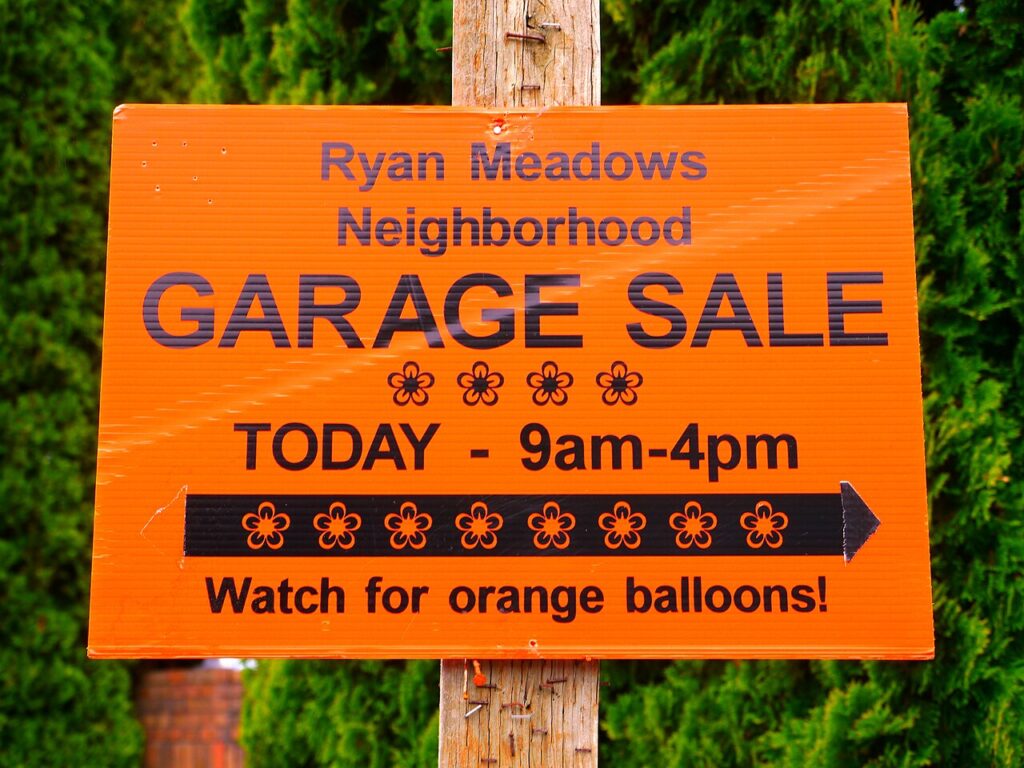
Your signs should be simple and bold with big lettering and clear arrows. If someone can’t read your sign quickly while driving, they won’t stop.
Have Plenty of Change Ready
Start the day with small bills and coins, at least $50 worth. You don’t want to lose a sale because you can’t break a bill.
Be Ready to Negotiate
People will try to negotiate it’s part of yard sale culture. Decide ahead of time what you’re willing to accept, and be open to bundling items. The goal is to sell, not bring things back inside.
Plan for Leftovers Ahead of Time
Not everything will sell, and that’s okay. Schedule a donation pickup, plan a drop-off, or offer deep discounts at the end of the day. The goal is to clear space, not restore clutter.
Keep It Short and Focused
Long weekend sales often don’t perform as well as a strong, well-organized one-day sale. A focused Saturday sale creates urgency, attracts more buyers, and usually yields higher profits.