
The kitchen faucet serves as an essential tool in our daily kitchen activities. It’s a practical necessity for cooking, cleaning, and preparing meals. Additionally, it helps define the overall style and personality of the kitchen.
After purchasing our home, my husband and I embarked on a journey to make subtle improvements that would reflect our personal preferences. Among the various tasks on our list, one stood out—the replacement of our outdated kitchen faucet. The faucet had seen better days, showing signs of wear and tear.
If you are in a similar position and need to update your kitchen faucet, I’ll walk you through the process so you can confidently tackle it. By following these easy steps, you can complete the replacement in less than an hour, saving time and money.

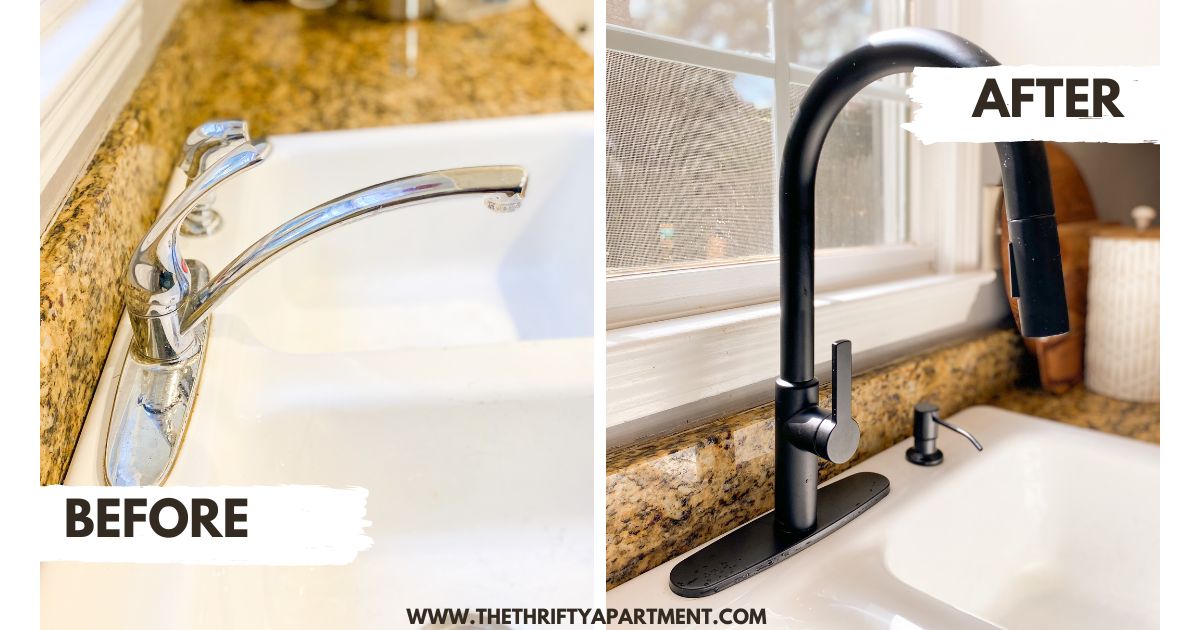
Kitchen Faucet Before Replacement
The kitchen faucet is a true workhorse in any home. It’s only right for its functionality and appearance to reflect its important role. The existing faucet in our kitchen has severe wear and tear, and it stood out like a sore thumb, failing to blend with our kitchen’s overall look and feel.
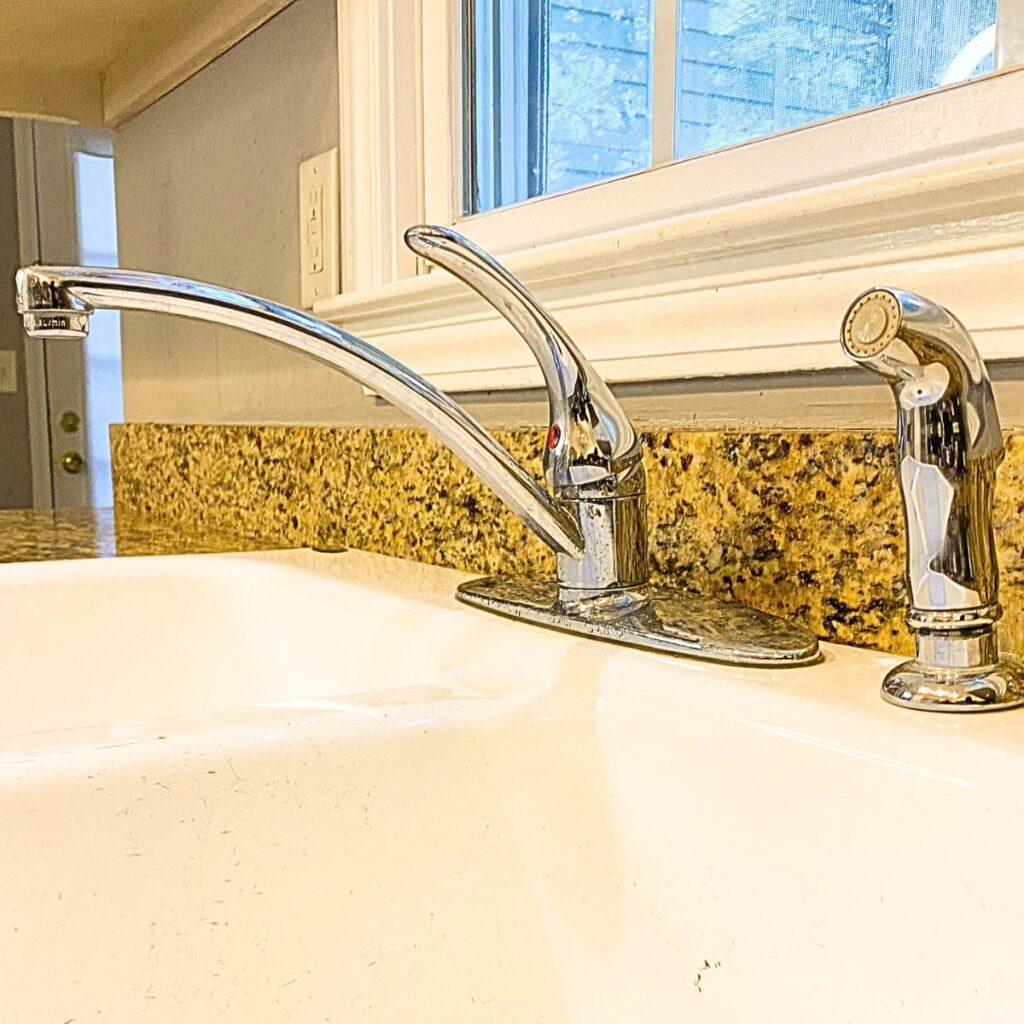
Our existing kitchen had a combination of white cabinets and granite countertops decorated with matte black cabinet handles interwoven with hints of black and brown. However, the chrome-finished faucet and a somewhat lackluster separate sprayer did not fit well into this space. We needed an upgrade. And we needed it badly.
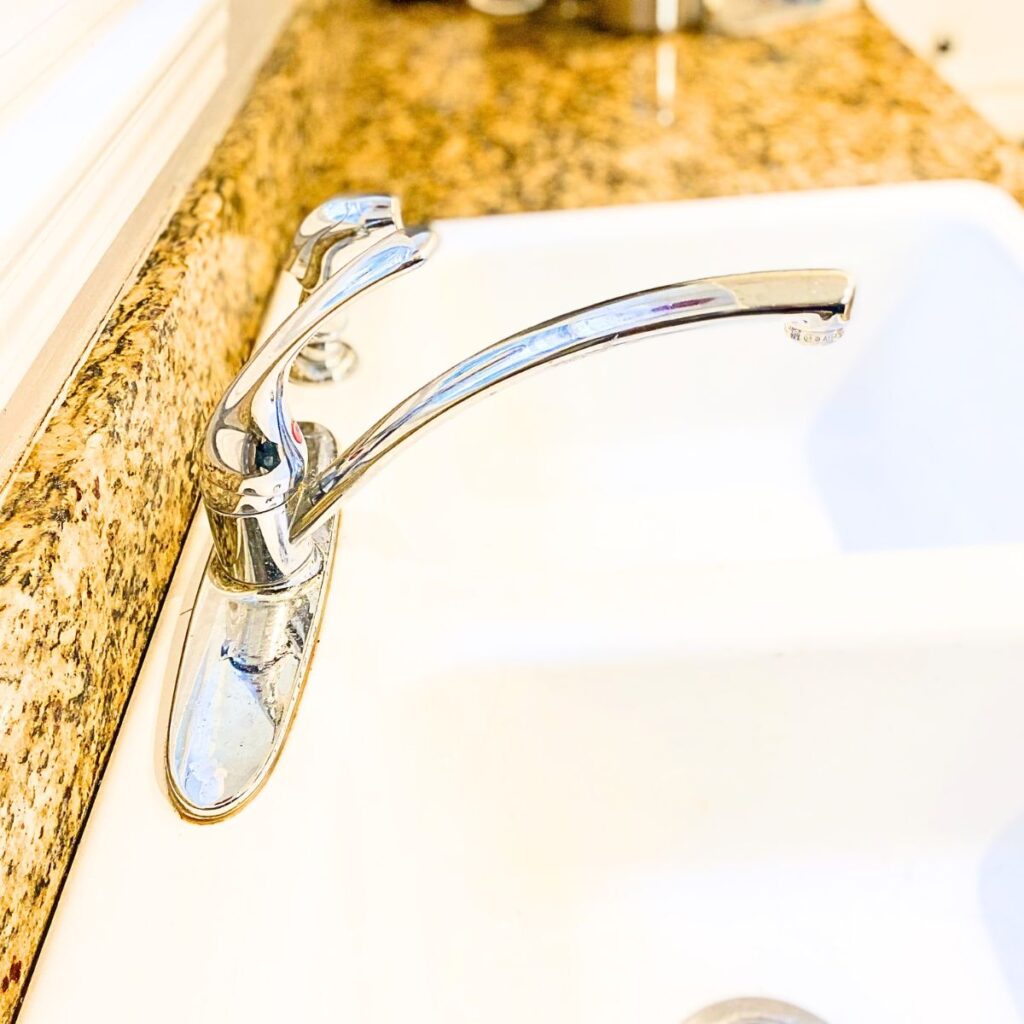
The idea of replacing our aged kitchen faucet felt a bit overwhelming at first. However, the appeal of a new faucet easily overshadowed our apprehension. Moreover, the cost of hiring a licensed plumber was a bit beyond our budget. Thus, as we gradually researched the required tools and installation process, a newfound sense of confidence emerged.
How To Install a Kitchen Sink Faucet
Supplies Needed
- Kitchen Faucet – I used this Kraus Pull-Down Kitchen Faucet
- Adjustable Wrench
- Pliers – I used the 8-piece Irwin Vise-Grip GrooveLock Pliers Set. It is my go-to for most home DIY projects.
- Phillips Screwdriver
- Pipe sealing tape
- Deck Plate or Escutcheon plate
- Flashlight
- Plumber’s Putty

Most of these supplies can also be found at your local home improvement store or hardware store.
Step 1: Clear the countertop and underneath the kitchen sink.
The first step is to clear the countertop and the area beneath the kitchen sink. This ensures a tidy workspace both above and below the counter.
This approach tends to simplify the process and prevent mishaps during installation, such as getting items wet or causing damage.
The next step is to gather all the tools and parts. The last thing you want to do is start the project only to find that pieces are missing, leaving you without a kitchen sink until you can get all the supplies together. You can typically check the installation guide for the specific faucet, which will include a diagram and parts list.
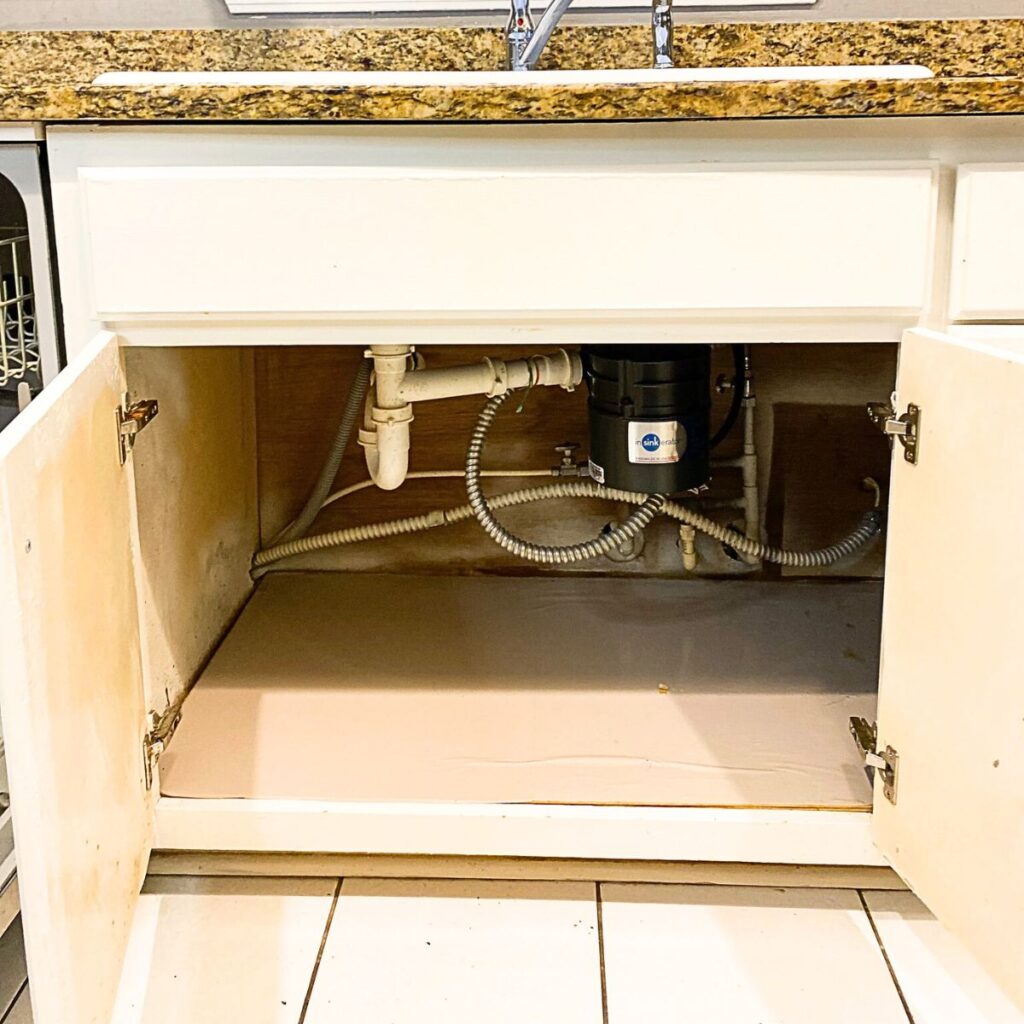
Step 3: Turn off the hot water and cold water line
Now, it’s time to shut off the water supply lines. This is an important step. Close off the water supply valves located beneath the kitchen sink. There will be a fair amount of maneuvering beneath the kitchen sink. Turning off these valves effectively halts the water flow in preparation for the faucet removal process.
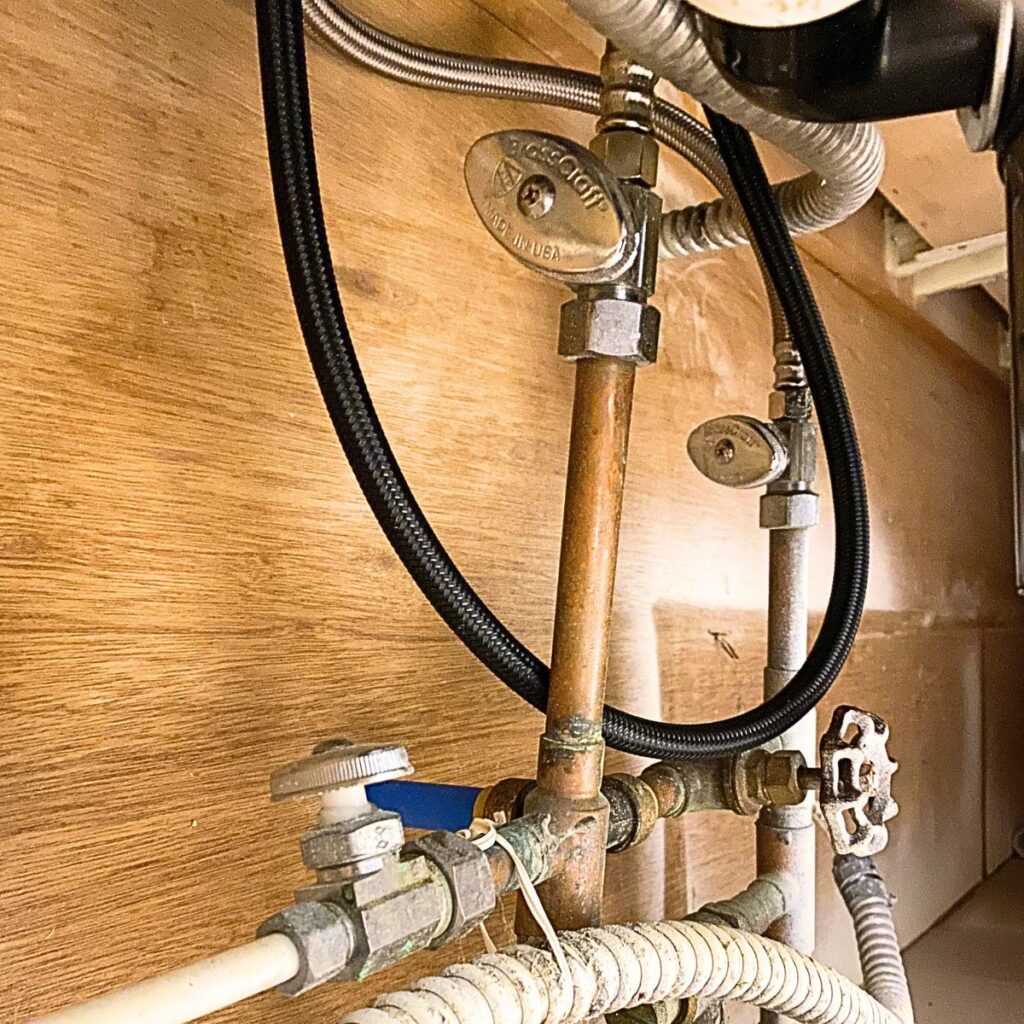
Step 4: Remove the old faucet
Your next move is to unscrew these nuts with a wrench. Each water supply line, both hot and cold, is affixed to a valve via a threaded nut. Use a flashlight or the light from your cell phone to help you navigate this confined space.
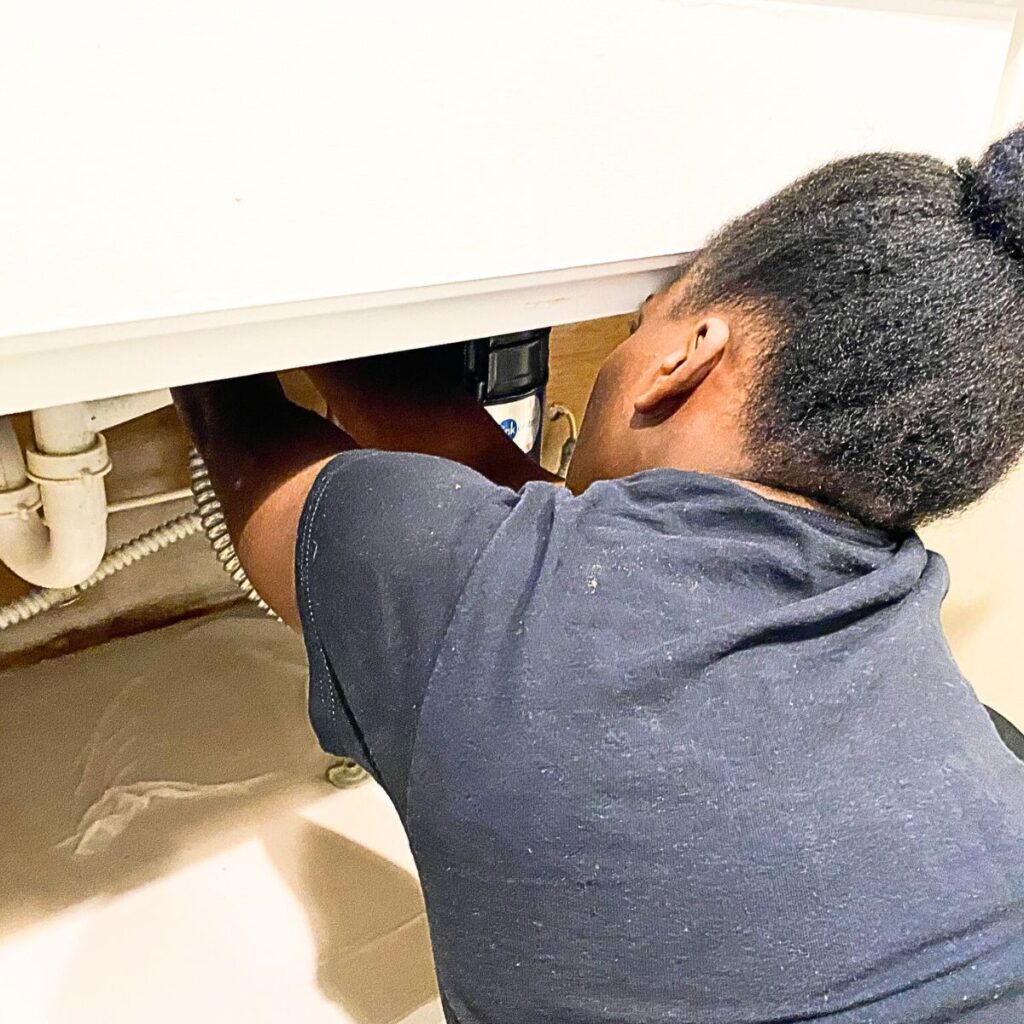
Proceed to disconnect the water supply lines and detach the aged connections to the faucet. Once completed, you can then extract the faucet itself.
When removing the old faucet, you might see some residual water spilling out.

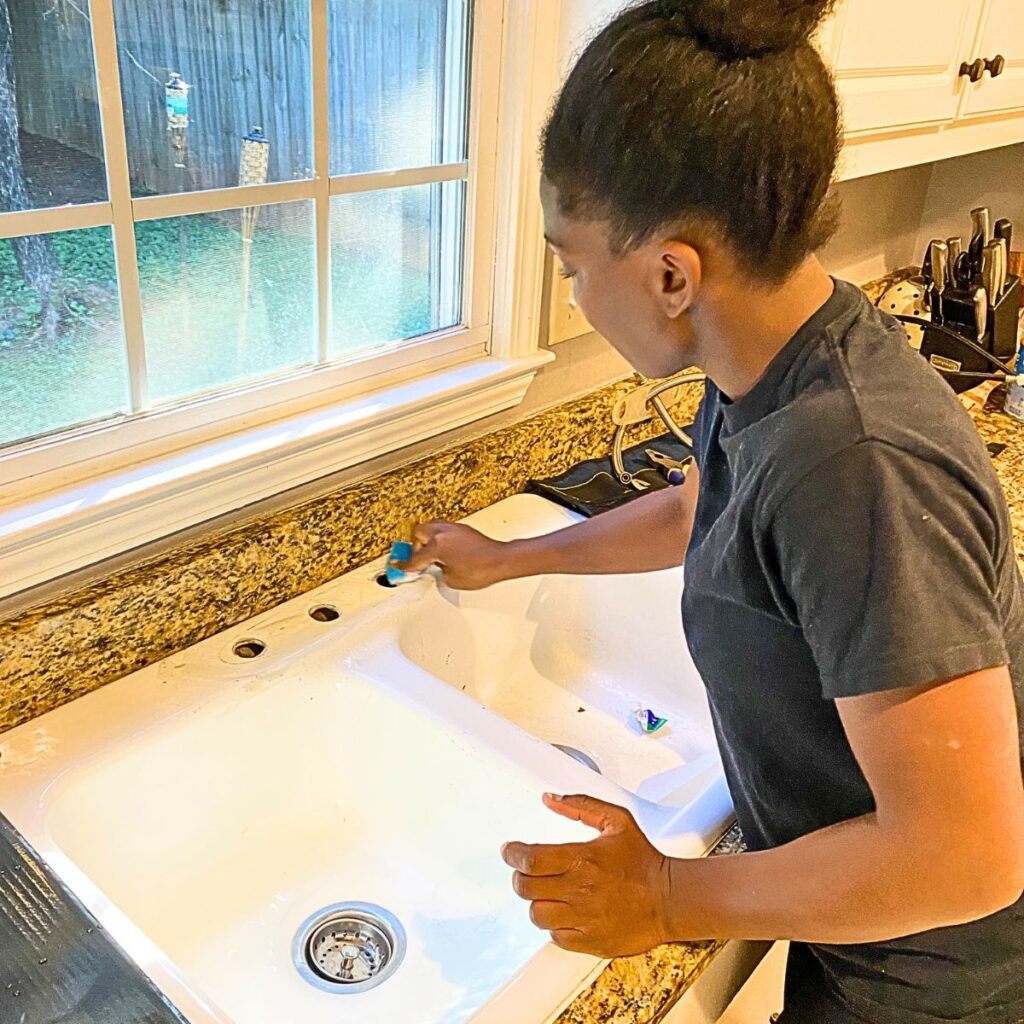
Step 5: Clean the area surrounding the sinkholes
It’s essential to address the area where the previous faucet was situated. You’ll probably encounter a significant amount of debris and grime that will require cleaning.
Step 6: Install the new faucet
Lay the Deck Plate over the openings to ensure a watertight seal. Often, you’ll find it necessary to apply caulk or use a plumber’s putty to achieve this.
Next, position the new Kraus Pull-Down Kitchen Faucet through the hole in the countertop. After it’s in place, venture beneath the counter to secure the faucet. Use the rubber washer, metal washer, and provided mounting nut, and finish off by tightening the screw.
Pro Tip: Don’t forget to consult the manufacturer’s guidelines for added assurance. There might be minor deviations based on the type of faucet and hole configuration you have. However, for the most part, the process remains fairly consistent.
Step 7: Connect the water lines
Secure a reliable grip by wrapping a small piece of Teflon plumber’s tape around the valve. Afterward, fasten the waterlines to the valves, tightening them until comfortably snug.
Turn on the cold and hot water lines and observe closely for any signs of leaks or water seepage. This precautionary measure ensures there is no potentially bothersome leak in your Kraus Pull-Down Kitchen Faucet.
Step 8: Install the weight clip
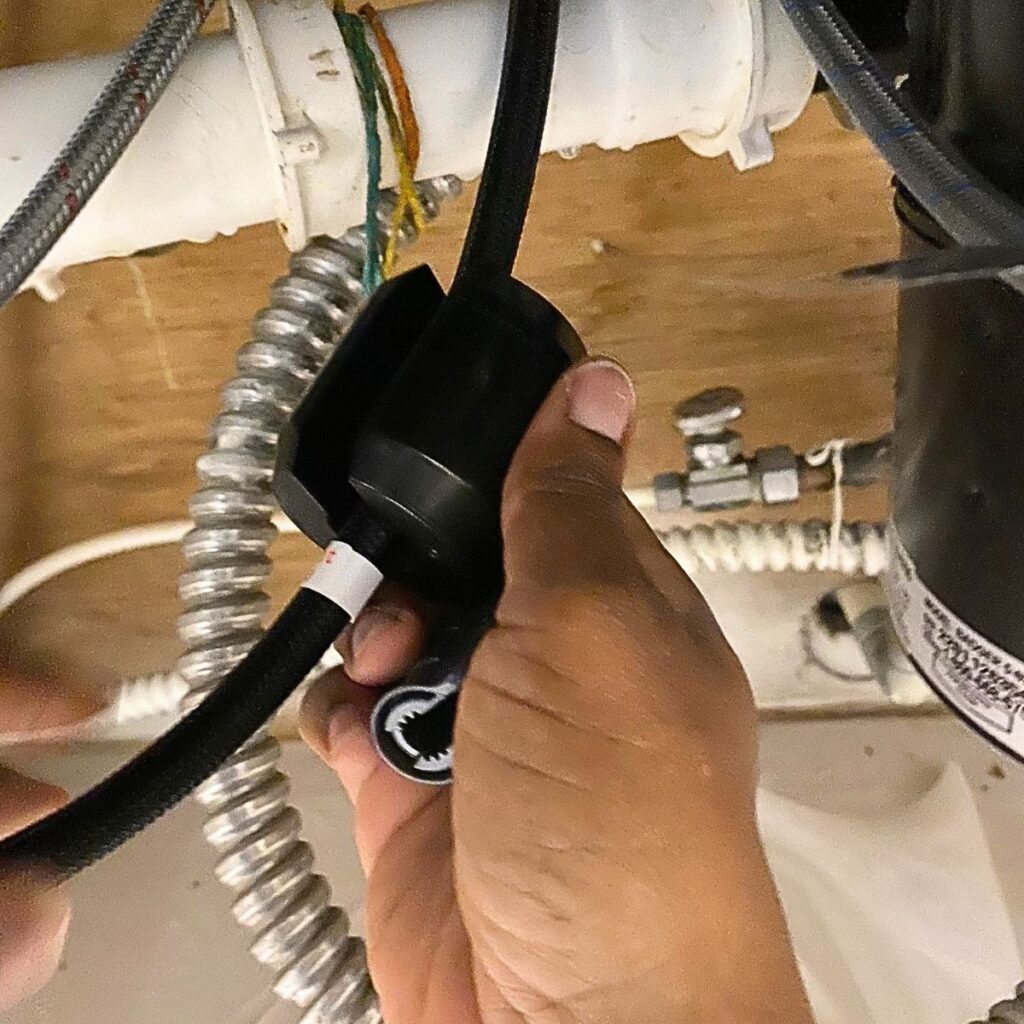
Attach the weight clip to the sprayer hose’s underside, just beneath the kitchen faucet underneath the sink. The weighted clip plays a vital role in maintaining the sprayer hose’s position within the faucet.
Step 9. Flush out the new faucet
Let the water flow and flush the water lines for about a minute. This flushes away any debris that could cause damage or compromise the internal parts.

SHOP THE POST
How to Choose Your Faucet?
When choosing a new kitchen sink faucet, start with a list of must-haves. Considering the vast array of faucet options available, it’s important to find something that fits your needs. Here are a few things to consider that will aid you in your decision-making process:
Brand – Traditionally, renowned brands like Kohler, Moen, and American Standard have held sway in kitchen faucet choices. However, the market has since diversified, presenting an array of well-crafted, user-friendly alternatives. Look through reviews to gauge product quality.
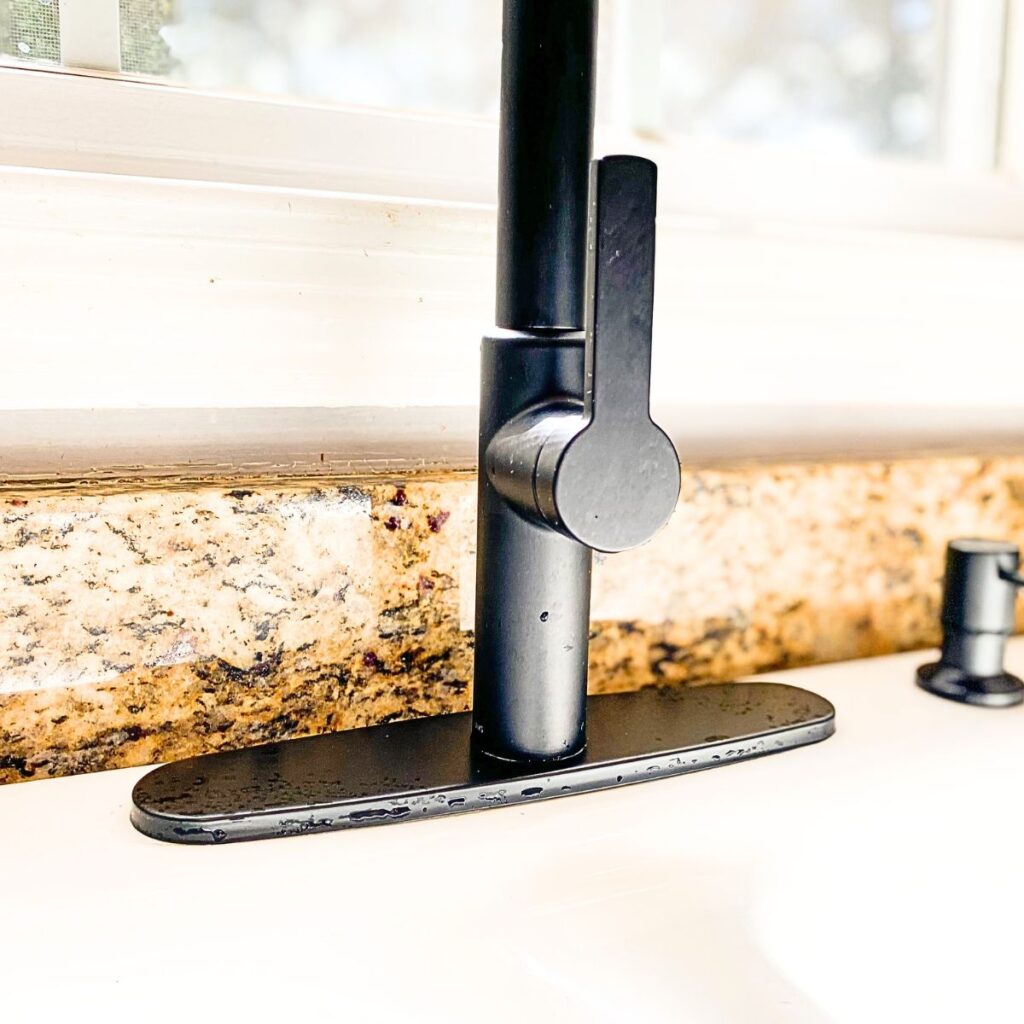
Finish or Color – Your choice of color hinges on hardware compatibility, spatial aesthetics, and personal preference. In our case, we opted for a Matte Black kitchen faucet, which aligns seamlessly with our existing hardware.
Style – Adjusting your faucet style to your culinary habits and cleaning routine is pivotal. You can explore single-handle vs. two-handle faucets, pull-out vs. pull-down options, or even touchless models. We chose a faucet with an integrated sprayer, designed to access challenging nooks and crannies within the sink. I also needed it to be able to fill a bucket without it being in the sink.
Sink Compatibility – Before making a selection, ensure it is compatible with your current sink setup. Examine the sink’s underside to determine the number of holes – this will range from 1 to 4. Opting for a replacement faucet with the same hole configuration streamlines installation. A three-hole faucet typically features separate hot and cold handles, while a one-hole faucet integrates both functions through a single handle.
Ultimately, your faucet choice should align with your functional needs and aesthetic preferences, paving the way for a seamless installation process.
Other posts you might like:
I hope you found this helpful. To complete this installation, you don’t have to be an experienced DIYer or plumber.